Key Takeaways
- Healthcare app downloads and usage remain high even post-pandemic, confirming lasting market demand
- The global digital health market is expected to exceed $190 billion, with mHealth projected to cross $300 billion by the decade's end
- 350,000+ healthcare and medical apps now exist in app stores
- Over 90% of physicians believe medical apps improve patient engagement and outcomes
- Digital healthcare is no longer temporary—it's the standard way patients access care
- Patients expect remote care, telemedicine, and mobile access as baseline services
- Healthcare apps improve engagement, support chronic disease management, and enable preventive care through wearable integration
Healthcare has changed for the better over the last few years, and in 2026, healthcare app development will play a central role in how medical services are provided, accessed, and managed. What started as a shift towards digital care has now become a standard way for patients and providers to connect.
Today, patients expect quick access to care. Booking appointments, speaking to doctors online, ordering medicines, and tracking health data now happen through mobile apps. This growing demand has made healthcare mobile app development essential for providers aiming to improve reach and service quality.
Digital healthcare tools also make it easier for doctors and care teams to review patient records, issue e-prescriptions, and manage follow-ups more effectively. As a result, the health care application development industry now supports both patient care and operational efficiency.
The wider market reflects this shift. The global digital health market continues to grow rapidly and is expected to cross $190 billion in value. In the UK, healthcare organisations increasingly invest in custom healthcare app development to improve access, reduce pressure on systems, and deliver better patient experiences.
However, building a healthcare app is not like building a regular mobile app. It involves strict data protection, regulatory compliance, and user trust. From privacy and security to usability and scalability, every decision matters.
In this guide, we explore key facts about healthcare mobile app development services, current market trends, and what organisations need to know before building a healthcare app in 2026.
Key Facts Driving Custom Healthcare App Development in 2026
Healthcare app development has evolved from a short-term response into a long-term digital strategy. What began as rapid adoption during global health disruptions has now become a permanent shift in how care is delivered and managed.
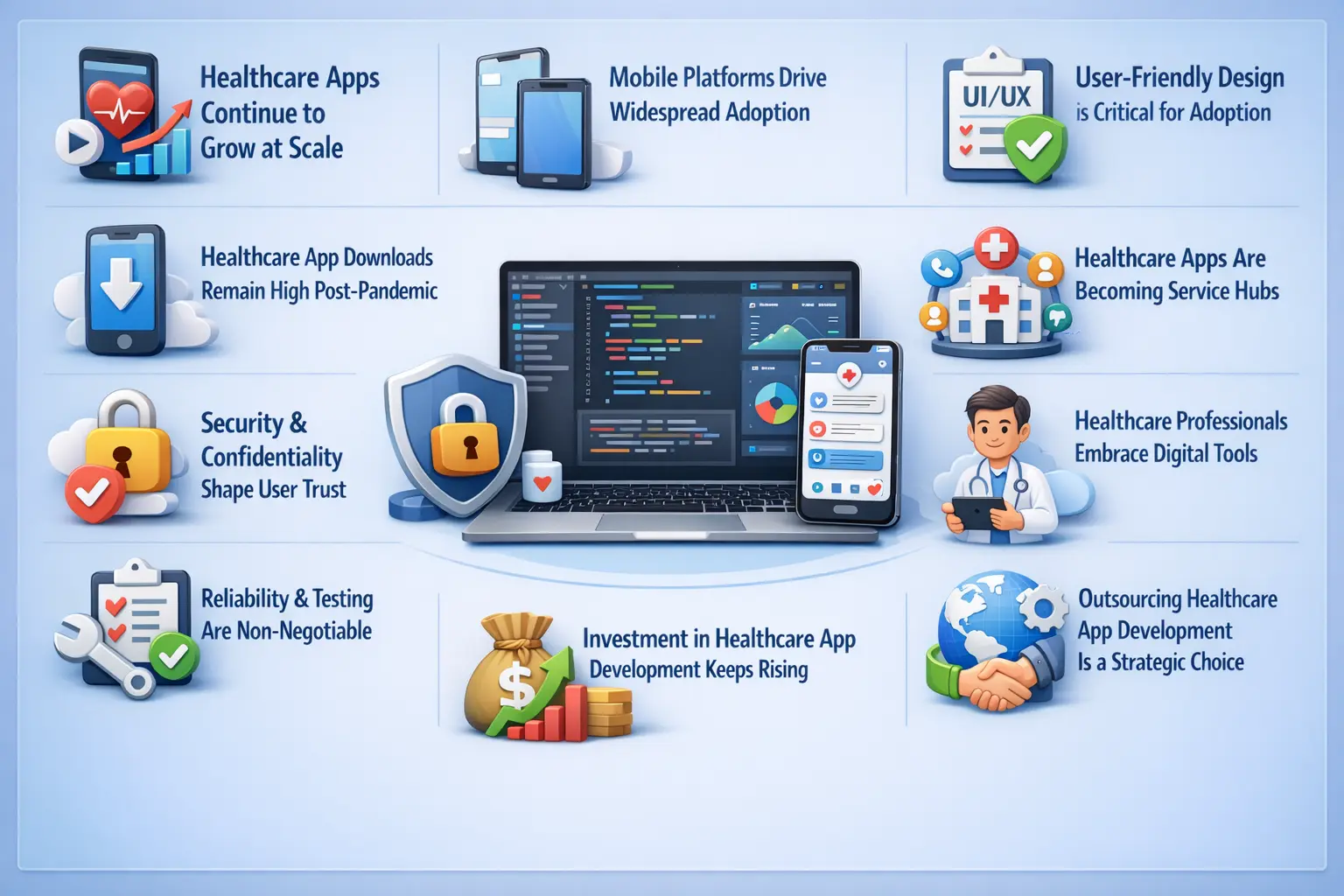
Below are the most important facts shaping custom healthcare app development today. Together, they explain why healthcare mobile apps continue to grow in scale, value, and impact.
1. Healthcare Apps Continue to Grow at Scale
There are now hundreds of thousands of healthcare and medical apps available across app stores. This number increases every year as new use cases emerge. From appointment booking to chronic care management, healthcare mobile app development supports a wide range of patient and provider needs. The steady rise reflects strong demand and long-term relevance.
2. Mobile Platforms Drive Widespread Adoption
Android continues to hold a large share of the global mobile market. This makes it a popular platform for app development for healthcare, especially where cost and reach matter. At the same time, iOS remains strong in premium markets. Many healthcare organisations now build apps for both platforms to ensure wider access and consistent care delivery.
3. Healthcare App Downloads Remain High Post-Pandemic
Healthcare app downloads surged during the pandemic years. Importantly, usage has remained high even after that period. Patients now prefer digital access for consultations, prescriptions, and health tracking. This shift confirms that healthcare mobile application development meets a lasting need, not a temporary one.
4. User-Friendly Design is Critical for Adoption
Healthcare apps serve users who may be ill, elderly, or under stress. Because of this, simple and reassuring design is essential. Clear navigation, easy data entry, readable text, and calm visuals define successful health app development. Apps that feel confusing or overwhelming often see low retention. In 2026, good UX is not optional. It is expected.
5. Security and Confidentiality Shape User Trust
Healthcare apps handle highly sensitive data. As a result, security and privacy sit at the centre of healthcare application development. Strong encryption, secure authentication, and controlled access protect patient information. Many organisations also tailor apps to meet regional data protection rules, reducing legal and compliance risks. Trust remains one of the biggest drivers of adoption.
6. Healthcare Apps Are Becoming Service Hubs
Modern healthcare apps no longer stop at diagnosis or advice. Many now integrate emergency support, online pharmacies, and follow-up care. Features such as medicine ordering, home delivery, and emergency access add real value. This connected approach improves outcomes and strengthens user engagement.
7. Reliability and Testing Are Non-Negotiable
In healthcare, app failure can have serious consequences. For this reason, testing plays a critical role in medical mobile app development. Apps are tested under poor connectivity, heavy usage, and emergency conditions. Performance, speed, and data accuracy must remain consistent at all times. Reliability directly impacts patient safety.
8. Healthcare Professionals Are Actively Embracing Digital Tools
Doctors, nurses, and care teams now rely on mobile apps in daily workflows. They use apps to access records, issue prescriptions, and monitor patient progress. This growing adoption shows strong acceptance of healthcare apps development across the professional community. Digital tools now support, rather than replace, clinical care.
9. Investment in Healthcare App Development Keeps Rising
Spending on healthcare apps continues to increase each year. Organisations invest in custom health app development to improve efficiency, scalability, and patient experience. This sustained investment highlights confidence in digital healthcare as a long-term solution.
10. Outsourcing Healthcare App Development is a Strategic Choice
Many organisations choose to partner with a specialised healthcare app development company rather than building in-house teams. Outsourcing offers access to expertise, faster delivery, and better cost control. For UK businesses, this approach balances quality with efficiency.
Why Healthcare App Development is a Core Part of the 2026 Healthcare Market?
Healthcare delivery changed rapidly over the last few years. What began as an urgent response to global health challenges has now become the preferred way many patients access care. Digital health is no longer a temporary solution. It is a permanent part of modern healthcare.
During that period, healthcare organisations adopted mobile and web solutions to support remote consultations, monitoring, and communication. These tools allowed providers to continue care while managing growing demand. Importantly, patient behaviour did not revert once restrictions eased.
Today, patients actively choose digital services for convenience, speed, and flexibility. This shift has made healthcare app development a core requirement rather than an optional upgrade. In 2026, telehealth, remote care, and mobile access are expected standards.
Below are the key reasons why healthcare mobile app development remains essential in today’s healthcare market.
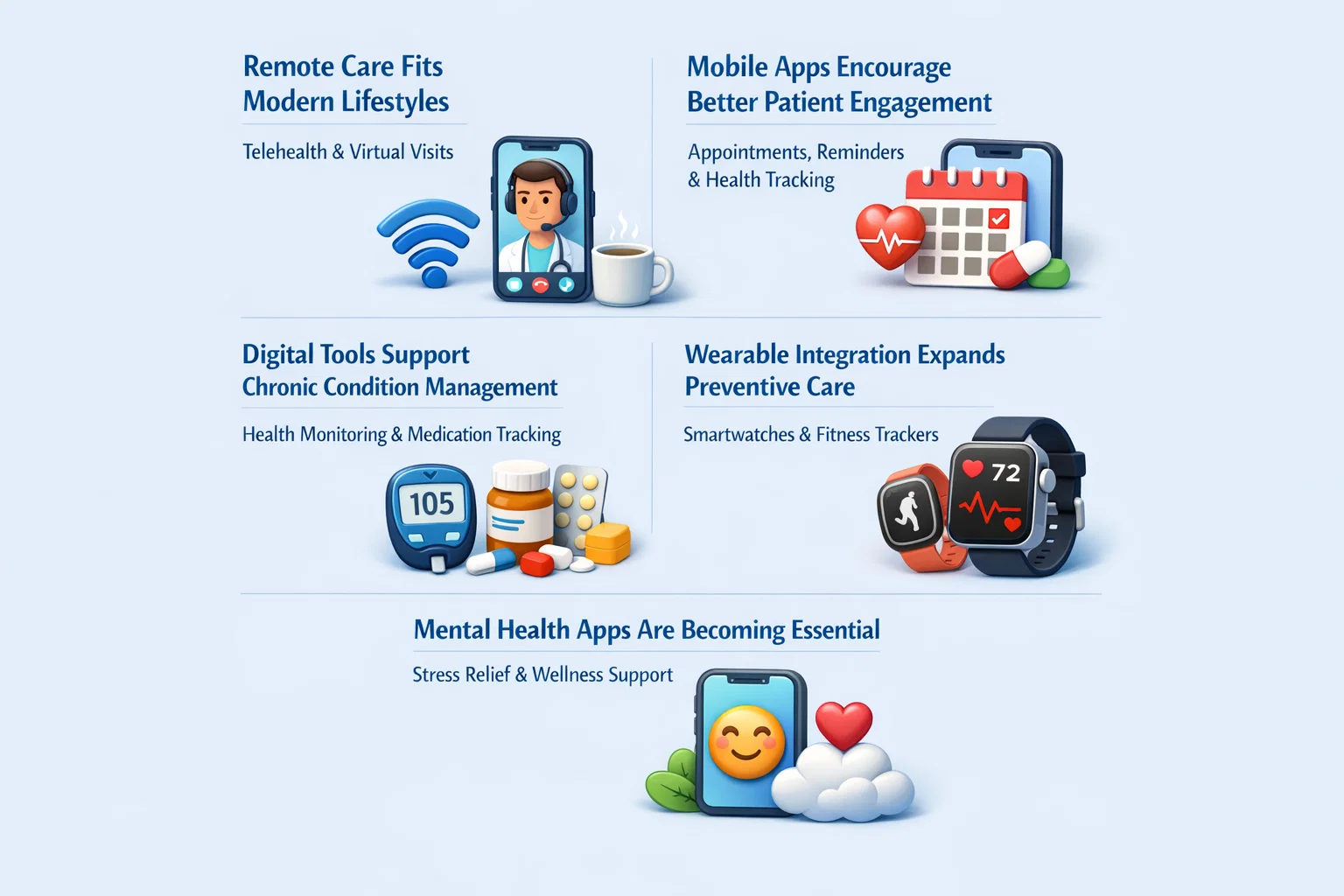
1. Remote Care Fits Modern Lifestyles
Patients now expect healthcare that fits around their daily lives. Mobile apps allow consultations, follow-ups, and monitoring without travel or long waiting times. This flexibility improves access while reducing strain on physical facilities.
2. Mobile Apps Encourage Better Patient Engagement
Healthcare apps offer reminders, health tracking, and educational content. These features help patients take an active role in their own care. As a result, engagement improves and outcomes often follow.
3. Digital Tools Support Chronic Condition Management
Long-term conditions require regular monitoring and consistency. Healthcare application development makes it easier for patients to track symptoms, medication, and progress. Apps also help providers intervene early when issues arise.
4. Wearable Integration Expands Preventive Care
Custom healthcare apps now integrate with smartwatches and connected devices. This allows continuous monitoring of key health metrics. Early insights help prevent complications and support proactive care.
5. Mental Health Apps Are Becoming Essential
Mental health awareness has grown significantly. Mobile health apps now support therapy access, mood tracking, and wellbeing support. In 2026, mental health features will form a key part of healthcare apps development strategies.
Types of Healthcare Apps in 2026
In 2026, healthcare apps are built around specific care models rather than generic functionality. Understanding these app categories helps organisations plan features, budgets, and compliance more effectively.
1. Telemedicine & Virtual Consultation Apps
Used for video consultations, digital prescriptions, and follow-ups. These apps reduce waiting times and improve access to specialists.
2. Remote Patient Monitoring Apps
Integrated with IoT devices and wearables to track vitals such as heart rate, glucose levels, and oxygen saturation in real time.
3. Mental Health & Wellness Apps
Support therapy access, mood tracking, guided meditation, and behavioural health programmes.
4. Fitness & Preventive Care Apps
Focus on activity tracking, diet management, and early health risk detection.
5. Hospital & Clinic Management Apps
Help healthcare providers manage appointments, records, billing, and internal workflows.
How to Build a Custom Healthcare App in 2026 – A Practical Step-by-Step Guide
Building a healthcare app requires more than a good idea. In 2026, successful healthcare app development depends on clear planning, strong compliance, and a focus on real user needs.
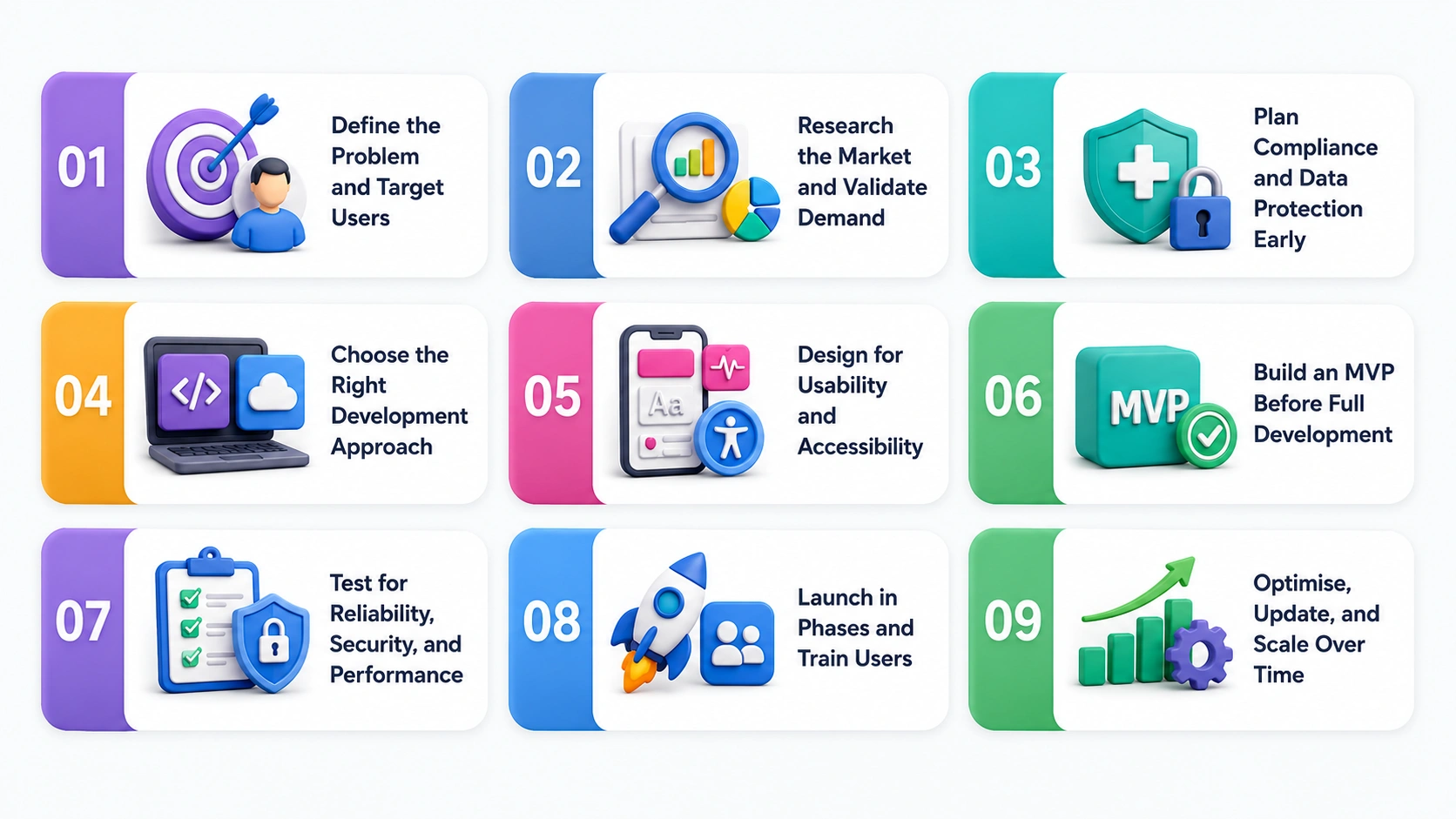
Below is a simple, industry-tested process followed by most professional healthcare app development companies.
Step 1) Define the Problem and Target Users
Every healthcare app must solve a real problem. Start by identifying who the app is for and what challenge it addresses.
Your users may be patients, healthcare professionals, or administrators. Some apps serve all three. Common goals include improving appointment access, enabling remote care, reducing admin workload, or supporting chronic condition management.
Clear goals at this stage reduce rework and cut development costs later.
Step 2) Research the Market and Validate Demand
Healthcare is a crowded space. Thousands of healthcare and medical apps already exist. Market research helps you avoid building features users do not need.
Study similar apps, user reviews, and unmet needs. Look for gaps in usability, accessibility, or integrations. In 2026, apps that focus on simplicity and real outcomes perform better than feature-heavy solutions.
This step helps define your unique value.
Step 3) Plan Compliance and Data Protection Early
Healthcare apps handle sensitive personal data. This makes compliance non-negotiable.
In the UK and EU, healthcare data falls under strict data protection rules. Security, consent management, and access control must shape your app from day one. Ignoring compliance early often leads to costly rebuilds later.
Data breaches in healthcare remain among the most expensive globally. Strong planning reduces both legal and reputational risk.
Step 4) Choose the Right Development Approach
Your development approach affects cost, speed, and scalability. Options include native, cross-platform, web-based, or simplified low-code solutions.
Native apps suit complex device integrations. Cross-platform apps balance reach and cost. Web apps work well for portals and admin tools. The right choice depends on features, timeline, and long-term goals.
There is no one-size-fits-all approach in healthcare mobile app development.
Step 5) Design for Usability and Accessibility
Healthcare apps must be easy to use, especially for elderly users or those under stress.
Clear navigation, readable text, simple forms, and calm visuals improve adoption. Accessibility is not optional. Apps that confuse users often fail, regardless of features.
Good design directly impacts patient trust and engagement.
Step 6) Build an MVP Before Full Development
Launching a full healthcare app at once is risky. Most teams start with a Minimum Viable Product (MVP).
An MVP tests core workflows with real users. It reveals usability issues, compliance gaps, and operational challenges early. This approach saves time and money while improving outcomes.
Many successful healthcare apps evolve through controlled iterations.
Step 7) Test for Reliability, Security, and Performance
Testing in healthcare goes beyond fixing bugs. Apps must work during poor connectivity, high usage, and emergency scenarios.
Security testing is critical. Healthcare data remains a prime target for cyber threats. Regular testing throughout development reduces vulnerabilities and protects users.
Reliability is essential when patient care depends on the app.
Step 8) Launch in Phases and Train Users
A phased launch reduces risk. Start with a pilot group, monitor performance, and gather feedback.
User training matters. Even well-designed healthcare apps fail if users do not understand them. Clear onboarding, guides, and support improve adoption.
Once stable, the app can scale confidently.
Step 9) Optimise, Update, and Scale Over Time
Healthcare app development does not end at launch. Continuous improvement keeps the app relevant and compliant.
Use analytics and feedback to refine features. Add integrations, improve performance, and adapt to regulatory updates. In 2026, successful healthcare apps evolve with user needs.
Healthcare App Compliance and Regulations in 2026
Healthcare apps must comply with strict regional and international regulations to protect patient data and ensure safety.
Key compliance standards include:
- UK GDPR & Data Protection Act
- NHS Digital Standards
- HIPAA (for US-based users)
- ISO 27001 for information security
- Medical device regulations for connected health apps
Failing to address compliance early can delay launches and increase legal risks.
Healthcare App Development in 2026: Market Facts and Figures
Healthcare app development continues to grow as patients and providers rely more on digital care. In 2026, mobile health solutions sit at the centre of healthcare delivery, not at the edges.
Here are the most relevant market insights shaping custom healthcare app development today:
- Mobile health (mHealth) remains the largest segment of digital healthcare, driven by strong adoption among both patients and clinicians.
- The global mHealth market, valued under $40 billion in the early 2020s, is projected to cross $300 billion by the end of the decade, driven by remote care and monitoring.
- Studies show that over 90% of physicians believe medical apps improve patient engagement and health outcomes.
- Nearly three in four patients now recognise the importance of healthcare apps for managing their health.
- Telemedicine continues to expand, with the global telehealth market expected to exceed $17 billion and grow steadily beyond 2026.
- Smartphone access has pushed adoption higher, with more than 60% of users using healthcare apps to manage health conditions.
- App stores now host 350,000+ healthcare and medical apps, covering fitness, nutrition, chronic care, mental health, and remote monitoring.
Usage trends also show how patients engage with healthcare apps:
- Around one-third of users rely on apps for fitness and exercise tracking.
- Over 20% use apps for nutrition and diet management.
- Blood pressure tracking, meditation, and mental health management continue to grow steadily as awareness increases.
A clear message can be drawn from these figures – healthcare apps are no longer niche products. Instead, they are an essential part of the digital healthcare infrastructure.
Common Challenges in Healthcare App Development
Despite growing adoption, healthcare app development presents unique challenges:
- Managing sensitive patient data securely
- Navigating complex regulatory requirements
- Ensuring high app reliability during emergencies
- Achieving user adoption among non-technical users
- Integrating with legacy healthcare systems
Experienced healthcare app development companies mitigate these risks through compliance-first design, robust testing, and scalable architecture.
Cost of Healthcare App Development in 2026
Healthcare app development costs vary based on complexity, features, and compliance requirements.
- Basic MVP healthcare app: £25,000 – £45,000
- Mid-level app with integrations: £50,000 – £90,000
- Advanced healthcare platform: £100,000+
Factors affecting cost include platform choice, security requirements, third-party integrations, and regulatory compliance.
Conclusion – Building Healthcare Apps That Truly Make a Difference
Developing healthcare apps in 2026 is no longer just a technical endeavor. It is a strategic decision that impacts patient outcomes, operational efficiency, and long-term sustainability.
Successful healthcare apps are built with clear goals, strong compliance foundations, and a deep understanding of real-world clinical and patient needs. They prioritise usability, security, and reliability from the start. Most importantly, they evolve through continuous improvement rather than one-time launches.
Organisations that invest wisely, starting with a focused MVP and scaling based on proven value – reduce risk and achieve better results over time. In a sector where trust matters as much as innovation, thoughtful design and experienced execution make all the difference.
Why Choose IDS Logic?
IDS Logic brings deep domain expertise and 18+ years of experience in healthcare app development services, delivering secure, compliant, and scalable digital health solutions. Our teams build healthcare apps designed for real clinical environments, including remote patient monitoring, wearable integrations, medical IoT, and EHR/EMR interoperability.
We work as a strategic technology partner, not just a delivery vendor. From compliance planning and backend integrations to user-centred design and long-term scalability, IDS Logic supports the full product lifecycle.
With proven experience across NHS-aligned projects and global healthcare startups, IDS Logic ensures every healthcare app meets clinical, technical, and regulatory expectations.