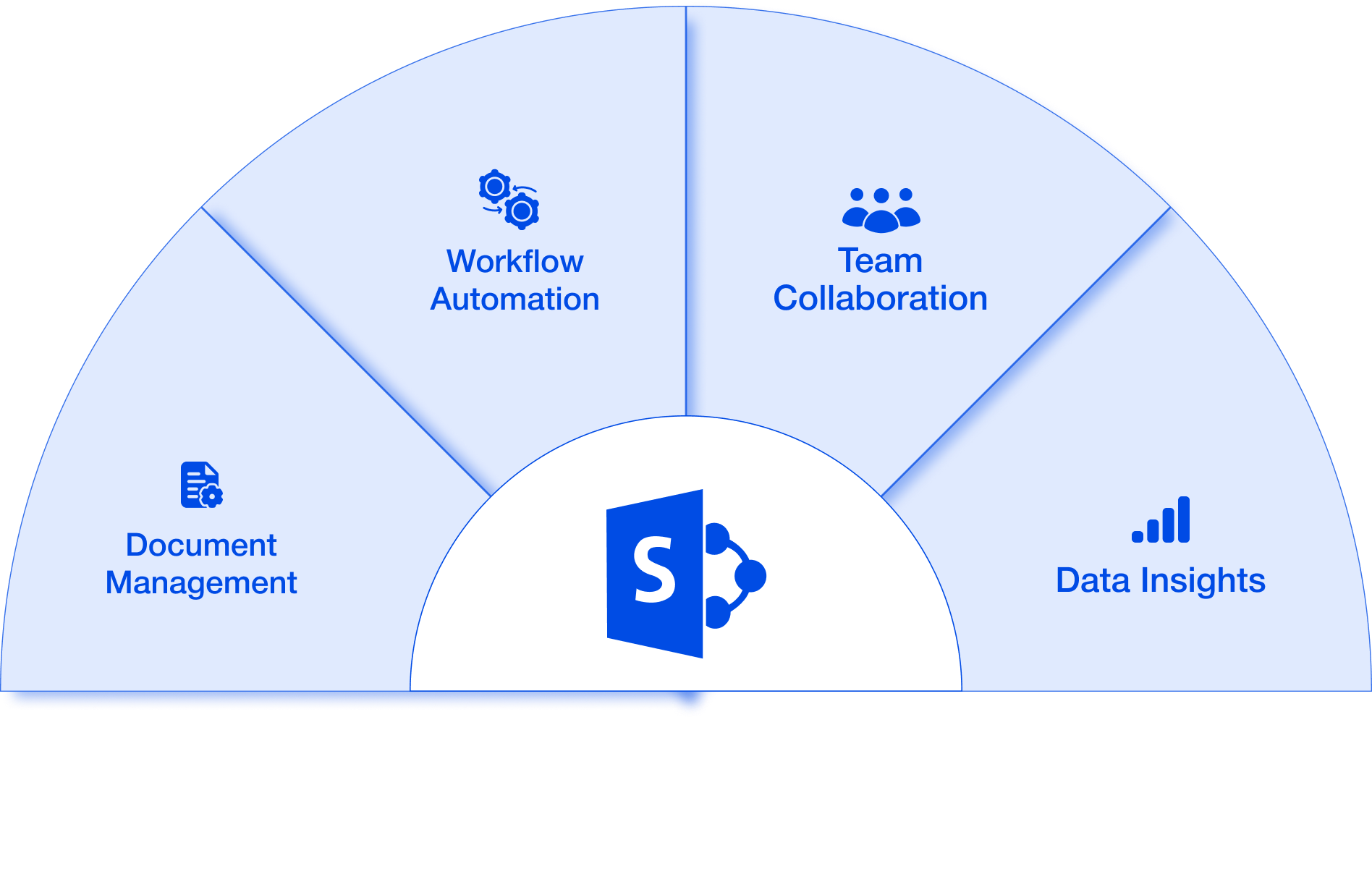
SharePoint maintenance is a key aspect of ensure services that are optimised for better performance. There are several other metrics that bring success to SharePoint development plan.
SharePoint maintenance is essential for keeping your digital workplace reliable and efficient. Many organizations invest heavily in SharePoint, but overlook the need for regular maintenance. This can lead to sluggish performance, cluttered sites, and rising support costs.
SharePoint environments grow quickly. Files increase, sites expand, and users change roles. Without structured SharePoint Online maintenance, storage usage becomes difficult to control, and system performance starts to drop. Even well-designed SharePoint platforms can struggle if they are not reviewed and maintained consistently.
Many organisations reviewing their SharePoint maintenance strategy also discover that outdated structures, legacy content, or older environments are limiting collaboration and scalability. If you are planning to modernise or streamline your SharePoint setup, this practical guide on SharePoint migration and modernisation for UK organisations may help you understand the process, challenges, and best practices involved.
Download the whitepaper to explore how businesses are improving performance, governance, and long-term SharePoint efficiency.
Regular clean-up plays a key role in SharePoint site management. Removing unused content helps free up database space and keeps search results accurate. It also improves everyday user experience, especially for teams that rely on SharePoint for daily collaboration and document access.
Most UK businesses using SharePoint need more than occasional fixes. They need ongoing SharePoint support and maintenance that covers updates, routine checks, and performance reviews. Because SharePoint is a powerful but complex platform, expert oversight helps prevent small issues from becoming costly problems.
In this guide, we explore SharePoint maintenance best practices, performance improvement, and long-term planning. We also look at SharePoint maintenance costs in the UK and how the right approach supports growth, security, and business continuity.
Who This Guide Is For (UK Businesses)
This SharePoint maintenance guide is designed for:
- UK SMEs and enterprises using SharePoint Online
- IT managers responsible for SharePoint governance
- Business leaders planning monthly SharePoint maintenance
- Organisations experiencing slow SharePoint performance or security concerns
- Teams looking to reduce long-term SharePoint maintenance costs in the UK
SharePoint Maintenance: Practices to Follow
When SharePoint environments grow, small issues can quickly cause performance slowdowns, security risks, and poor user adoption. A well-defined SharePoint maintenance plan keeps the platform stable, secure, and ready to use. By establishing clear processes and sharing responsibilities between IT teams and business users, ongoing maintenance ensures SharePoint is reliable and easy to use by managing permissions, performance, and security effectively.
The following SharePoint maintenance best practices focus on consistency, prevention, and long-term value. When applied correctly, they support better performance, stronger governance, and a smoother experience for everyone using SharePoint.
1. Regular Communication Between IT and End Users
For SharePoint maintenance to work effectively, IT teams must clearly understand the challenges faced by end users. Daily users often experience performance issues, access problems, or usability gaps before administrators notice them. Regular communication helps surface these issues early. Built-in surveys, usage reports, and activity logs provide valuable insight into how SharePoint is actually used. Scheduled discussions between IT and business teams also help identify improvement areas and reduce frustration. This ongoing dialogue plays a vital role in successful SharePoint support and maintenance.
2. Archive Unused Content
As SharePoint environments grow, unused site collections and outdated content begin to affect performance and storage costs. Archiving inactive content improves efficiency and supports better SharePoint site management. However, this process should never be sudden. Users must be informed in advance and given enough time to retain any business-critical data. Restoring archived content can be difficult, so clear communication and planning are essential. A structured archiving strategy keeps SharePoint organised while avoiding disruption.
3. Site Permission Review
Regular permission reviews are essential to protect organisational data. Over time, user access often becomes outdated as employees change roles or leave the business. Using the central administration panel, administrators should routinely remove inactive users and adjust permissions. This ensures that only authorised individuals can access sensitive information. When permission management becomes complex, professional SharePoint support can help maintain security and control without impacting productivity.
4. Testing Backup Processes
Backing up SharePoint data protects the organisation from accidental loss, system failures, or security incidents. A reliable SharePoint maintenance plan includes scheduled backups and routine recovery testing. Testing is just as important as creating backups, as it confirms that data can be restored when needed. Regular testing reduces downtime and ensures business continuity during unexpected events.
5. Regular System Checks
Ongoing system monitoring helps maintain a healthy SharePoint environment. Tools such as the SharePoint Admin Centre allow teams to track performance, storage usage, and user activity. These checks should run weekly or monthly to detect issues early. Core activities include monitoring system performance metrics, watching for unusual user behaviour or security alerts, and ensuring content databases remain within recommended size limits. Consistent system checks help prevent performance degradation and service interruptions.

6. Ensure Regular Security Patches
Microsoft releases frequent updates to address security risks and improve platform stability. Ignoring these updates increases vulnerability to threats. Best practice involves reviewing updates regularly, testing them in a controlled environment, and then deploying them to live systems. Users should also be informed about any planned downtime or functional changes. This balanced approach strengthens security without disrupting operations.
7. Data Integrity
Maintaining data integrity is a key part of SharePoint maintenance best practices. Regular clean-up removes outdated, duplicate, or unused content, which improves performance and user experience. Effective data management includes implementing retention policies, reviewing content lifecycle stages, and archiving or deleting obsolete data. Features such as version control and recycle bins help manage document changes and reduce accidental loss.
8. User Management and Site Permission
User management supports both security and efficiency. Regular audits ensure users have the correct access to perform their roles. Permissions should be granted based on responsibilities rather than individuals. Access must be updated promptly when employees join, move roles, or leave the organisation. Consistent reviews reduce security risks and improve governance across SharePoint Online environments.
9. Regular Compliance Checks
Compliance checks help ensure SharePoint aligns with internal policies and external regulations. Regular SharePoint maintenance audits identify gaps in governance, access control, and content handling. Organisations should review governance policies, conduct routine audits, and address compliance issues quickly. This approach supports long-term scalability and reduces regulatory risk.
10. Managing Site Subsites
A well-structured SharePoint environment improves navigation and usability. Regular reviews of site collections and subsites help ensure alignment with business goals. Clear naming conventions and logical navigation make content easier to find. Inactive or unused subsites should be archived or removed to improve performance and reduce clutter. Effective site structure supports both user experience and system efficiency.
11. Library and Maintenance of Lists
Document libraries and lists store critical organisational data. Maintaining them properly supports efficient information management. Libraries should use metadata and content types instead of deep folder structures. Lists should be reviewed regularly, with unnecessary items removed. These actions improve usability, search accuracy, and overall performance.
12. User Training and Support
Training and support are essential for long-term SharePoint success. Users need clear guidance on how to use the platform and follow data security policies. A strong SharePoint maintenance plan includes regular training sessions, accessible user guides, and responsive support channels. Well-trained users work more efficiently and generate fewer support issues.
13. Proactive Management with a SharePoint Maintenance Plan
Proactive management helps identify risks before they escalate. Regular monitoring of system health, performance metrics, and security alerts allows teams to act early. Checking database performance and size limits also prevents long-term issues. This proactive approach ensures stability and reduces unexpected downtime.
Read more – What’s New in SharePoint 2025: Latest Features
14. Performance Optimisation
A well-planned SharePoint maintenance performance optimisation strategy improves reliability and user satisfaction. Regular optimisation ensures SharePoint remains responsive as content and usage grow.
15. Optimised Page Load Time
Page speed plays a major role in user experience, especially on content-heavy sites. Performance optimisation includes compressing images and media, reducing unnecessary scripts, and using built-in SharePoint performance tools. These actions help identify slow elements and improve load times across pages.
16. Audits at Regular Intervals
Regular performance audits highlight inefficiencies before they affect users. Using SharePoint Admin Centre tools, teams can identify bottlenecks and optimisation needs. Reviewing site structure, reducing large lists, and simplifying complex hierarchies all contribute to better performance. Applying best practices to site design and navigation further improves responsiveness.
17. Troubleshoot Issues
A structured troubleshooting approach is essential for effective SharePoint Online maintenance. Issues related to performance, access, or functionality require systematic resolution to avoid repeat incidents.
18. Common SharePoint Issue Identification
Understanding common SharePoint challenges helps teams respond faster. Typical issues include login problems, broken links, slow performance, and synchronisation errors. Documenting these issues helps identify patterns. Teams should also be aware of SharePoint Online limitations, such as throttling during high usage periods.
19. Using SharePoint Online Diagnostic Tools
SharePoint Online offers several tools to support issue diagnosis. The Microsoft 365 Service Health Dashboard helps identify service-level problems and security risks. Admin Centre logs and reports provide insight into user behaviour and system performance. The Microsoft 365 Admin Centre offers a broader view of service health, compliance, and user activity.
20. Structured Troubleshooting Plan
A clear troubleshooting process improves resolution speed and accuracy. Teams should define the issue clearly, collect details such as screenshots or error messages, and analyse logs or recent changes. Once a solution is applied, it must be tested thoroughly to confirm the issue is fully resolved.
21. Keeping a Knowledge Base
A shared knowledge base helps teams resolve recurring issues quickly. It should document problems, root causes, and solutions in a clear format. Easy access is essential for both IT teams and users. Regular updates ensure the knowledge base reflects changes in the SharePoint environment.
22. Frequent Collaboration with the SharePoint Community
Some issues require external insight. Engaging with SharePoint forums, blogs, and online communities helps teams learn from real-world experiences. Staying informed about updates and known issues also reduces troubleshooting time and improves solution quality.
23. Creating a Maintenance Checklist
SharePoint maintenance is an ongoing process that requires consistency and planning. A maintenance checklist ensures regular tasks are not missed and supports proactive management. Successful SharePoint maintenance focuses on prevention, not just fixing problems after they occur.
Managed SharePoint Maintenance vs In-House Support
Many UK businesses struggle to balance internal IT workloads with ongoing SharePoint maintenance.
Managed SharePoint maintenance services typically include:
- Monthly performance audits
- Security patching
- User access reviews
- Content governance
- Backup monitoring
- Support desk access
This approach reduces operational burden while ensuring consistent platform health.
SharePoint Maintenance Cost: What You Should Know
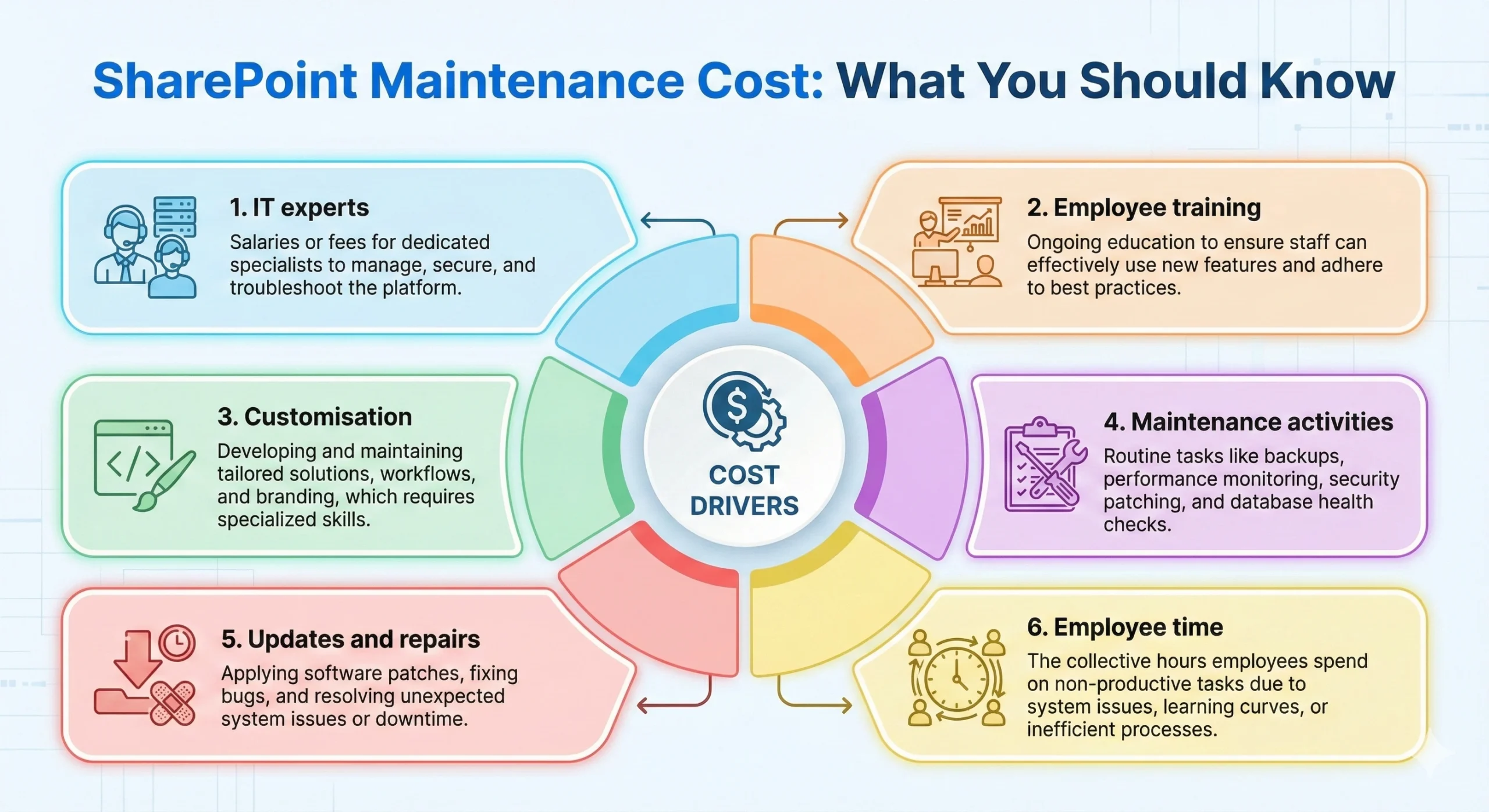
With the right customisation and a solid SharePoint maintenance plan, SharePoint can be a powerful collaboration and productivity tool. However, it also has the potential to strain your budget if you don’t plan for ongoing costs.
Maintaining a SharePoint environment involves several expenses beyond licence fees. In the UK, standalone SharePoint Online licences can start at roughly £4–£5 per user per month, while business suites that include SharePoint such as Microsoft 365 Business Standard typically cost around £9–£10 per user per month and higher-tier plans with advanced security or compliance can be £16–£18 per user per month or more, depending on features and commitments.
1. IT experts
SharePoint is a complex platform that requires specialist knowledge. Most organisations need either in-house IT professionals or external SharePoint consultants to manage configuration, troubleshooting, performance tuning, and security. Skilled expertise helps reduce downtime but adds to overall maintenance costs.
2. Employee training
To achieve strong user adoption, employees must understand how to use SharePoint correctly. Regular training is often required, especially as new features are introduced. Organisations may invest in online sessions, workshops, or consultant-led training to improve productivity and reduce support requests.
3. Customisation
Most businesses customise SharePoint to match branding, workflows, and internal processes. These changes improve usability but require expert setup and ongoing updates. When Microsoft releases platform changes, custom features may also need adjustments, adding to maintenance effort.
4. Maintenance activities
Routine tasks such as archiving outdated content, managing permissions, monitoring performance, and running compliance checks require dedicated time and expertise. These activities form a core part of SharePoint Online maintenance and should be planned into ongoing budgets.
5. Updates and repairs
Microsoft regularly releases updates, patches, and security fixes. These updates must be reviewed, tested, and deployed carefully. Some updates can affect existing configurations or customisations, which may require additional fixes or rework.
6. Employee time
Adopting and maintaining SharePoint takes time. Employees may need extra time to adjust during rollouts or major changes. This learning period can impact productivity and should be considered as part of overall SharePoint maintenance costs in the UK.
Common Problems Businesses Face Without Regular SharePoint Maintenance
When organisations skip regular SharePoint Online maintenance, problems tend to build up quietly. At first, these issues seem minor. Over time, they start affecting productivity, security, and trust in the platform.
One of the most common challenges is slow performance. Pages take longer to load, and users struggle to find information quickly. This often leads to frustration and reduced reliance on SharePoint for daily work. As content grows without control, storage becomes bloated, which increases costs and makes site management harder.
Security and access issues are another major concern. Without routine SharePoint governance and compliance checks, permissions can become chaotic. Former employees may retain access, and sensitive content may be shared too widely. This increases the risk of data exposure and compliance gaps.
Workflows and automations also suffer when maintenance is ignored. Failed or paused processes often go unnoticed, which can delay approvals and disrupt business operations. Search results become less reliable due to duplicate or outdated content, making it harder for teams to trust the system.
Over time, these problems affect more than IT teams. Business users lose confidence in SharePoint, adoption declines, and teams fall back on manual workarounds. What starts as missed maintenance can eventually impact day-to-day operations and decision-making.
Benefits of a Structured SharePoint Monthly Maintenance Plan
A structured SharePoint maintenance plan delivers clear and measurable benefits when managed proactively. Instead of reacting to problems, organisations stay in control of performance, security, and costs.
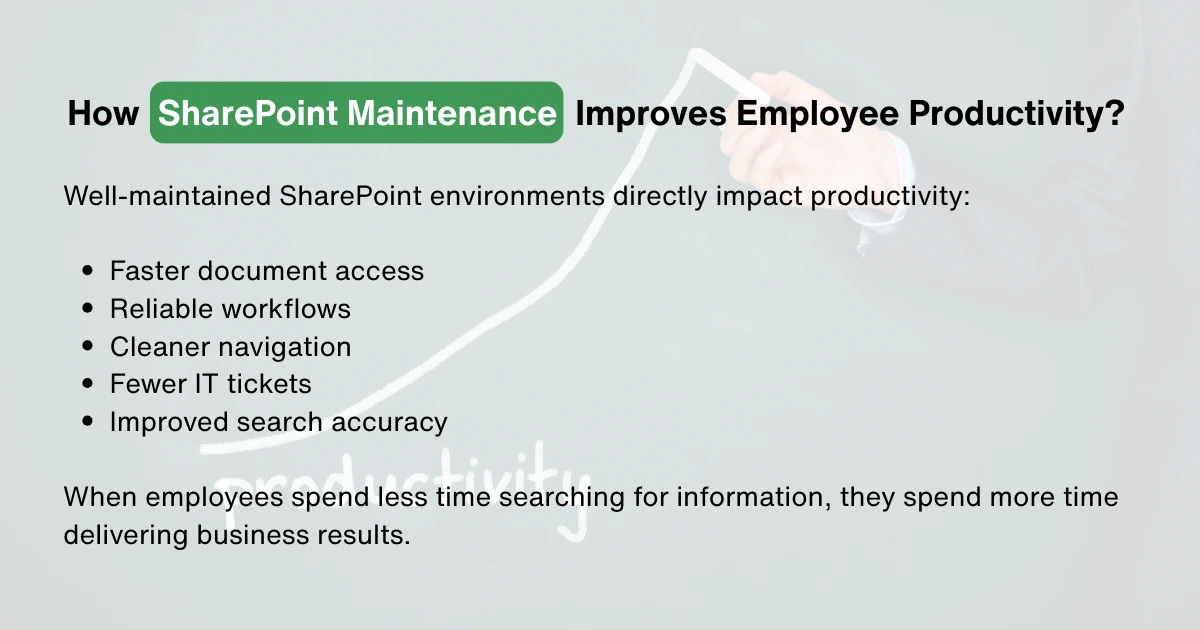
Regular maintenance improves system speed and reliability. Sites load faster, workflows run smoothly, and users spend less time searching for information. This directly supports SharePoint performance optimisation and improves productivity across teams.
Security also improves with consistent reviews. Routine checks strengthen access control and support ongoing SharePoint support and maintenance, helping organisations meet internal policies and external compliance requirements. This reduces risk and builds confidence in how information is managed.
From a cost perspective, proactive maintenance lowers long-term spend. Fewer emergencies mean reduced support tickets, less rework, and more predictable SharePoint maintenance costs in the UK. Teams can plan budgets more accurately instead of reacting to unexpected issues.
A well-maintained SharePoint environment also improves user experience. Clear structure, reliable search, and stable performance encourage adoption and trust. As organisations grow, monthly maintenance ensures SharePoint scales smoothly alongside new users, content, and business needs.
Most importantly, structured maintenance frees up time. Instead of constant firefighting, IT teams can focus on optimisation, innovation, and adding real business value.
Why SharePoint Monthly Maintenance Matters?
SharePoint monthly maintenance is not just an IT activity. It is a business enabler. As SharePoint becomes more central to digital workplaces, the need for proactive and consistent maintenance continues to grow. Organisations that invest in regular SharePoint support and maintenance benefit from more stable platforms, better user experience, and stronger security over time.
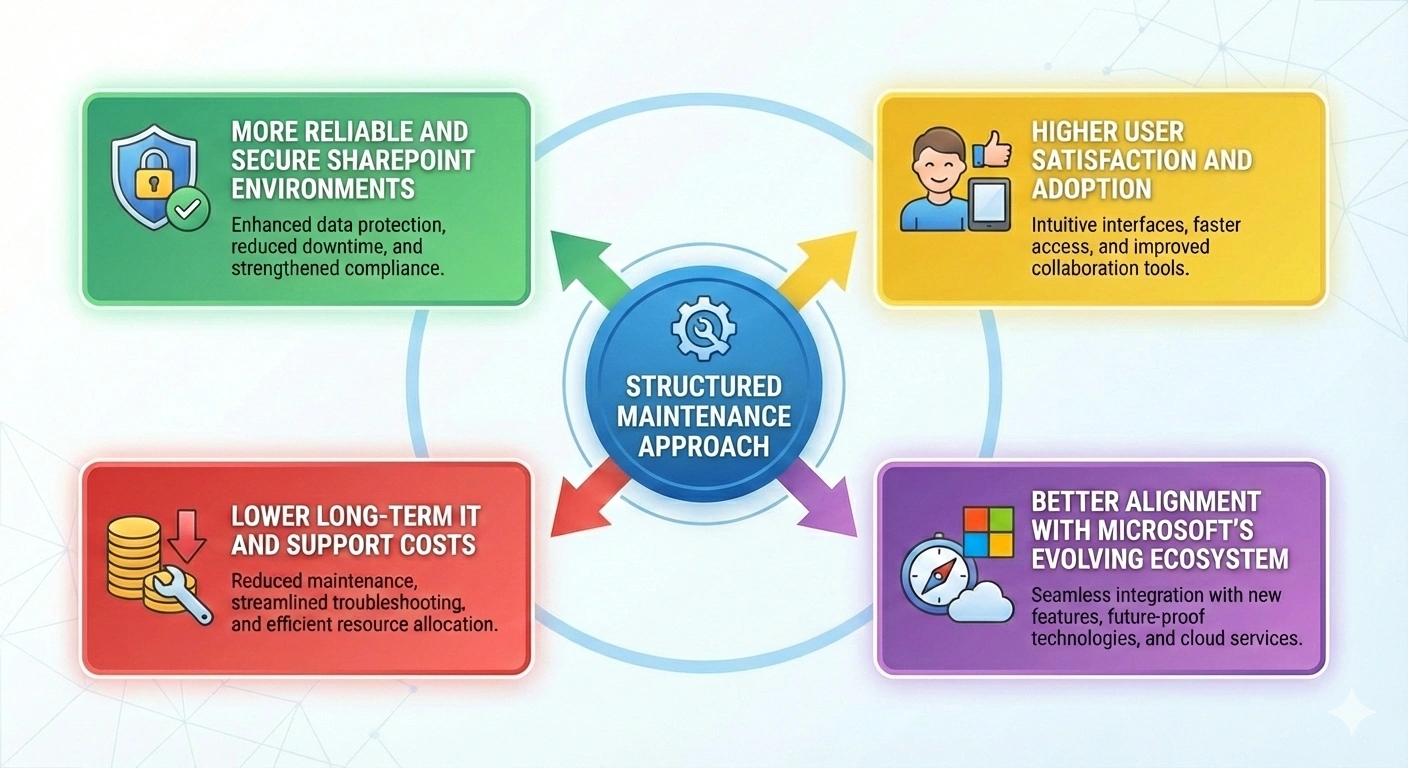
Businesses that follow a structured maintenance approach often see:
- More reliable and secure SharePoint environments
- Higher user satisfaction and adoption
- Lower long-term IT and support costs
- Better alignment with Microsoft’s evolving ecosystem
When SharePoint supports critical collaboration and workflows, reactive support is not enough. Proactive care helps teams stay productive and confident in the platform.
Getting Started with SharePoint Monthly Maintenance
If your SharePoint environment has not been reviewed recently, now is the right time to act. As usage grows, small gaps in performance, security, or content control can quickly turn into bigger issues. A structured SharePoint maintenance plan helps organisations move away from reactive fixes and towards proactive optimisation.
Monthly maintenance brings consistency. It ensures performance stays stable, permissions remain secure, and content continues to support daily work. For UK businesses using SharePoint as a core digital workplace, regular SharePoint Online maintenance is no longer optional.
If you are looking for expert guidance or a managed approach, IDS Logic provides structured SharePoint maintenance and support services. Our team helps organisations keep their SharePoint environments secure, performant, and aligned with business goals. From performance checks to governance and user support, we focus on long-term value, not short-term fixes.
If you want to assess the health of your SharePoint environment or explore a tailored maintenance approach, you can connect with our specialists to start the conversation.
In Conclusion – Choosing the Right SharePoint Maintenance Partner
An all-inclusive SharePoint maintenance plan should cover collaboration, document management, workflows, performance optimisation, and communication. While choosing the right partner may feel challenging, working with an experienced SharePoint specialist makes a clear difference.
At IDS Logic, we provide end-to-end SharePoint services that align technology with real business needs. Our experienced professionals support organisations with maintenance, optimisation, and long-term planning at competitive costs. Whether you need ongoing support or a structured monthly maintenance strategy, our focus remains on delivering reliable, result-driven SharePoint solutions.
If you have questions about SharePoint maintenance, support, or optimisation, feel free to connect with our team and explore the next steps.