Here is a detailed guide that explains all the important steps involved in website development. Keep on reading to know more.
As we move through 2025 and beyond, building a website isn’t as straightforward as picking a design and putting it online. Today’s users expect websites to be fast, secure, mobile-friendly, and fully accessible. Search engines also demand better structure, stronger content, and technical stability. As a result, many UK businesses find it difficult to start building a new website.
A clear website development process step by step helps you avoid stress and confusion. It also gives you a site that performs well and supports long-term growth. The full website development lifecycle covers planning, design, development, testing, and ongoing support. When this process is followed correctly, your website becomes a strong business asset, not just another online brochure.
Some of the recent industry reports show that 93% of users form an opinion about a company’s credibility based on its website. Another study shows that slow or poorly designed websites can lose up to 42% of potential customers. These numbers highlight why a structured approach matters now more than ever.
This blog breaks down the entire website development process in a simple, human way. Whether you are building a new website or improving an existing one, you will learn how each stage works and why it matters.
What is Website Development?
Website development is the process of turning an idea into a functional and engaging online presence. It covers everything from planning and design to coding, testing, and long-term support. Instead of focusing only on technical tasks, modern website development brings together strategy, user experience, content, and performance to create a site that helps a business grow.
A complete website development process step by step follows a structured framework known as the website development lifecycle.
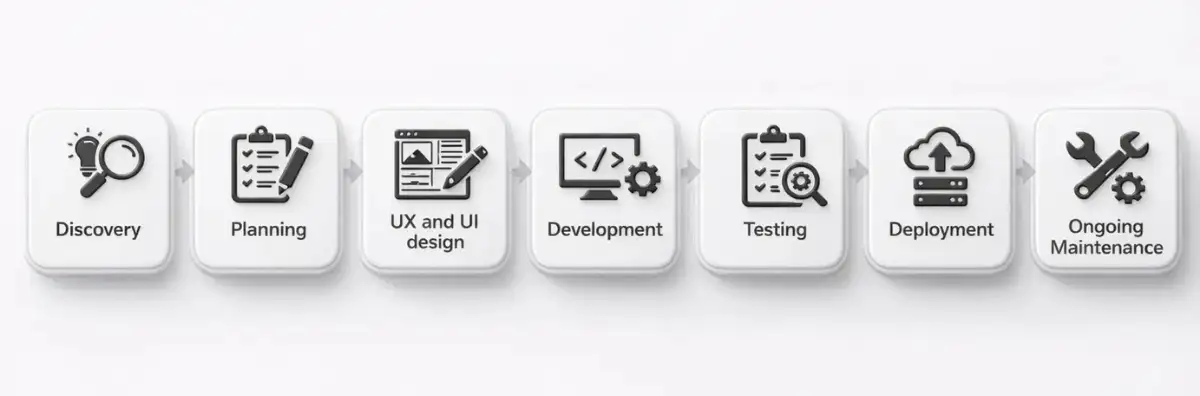
This lifecycle usually includes seven core stages:
- Discovery
- Planning
- UX and UI design
- Development
- Testing
- Deployment
- Ongoing maintenance
Each stage plays a vital role in building a site that is fast, secure, and easy for users to navigate.
Website design and development also work closely together throughout this journey. Design shapes how the website looks and how users move through it. Development brings those designs to life through features, integrations, and functionality. When both sides stay aligned, the website becomes more than a digital brochure, it becomes a tool that supports real business goals.
With users expecting speed, clarity, and mobile-first experiences, the website design and development process has never been more important. A well-executed lifecycle helps businesses improve visibility, engage audiences, and build trust in a highly competitive digital landscape.
Key Pointers to Consider Before Starting the Website Development Process
Before you begin the website development process step by step, it helps to get the foundations right. Many UK businesses rush into design or development without a clear plan. This often results in delays, rising costs, and a final product that fails to support business goals. A structured preparation phase prevents these issues and gives you control over the entire website design and development process.
Recent industry research shows that projects with proper planning are 70% more likely to launch on time. This is why experienced teams place great importance on discovery, budgeting, timelines, and content strategy before any coding begins.
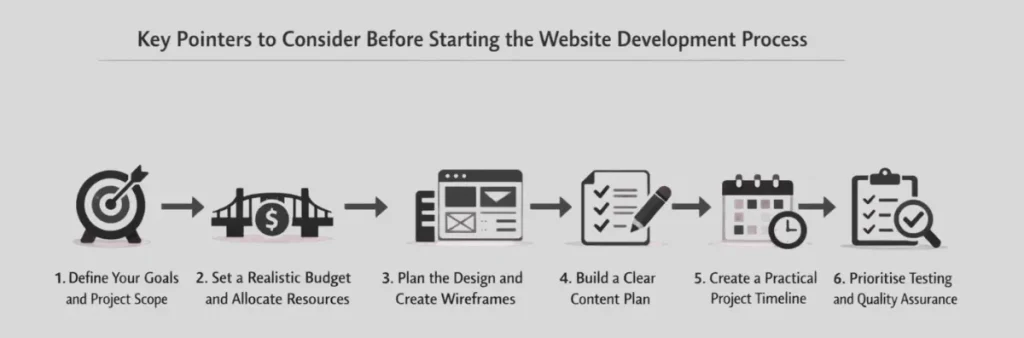
Below are the essential factors to consider when you start planning your new website.
1. Define Your Goals and Project Scope
Setting clear goals is the first step. You need to understand why the website exists and what results you expect. When your objectives, scope, and deadlines are clear, it becomes easier to break the project into smaller milestones.
This also helps both you and your development team stay on track. A well-defined scope reduces confusion, cuts rework, and ensures steady progress throughout the full website development lifecycle.
2. Set a Realistic Budget and Allocate Resources
A successful project needs a realistic budget. This includes the cost of design, development, content, integrations, hosting, and ongoing support. You also need to identify the right team – UX designers, developers, copywriters, and testers.
A reliable custom website development company UK will help you map out all required resources early on. This ensures that you invest wisely and avoid unexpected costs later.
3. Build a Solid Technical Foundation
Your technical setup influences everything – from speed to security. This includes your hosting environment, domain setup, SSL certificates, and server configuration. When this foundation is strong, deployment becomes smoother and your website stays stable.
Technical needs will vary from one project to another. So it’s important to choose infrastructure that fits your business model and long-term goals.
4. Plan the Design and Create Wireframes
Design begins long before colours and visuals. Wireframes help outline the layout, structure, and content placement. These simple mock-ups act as the blueprint for designers and developers.
At this stage, you define your visual direction, UX flow, and brand identity. Clean and simple design choices reduce friction and improve user satisfaction. Today, accessible and mobile-first design has become a must-have, not a luxury.
5. Build a Clear Content Plan
Many website projects fail because content is left to the last minute. A strong content strategy outlines your tone of voice, structure, messaging, and page purpose.
Your content must reflect your brand, support SEO, and guide users through the website. A clear plan makes the development process smoother and ensures every element aligns with your communication goals.
6. Create a Practical Project Timeline
A realistic timeline helps you maintain focus and track progress. Your project itinerary should include all key phases – design, development, content creation, testing, and revisions. Breaking the project into smaller, achievable milestones keeps everyone aligned. This also ensures that deadlines stay realistic and that no phase is rushed or overlooked.
7. Prioritise Testing and Quality Assurance
Testing is one of the most important steps in the website design and development process. It ensures that your site works well, loads fast, and feels consistent on all devices.
Testing usually covers:
- Functional and usability checks
- Mobile responsiveness
- Browser compatibility
- Accessibility compliance
- Security assessments
Users of today expect websites to load within 2.5 seconds, so testing performance is crucial. When you make testing a priority, you end up with a stable website that supports both user needs and business goals.
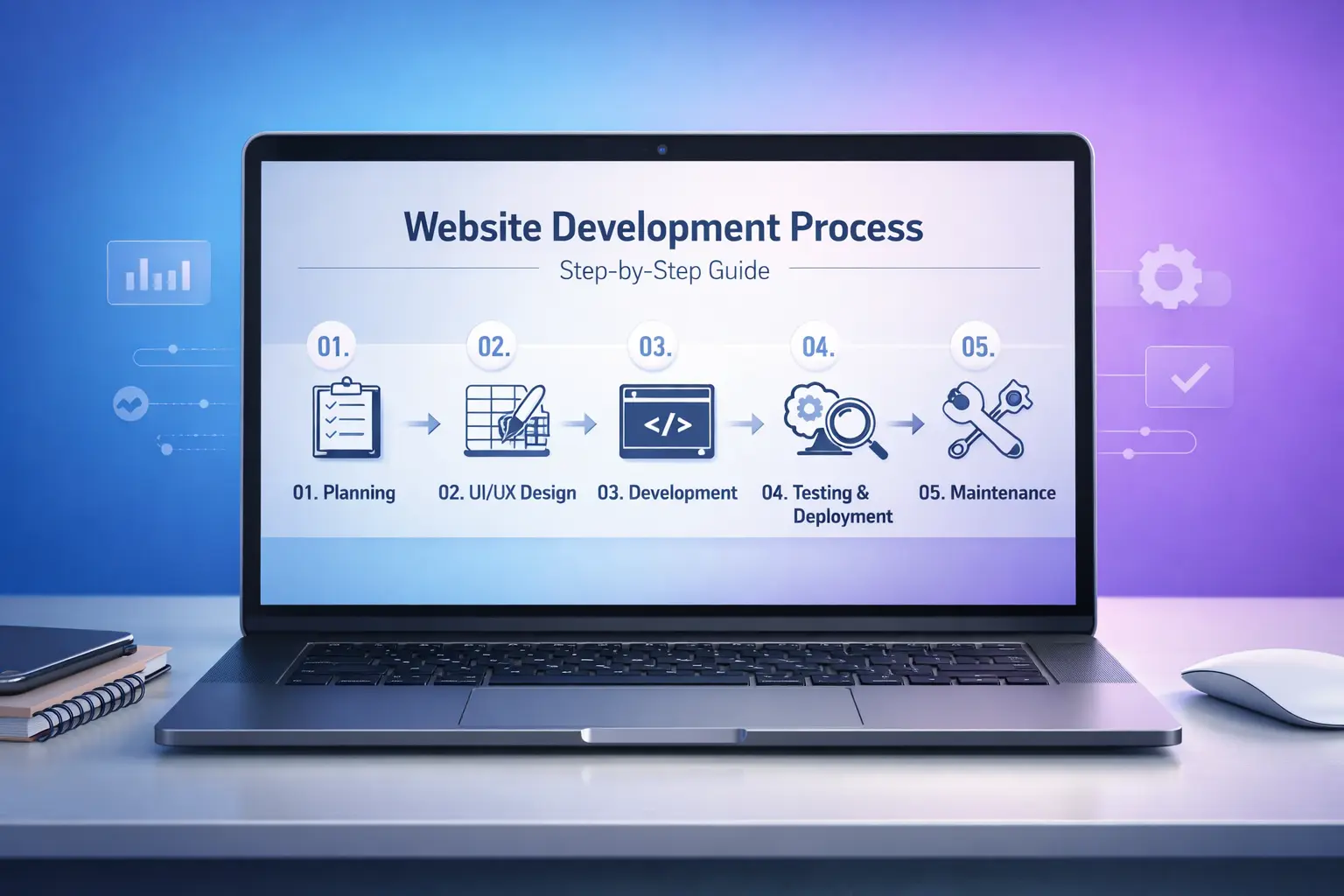
Steps Involved in the Website Development Process
Understanding the full website development lifecycle is important before you build a website. It is common for UK businesses to get stuck because of a lack of a clear process. They can skip research, rush design, or neglect testing. These mistakes often lead to poor performance, security risks, and higher long-term costs.
A structured website development process step by step gives your project direction. It also helps your team stay aligned, reduces delays, and ensures a smooth launch. Recent UK digital project reports show that projects with a defined process are 55% more likely to meet their deadlines and 40% more likely to stay within budget. That is why professional website development services UK teams always follow a predictable sequence of steps.
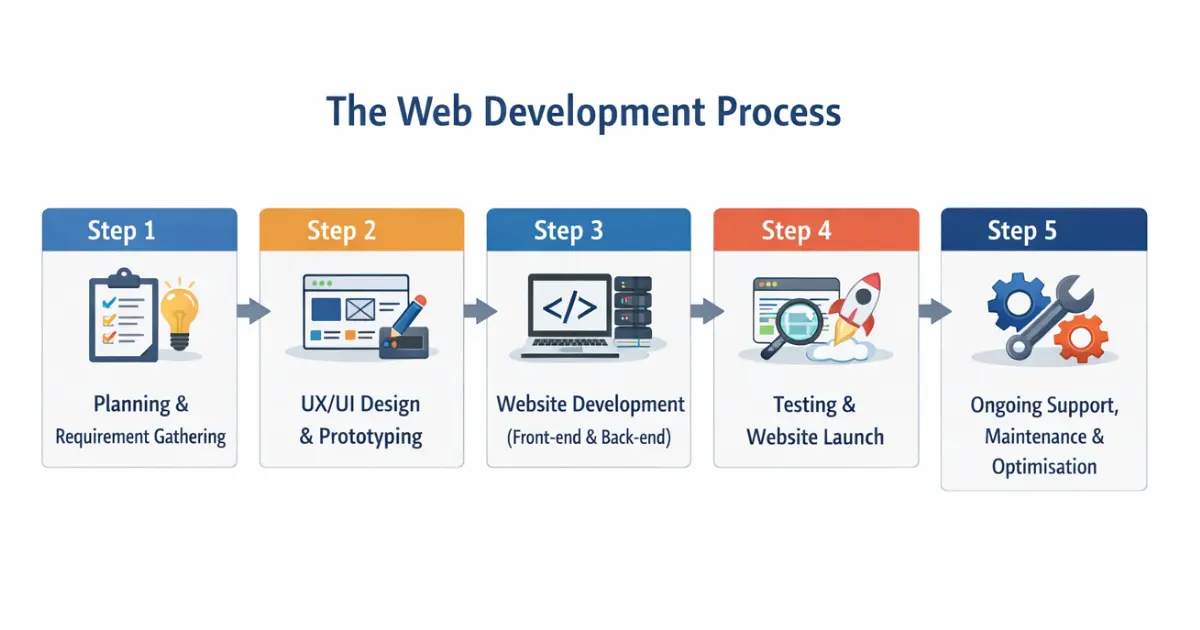
Below is a simple breakdown of how modern website development works from start to finish.
Step 1: Planning and Requirement Gathering
This first phase sets the tone for the entire project. It involves research, discussions, and a deep understanding of what your website should achieve. Stakeholders come together to define the project goals, user expectations, features, and timelines.
During this stage, your team also maps out user personas, identifies key challenges, and clarifies what the website must deliver. This reduces confusion later and ensures that every design and development decision supports the end goal.
Planning also includes risk analysis. By identifying issues early – like integration dependencies, performance concerns, or content gaps, you prevent costly surprises. This step ends with a clear project roadmap that outlines key milestones, required technologies, and the overall timeline.
Step 2: UX/UI Design and Prototyping
Once the goals are clear, the next step focuses on user experience and visual design. Designers create wireframes and prototypes that show how the website will look and how users will move through it.
This stage covers layout structure, navigation flow, colour palette and typography, brand representation, and mobile-first UX.
Nowadays, 83% of users expect websites to load fast, look clean, and feel intuitive. Because of this, accessibility, simplicity, and responsive design are prioritised. Designers also follow WCAG 2.2 guidelines to ensure the site works well for all users.
By the end of this phase, you have a full design kit that the development team uses to bring the website to life.
Step 3: Website Development (Front-end and Back-end)
This is where your website turns from a design into a working product. Developers build all layout components, features, and integrations.
The work usually includes two parts:
Front-end Development
Front-end developers build what users see and interact with. They convert wireframes into functional pages. They also ensure the site works across browsers, loads fast, and feels easy to use.
Back-end Development
Back-end developers build the logic behind the website. This includes:
- Databases
- APIs
- Content management
- Security functions
UK businesses now expect secure, scalable sites. Studies show that security flaws can increase bounce rates by 32%, so developers focus on strong, stable code. During this step, developers follow the plan created earlier and work closely with designers to maintain accuracy.
Step 4: Testing and Website Launch
Before going live, the entire website goes through a full round of testing. This includes:
- Functional testing
- Mobile testing
- Speed testing
- Browser compatibility
- Security checks
- Accessibility checks
Testing ensures your website works across all devices and meets performance expectations. A poor experience is one of the top reasons for users to leave a website, with 46% of visitors expecting a page to load in under 2.5 seconds.
After testing, the website moves into deployment. This includes configuring the hosting environment, setting up the domain, managing redirects, and checking every page again after launch. A pre-launch checklist helps ensure nothing is missed.
Step 5: Ongoing Support, Maintenance, and Optimisation
The website development process does not end at launch. Websites are living systems. They need continuous updates to stay fast, secure, and aligned with business needs.
Ongoing maintenance includes:
- Regular updates
- Security patches
- Content improvements
- Performance audits
- Tracking analytics and user behaviour
Businesses that update their sites monthly see up to 28% higher engagement and better SEO performance. Continuous support also helps you adapt to changes in user expectations and search engine algorithms. This long-term stage ensures your website stays reliable, relevant, and ready to scale with your growing business.
Also Read: Importance of Website Maintenance After Development
Choose the Right Website Design & Development Company in the UK
When it comes to website design and development, choosing the right partner is crucial. The success of your project depends not only on the work you do internally but also on the skills of the team you hire.
A reliable agency will help you plan your goals, refine your ideas, and guide you through every stage of the full website development lifecycle. When comparing companies, take time to review their portfolio, industry experience, and the types of projects they have delivered for UK businesses. A strong track record often reflects their ability to solve complex problems and deliver consistent results.
Communication is another essential factor. You need a partner who listens, explains things clearly, and keeps you informed throughout the project. Transparent pricing, honest timelines, and post-launch support are equally important. Many UK businesses prefer working with a custom website development company because it gives them more flexibility, better performance, and long-term scalability.
Before finalising a partner, check client reviews, case studies, and independent ratings. A quick review of their past clients can help you understand the quality of their work and their approach to problem-solving. A good agency won’t just build a website, they will help shape a long-term digital strategy that supports your business goals.
Controlling Development Costs as Your Website Scales
As your website moves from development to deployment, managing infrastructure, hosting, and cloud resources becomes just as important as design and functionality. For many UK businesses, scaling websites with modern technologies, APIs, and integrations often leads to increasing cloud costs across platforms like AWS and Azure. Without clear visibility and cost optimisation strategies, these expenses can quickly grow beyond expectations. Adopting a Cloud FinOps approach helps organisations balance performance, scalability, and cost efficiency while maintaining control over their infrastructure.
Download the whitepaper to learn how UK businesses are optimising AWS and Azure costs while building scalable, high-performance websites.

Conclusion
Building a successful website requires clear planning, thoughtful design, and ongoing improvement. When you follow a structured website development process step by step, you reduce risk and create a site that feels modern, works smoothly, and supports real business growth. Each stage – from planning to launch, plays a vital role in shaping the final result.
The right development partner can make this journey easier. They bring experience, clarity, and reliable technical support. This ensures that your website stays fast, secure, and aligned with customer expectations.
If you want a website that looks professional, loads quickly, and helps your business grow, IDS Logic can help. We provide professional website development services in the UK, including planning, design, development, optimisation, and long-term support. Our team builds websites that are fast, secure, and tailored to your goals.
Ready to build a website that delivers results?
Get in touch with IDS Logic today and let our experts guide you through the website development entire process.