Copied product descriptions and content can cost you visibility and customers. This guide explains how plagiarism impacts eCommerce SEO and how to build a clean, original content strategy.
Starting an eCommerce business today feels exciting, but it also comes with real pressure. The online market in the UK is crowded, fast-moving, and shaped by tough customer expectations. Most shoppers compare options, read reviews, and check your product details before they buy anything. This means your online store must look and feel trustworthy from the very first click.
One of the easiest ways to build that trust is through clear and original content. Every product page, FAQ, category description, and blog post tells people something about your brand. But if any of that text looks copied, your credibility drops at once. And once a customer loses confidence, it is very hard to win them back.
Plagiarism often happens when new businesses rush to publish content. Some founders reuse text from suppliers, competitors, or marketplace listings because they want to save time. It feels harmless, but it creates serious problems. Google can now detect duplicated content within seconds, and its latest updates reward fresh writing more than ever. This makes plagiarism risks for startups far greater in 2026.
There is also a legal side to consider. Copying work from another site without permission is a copyright issue, and the owner can demand removal or even take action. For a small business, that can mean avoidable costs and unwanted disruption.
So before you focus on ads, design, or new features, stop and check something simple: Is your content original? This single step can shape your growth, visibility, and long-term brand value.
In this guide, we will look at why plagiarism harms eCommerce startups, how it affects your search performance, and why unique content for online stores is now a major part of eCommerce SEO best practices. Understanding these risks early can save your brand from bigger setbacks later, and give you a stronger base for your long-term eCommerce content strategy.
What Plagiarism Means for Your eCommerce Startup?
Your content becomes your brand’s face when you run an eCommerce store. Every product detail, blog post, and marketing message shapes how your brand is perceived. A good eCommerce content strategy starts with original and strong content. However, many online stores still do not pay attention to this and use text pulled from other websites. That’s when plagiarism takes place.
Plagiarism in eCommerce happens when content, images, or ideas from another source get copied and used as if they were your own. It sounds simple, but the impact can be much deeper. In a digital market where thousands of brands share similar products, even small pieces of duplicated text can hurt your trust score. And in 2026, customers are far more careful about what they read and who they buy from.
While trying to launch new products, some companies don’t copy content on purpose. While rushing to launch new products, they may reuse supplier descriptions or lift text from another brand. Search engines treat this as duplicate content, and penalties may apply. In addition to affecting your visibility and ranking, plagiarism remains one of the most important rules in eCommerce SEO today. This affects your visibility and ranking, both of which are crucial for early growth.
There is also a legal angle. Copying words or images without permission can break copyright laws. The owner has the right to raise a claim or send a legal notice. For a new startup, this can drain money, time, and reputation. And in the market, where customer loyalty is built slowly, losing trust early can become a major setback.
So, why does all of this matter? Because plagiarism hides your voice. When your content is not unique, customers cannot understand what makes your store special. They may compare your pages with others and notice the same words everywhere. This weakens your brand and stops you from creating a strong first impression.
To grow your eCommerce business, your content needs to feel real, honest, and written for your audience. Original writing helps you stand out. It improves your ranking. It builds trust. And it gives your organisation a clear identity in a crowded space.
Now, in the next section, we will explore how plagiarism harms your brand and why unique content for online stores is now more important than ever.
The Real Impact of Plagiarism on Your eCommerce Startup’s Growth
Plagiarism may look like a small shortcut, but it carries heavy consequences for any new eCommerce startup. When your content is not original, it affects your visibility, reputation, and even your long-term growth. Most founders focus on getting products live as fast as possible. But if your website contains copied text or images, you end up losing the trust you are trying to build.
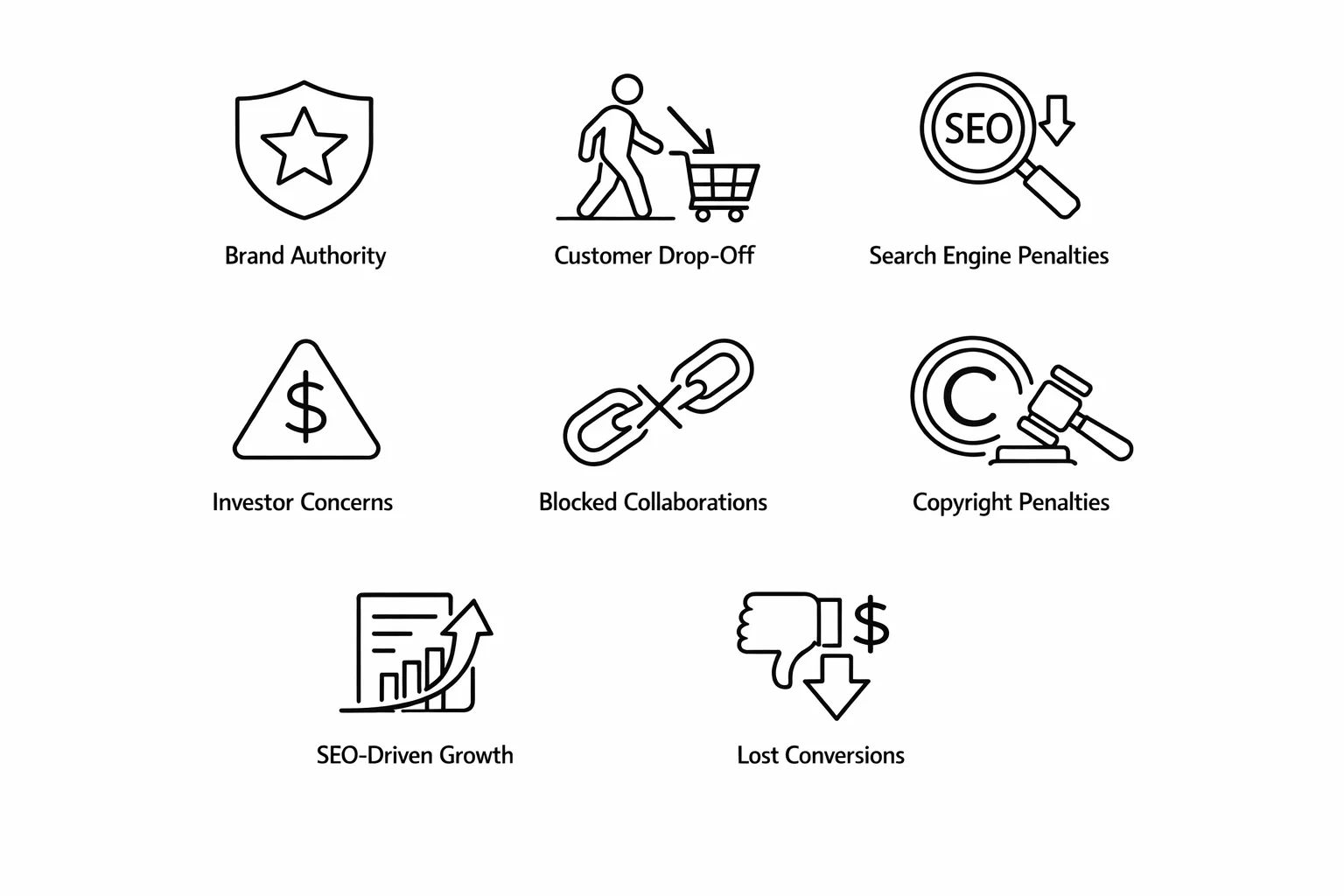
Here are the biggest ways plagiarism affects your online store and why avoiding it must be part of your eCommerce SEO best practices.
1. Plagiarism Damages Your Brand Identity and First Impression
Your audience arrives on your website expecting fresh and helpful information. When they read content that feels repeated or generic, it creates doubt. Today’s shoppers check multiple sites before buying anything. If they see the same product description in many places, your store will look less reliable.
Original writing helps you stand out. It builds confidence and gives your organisation a clear voice. But duplicated text weakens your identity and signals that your business lacks effort. When this happens, customers leave quickly and do not return. This can slow your growth in a market where trust matters more than ever.
2. Duplicate Content Pushes Your Customers Away
People visit an online store to find answers or compare products. When your content is the same as content found on another website, it creates irritation. Shoppers feel that your brand is not offering anything new. This behaviour leads to a higher bounce rate, which is a strong negative signal for your Search Engine Optimization.
Customers expect honest and clear information. When they sense that your content is copied, they assume your products may not be genuine either. This is why avoiding plagiarism in e-commerce remains a crucial rule for new brands. Losing customer trust early can affect your sales for months.
3. Search Engines Penalise Duplicate Content and Lower Your Ranking
Google’s 2024-2025 updates place strong focus on originality. The algorithm now detects copied text, duplicate images, and repeated patterns within seconds. When your site carries plagiarised content, Google reduces its visibility. Your pages may rank lower, or in serious cases, get de-indexed.
This is where many startups struggle. Without organic traffic, paid ads become expensive, and growth becomes slow. Even if you have great products, your audience may never find you. This is why unique content for online stores plays a big role in your eCommerce content strategy.
A drop in ranking affects:
- Product discovery
- Organic traffic
- Conversion rates
- Long-term brand visibility
Once your ranking drops, recovery takes a lot of time and effort.
4. Plagiarism Makes Investors and Partners Lose Confidence
Building an eCommerce startup often requires external funding. Investors want to see a strong, original, and reliable brand. If they spot duplicated content during their review, they question your credibility. It signals a lack of seriousness and raises concerns about future risks.
Investors look for:
- Authentic branding
- Clear market positioning
- Ethical business behaviour
- Original content and ideas
When plagiarism appears, all these factors collapse. This can stop funding, delay expansion, or push investors away completely.
5. Duplicate Content Can Block Collaborations and Marketing Opportunities
Brands now rely on influencer marketing, affiliate programmes, and cross-promotions. But these partners only work with businesses that show originality. If your website carries copied content, they avoid association to protect their own reputation.
Plagiarism signals:
- Poor brand ethics
- Weak content quality
- Low creative value
This limits your chance to collaborate with bloggers, content creators, and other brands who can boost your visibility.
6. Legal Trouble and Copyright Issues Can Cost You Heavily
Using someone else’s content without approval can lead to copyright claims. This includes text, photos, graphics, and even product descriptions. Many eCommerce stores unknowingly use supplier descriptions that are already used by hundreds of sellers. This still creates copyright risk.
A copyright complaint can result in legal notices, content removal demands, monetary penalties, damage to your reputation. And for a new business, this disruption can be costly and time-consuming.
7. Plagiarism Blocks the SEO Benefits That Boost Growth
Original writing offers many advantages:
- Higher ranking potential
- Better keyword coverage
- More backlinks
- Stronger user engagement
When you use duplicated content, all these benefits disappear. Your content cannot rank, attract links, or educate buyers. This leads to low traffic and slow sales, even if your products are strong.
8. High Bounce Rate and Poor User Experience
When users feel that your content is repetitive or unhelpful, they leave fast. This increases your bounce rate, which tells Google that your site is not useful. This pattern lowers your ranking even more. Poor content also affects session time, which is another important SEO metric. If your pages cannot keep people engaged, your growth stalls.
Practical Ways to Avoid Plagiarism in Your eCommerce Content
Once you understand how harmful plagiarism can be, the next step is learning how to avoid it. Many eCommerce founders manage large volumes of product data, and it becomes easy to repeat or reuse content without realising it. But with the right habits and tools, you can create content that stays original and supports your eCommerce SEO best practices.
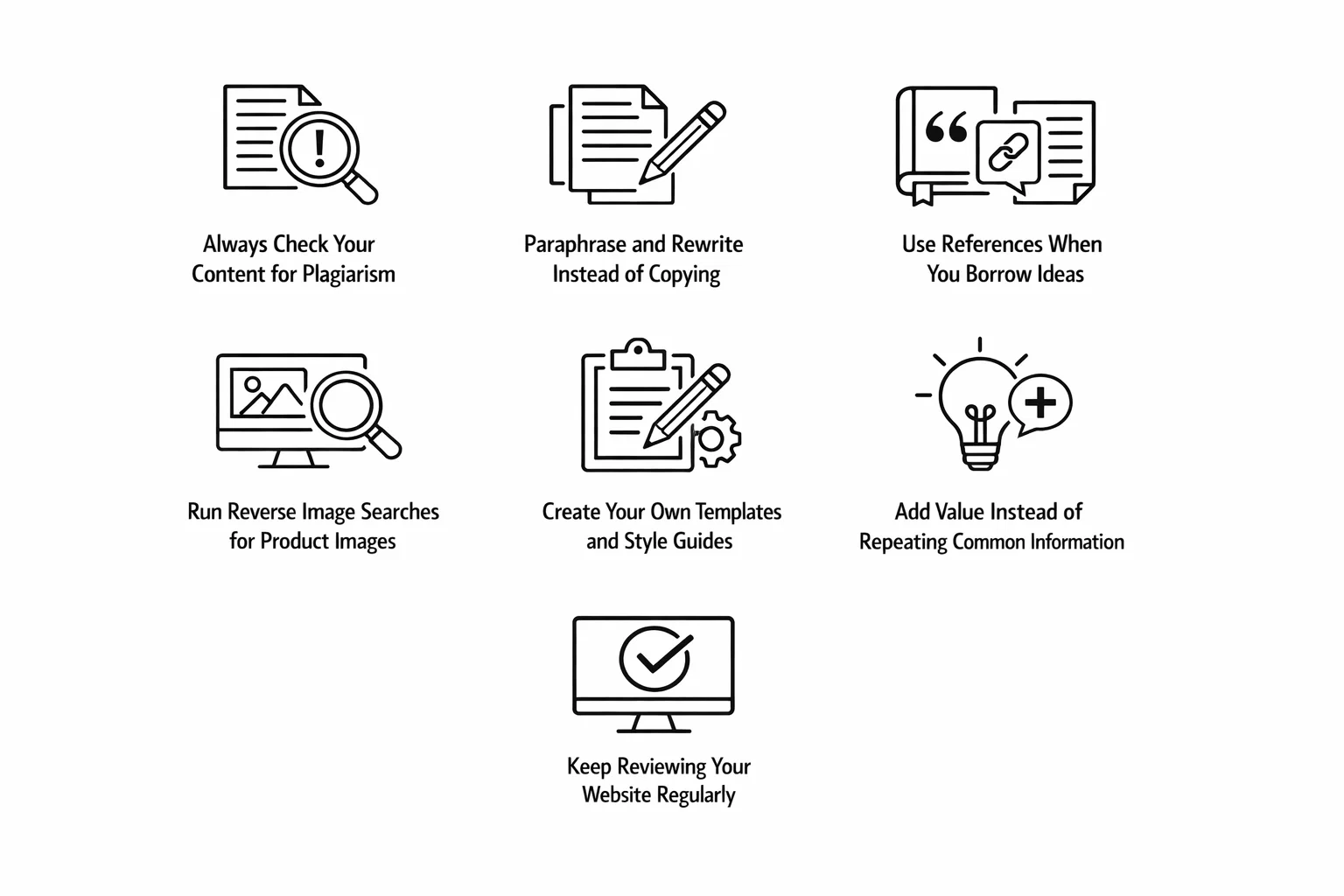
Here are some simple and reliable methods to keep your website clean and free from duplicate content.
1. Always Check Your Content for Plagiarism
Before you publish anything, whether it is a product description, blog post, FAQ, or landing page, run a quick plagiarism check. This one step can save your brand from penalties and trust issues later. Online plagiarism checkers scan your text against millions of web pages and highlight any matching lines.
Most tools now use AI to detect even slightly altered phrases, which makes them helpful for startups that post content frequently. A clean report gives you confidence that your content is safe to publish.
In 2026, Google has become even stricter about copied material. So, checking your content before uploading is not only good hygiene, it is part of your eCommerce content strategy.
2. Paraphrase and Rewrite Instead of Copying
Every product in your store may have details similar to those sold by competitors. So, it is tempting to copy descriptions from manufacturer websites or marketplaces. But doing this increases your risk of duplicate content penalties.
Instead, rewrite the information in your own words. Keep the same meaning, but change the structure, tone, and flow. This makes your content unique and easy to read. You can also add your own insights such as usage tips, features, or benefits that matter to shoppers.
If you find paraphrasing difficult, practise with small sentences first. You can also use paraphrasing tools as a support, but always review their output to keep your tone consistent and human.
3. Use References When You Borrow Ideas
Sometimes you need to cite data, industry trends, or facts from trusted sources. In such cases, referencing helps you stay transparent. Adding a link or short credit shows that you respect the original creator. It also helps you build authority.
You do not need to cite basic information or common knowledge. But if you copy a specific line, quote, or idea, always give credit. This protects your brand from copyright issues and keeps your content ethical.
4. Run Reverse Image Searches for Product Images
Plagiarism is not only about text. Images and graphics can also trigger copyright claims. Many eCommerce businesses unknowingly reuse photos that appear on other websites. A simple reverse image search helps you check where an image exists online.
If the picture belongs to another brand or photographer, avoid using it without permission. Instead, use original photos, stock images with proper licences, or supplier-approved visuals.
Google Lens and similar tools make this process easy. Building your own image library gives your store a strong and distinct visual identity.
5. Create Your Own Templates and Style Guides
As your business grows, your team may produce content in large volumes. Creating your own writing templates helps maintain consistency without repeating material found on other websites. A style guide also keeps your tone, format, and structure clear.
When your content looks and sounds like your brand, it becomes easier to stand out. This supports your long-term unique content for online stores strategy and ensures that you present information in a clean and reader-friendly way.
6. Add Value Instead of Repeating Common Information
Many product details online feel identical because brands copy each other. To avoid this trap, add value to your content. Think about what shoppers want to know, such as usage ideas, safety tips, material quality, or care instructions.
Search engines reward content that solves real user problems. So, when you go beyond basic descriptions, your site gains visibility and trust.
7. Keep Reviewing Your Website Regularly
Large eCommerce websites update pages often. During updates, old lines or repeated blocks may slip in. A regular content audit helps you catch these issues early. Review your text, URLs, metadata, and images every few months. It keeps your website fresh, original, and aligned with SEO goals.
Final Thoughts
Running an eCommerce startup demands consistency, trust, and a clear voice. Plagiarism takes away all three. It harms your brand image, slows down your SEO growth, and creates confusion for customers who expect fresh and honest information. In a market where buyers compare every detail, copied content reduces your value and makes your store blend in with hundreds of similar platforms.
Original content, on the other hand, builds a strong base for long-term success. It improves your visibility, reduces duplicate content penalties, and strengthens your eCommerce content strategy. Brands that deliver unique and helpful information gain higher ranking and better conversion rates. Clean product descriptions, genuine blogs, and clear messaging also help customers feel confident about choosing your platform.
You do not need to write like a professional author. You only need to stay truthful, simple, and helpful. Check your content before publishing. Paraphrase where needed. Credit your sources. Use tools to scan for plagiarism. These small habits protect your business from the many plagiarism risks for startups and help you grow with stability. At the end of the day, your voice is your brand. Keep it original, keep it honest, and let it support your growth.
If you want a complete and plagiarism-free eCommerce website with the right strategy, the IDS Logic team can guide you with content, SEO, UX, and development – all aligned with eCommerce SEO best practices for the market.
Read more: A Comprehensive Guide on Creating Fascinating CTAs for Ecommerce Store