Shopify E-commerce comes packed with a range of Shopify benefits. The list of advantages makes it easy for business merchants to operate their business over the platform and ensure user-friendly services.
The Shopify eCommerce platform offers a wide range of benefits that make running an online store simpler and more efficient. From easy setup to smooth store management, Shopify helps businesses focus less on technical tasks and more on selling and growth.
Today, Shopify powers millions of online stores globally, including thousands of businesses across the UK. Over the years, Shopify has evolved into one of the most trusted eCommerce platforms worldwide. Among its key strengths are flexibility, ease of use, and a variety of features to support businesses ranging from startups to established brands.
As online shopping continues to evolve, Shopify is also moving forward. By 2026, the platform is expected to play an even bigger role in digital commerce through smarter automation, mobile-first design, and performance-driven tools. These updates make the benefits of Shopify for businesses even more relevant in a competitive market where speed, experience, and reliability matter.
Despite its popularity, many business owners still ask an important question. What are the real Shopify advantages for online stores, and how do they support long-term growth? With so many features built into the platform, understanding its true value helps businesses make informed decisions.
In this blog, we explore the most important Shopify benefits, explain how they support modern eCommerce needs, and highlight why Shopify remains a strong choice for building and scaling online stores in 2026 and beyond.
Top Shopify Benefits for Modern Online Businesses
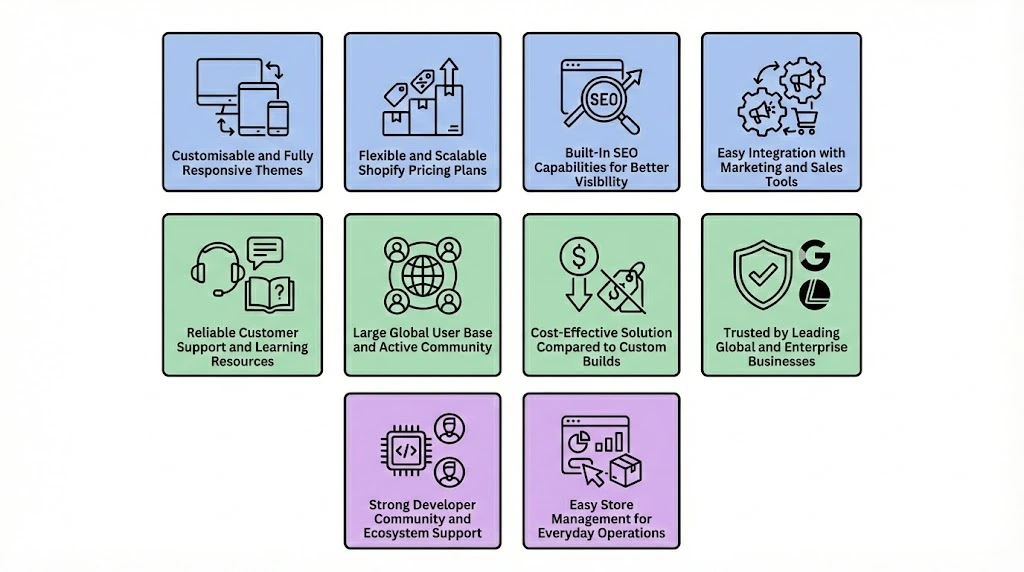
The Shopify eCommerce platform offers a wide range of advantages that help businesses launch, manage, and scale online stores with confidence. Below are the most important Shopify benefits everyone should know, especially for businesses planning long-term growth.
1. Customisable and Fully Responsive Themes
Your online store is often the first impression customers have of your brand. Shopify makes it easy to create a storefront that looks professional, modern, and consistent across all devices. The platform offers thousands of pre-designed themes that suit different industries, from fashion and electronics to food and services.
These themes are fully responsive, which means your store works smoothly on mobiles, tablets, and desktops. This matters more than ever, as most online purchases now happen on mobile devices. Even businesses without design or technical experience can launch a visually strong store. For brands that need more flexibility, Shopify development services allow further customisation to match branding and customer expectations.
2. Flexible and Scalable Shopify Pricing Plans
One of the biggest benefits of Shopify for businesses is its flexible pricing structure. Shopify offers multiple plans, including Basic, Shopify, Advanced, and enterprise-level options. Each plan is designed to support businesses at different growth stages.
You can start small and upgrade as your store grows. There is no need to rebuild your website or change platforms later. This flexibility helps businesses control costs while still gaining access to advanced features when required. It also makes Shopify a practical choice for startups, growing brands, and established online retailers.
3. Built-In SEO Capabilities for Better Visibility
Search visibility plays a key role in online success. Shopify includes built-in SEO features that help stores rank better in search engines without complex setup. Store owners can easily edit page titles, meta descriptions, URLs, and image alt text.
The platform also supports clean code, fast page loading, and mobile-friendly design, which are all important ranking factors. Product pages, collections, and blogs can be optimised without advanced technical skills. These Shopify features and benefits help businesses attract organic traffic and compete more effectively online.
4. Easy Integration with Marketing and Sales Tools
Shopify integrates smoothly with thousands of marketing, sales, and operational tools. The Shopify App Store offers access to apps for email marketing, social media selling, loyalty programmes, inventory management, shipping, analytics, and more.
These integrations allow businesses to manage marketing campaigns, improve checkout experiences, and track conversions from a single dashboard. Whether you sell through social platforms, marketplaces, or your own website, Shopify helps centralise operations and reduce manual work.
5. Reliable Customer Support and Learning Resources
Shopify provides round-the-clock customer support through live chat, email, and phone. This support is especially valuable for new store owners or growing teams who may need quick answers.
In addition to direct support, Shopify offers detailed guides, tutorials, and community resources that cover store setup, payments, shipping, and optimisation. These resources reduce dependency on constant external help and allow businesses to resolve many issues independently.
6. Large Global User Base and Active Community
Shopify’s large and active user base is another key advantage. Millions of stores use the platform worldwide, which creates a strong ecosystem of shared knowledge and best practices.
When businesses face challenges, answers are often easy to find through community forums, blogs, and expert discussions. This level of community support is difficult to match on smaller or niche platforms and adds long-term value for store owners.
7. Cost-Effective Solution Compared to Custom Builds
Shopify offers a cost-effective alternative to building and maintaining a custom eCommerce website. While pricing varies by plan, businesses avoid high upfront development costs and ongoing infrastructure expenses.
Hosting, security, performance updates, and system maintenance are all managed by Shopify. Transaction fees remain competitive, especially when using built-in payment options. As sales grow, costs scale in line with revenue, which helps businesses plan budgets more effectively.
8. Trusted by Leading Global and Enterprise Businesses
Shopify’s eCommerce platform has earned strong trust from fast-growing startups to large global enterprises. Shopify’s consistent focus on security, performance, and scalability has earned this trust. Businesses need platforms that are able to handle spikes in traffic, large product catalogues, and complex operations without slowing down as online commerce continues to grow.
Shopify’s steady growth over the years reflects this reliability. Its ability to scale smoothly, support high order volumes, and maintain uptime during peak sales periods makes it a preferred choice for brands operating at national and international levels. These strengths highlight one of the key Shopify advantages for online stores, especially for businesses planning long-term growth.
9. Strong Developer Community and Ecosystem Support
One of the major Shopify benefits is its active and well-established developer community. This ecosystem supports businesses at every stage, whether they are just starting out or looking to add advanced features. Developers, agencies, and solution partners continuously build apps, tools, and integrations that extend Shopify’s core capabilities.
Shopify’s well-documented APIs make it easier to develop custom features that match specific business needs. These solutions can be refined and scaled as requirements change. The availability of experienced developers and ready-made apps gives businesses flexibility without locking them into rigid systems. This support network plays a key role in the long-term success of Shopify stores.
10. Easy Store Management for Everyday Operations
Shopify is widely recognised for its ease of use and simple store management. The platform is designed so that business owners can manage their online stores without technical expertise. From a single admin dashboard, users can add products, update designs, manage inventory, process orders, and track performance.
The interface is clean, intuitive, and suitable for both beginners and experienced teams. Thousands of free and paid themes allow businesses to update their store appearance without rebuilding from scratch. This ease of management is one of the most practical benefits of Shopify for businesses, especially for teams that want to focus on sales, marketing, and customer experience rather than technical tasks.
Key Shopify Trends That Will Redefine eCommerce in 2026
The Shopify eCommerce platform continues to evolve as customer behaviour, technology, and competition change. In 2026, success in online retail depends on speed, trust, personalisation, and scalability. Shopify is responding with platform-wide improvements that directly shape how modern stores operate.
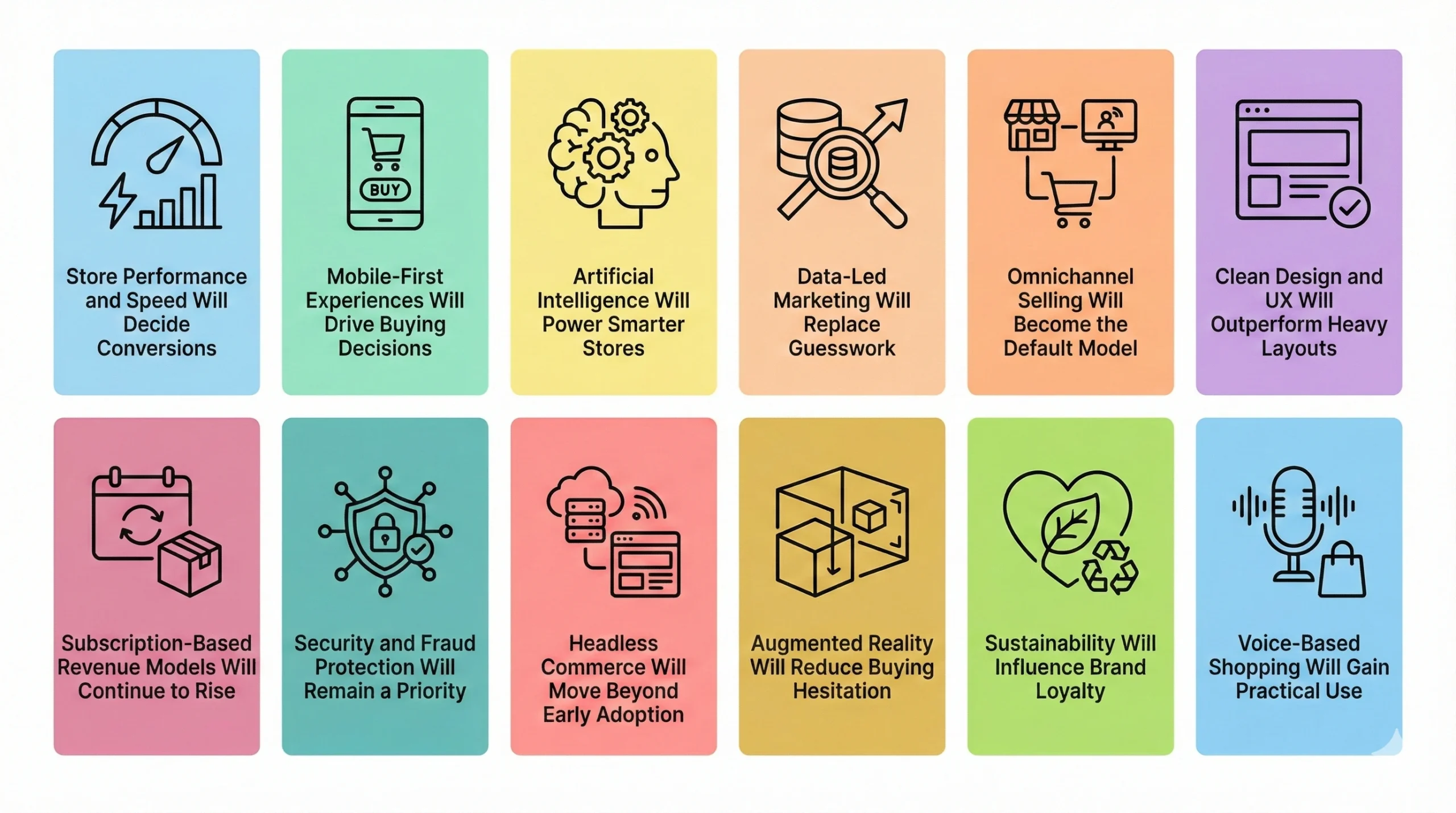
Below are the most important Shopify trends businesses should prepare for:
1. Store Performance and Speed Will Decide Conversions
Speed is no longer a technical metric. It is a business outcome. Customers now expect pages to load instantly, especially on mobile devices. Shopify stores that optimise images, themes, and checkout flows see lower bounce rates and better search visibility. With Google prioritising performance signals, fast stores also rank higher. Performance optimisation is now a core Shopify benefit, not an optional task.
2. Mobile-First Experiences Will Drive Buying Decisions
Mobile shopping dominates online sales. In 2026, Shopify store design starts with mobile screens, not desktops. Clean layouts, fast-loading pages, sticky buy buttons, and simplified checkout flows are now standard expectations. Stores that ignore mobile-first design lose customers within seconds.
3. Artificial Intelligence Will Power Smarter Stores
AI is becoming central to how Shopify stores operate. Merchants now use AI to personalise product suggestions, automate email campaigns, and support customers in real time. AI also helps businesses predict demand, manage inventory, and reduce waste. These tools allow even small teams to operate with enterprise-level efficiency.
4. Data-Led Marketing Will Replace Guesswork
Rising advertising costs mean intuition is no longer enough. Shopify analytics help brands understand customer behaviour across every stage of the journey. Businesses that use real data to test pages, refine campaigns, and personalise offers consistently outperform those relying on assumptions. Data-driven decisions are now essential for growth.
5. Omnichannel Selling Will Become the Default Model
Customers move freely between websites, social platforms, marketplaces, and physical stores. Shopify supports this behaviour by centralising sales, inventory, and customer data. Selling across Instagram, TikTok, online marketplaces, and in-store systems from one dashboard improves consistency and reduces errors. Omnichannel is no longer advanced – it is expected.
6. Clean Design and UX Will Outperform Heavy Layouts
Modern shoppers value clarity over decoration. Simple layouts, strong calls to action, and smooth navigation now convert better than complex designs. Shopify themes increasingly focus on usability, accessibility, and speed. Good design now supports decision-making instead of distracting from it.
7. Subscription-Based Revenue Models Will Continue to Rise
Predictable income matters more than ever. Shopify supports subscription selling through flexible tools that let customers manage deliveries and payments easily. Subscriptions work well for consumables, memberships, and repeat-purchase products. They also strengthen long-term customer relationships.
8. Security and Fraud Protection Will Remain a Priority
Trust plays a major role in online buying. Shopify continues to strengthen fraud detection, payment security, and data protection. Features such as encrypted transactions, automated risk analysis, and account protection help reduce chargebacks and protect customer data. Secure stores convert better and retain trust longer.
9. Headless Commerce Will Move Beyond Early Adoption
More brands are separating frontend design from backend systems to gain flexibility. Shopify now supports this approach more smoothly, allowing faster, custom storefronts. Headless builds help brands create unique user experiences while keeping operations stable. This approach supports long-term scalability and multi-channel expansion.
10. Augmented Reality Will Reduce Buying Hesitation
Customers want confidence before they purchase. Shopify’s AR features allow shoppers to preview products in real-life settings. This improves engagement and reduces returns, especially in fashion, home décor, and electronics. AR is becoming a practical tool, not a novelty.
11. Sustainability Will Influence Brand Loyalty
Shoppers increasingly care about how products are made and delivered. Shopify supports sustainability through tools that highlight responsible practices. Brands that communicate ethical sourcing, low-impact packaging, and transparency often see stronger loyalty and repeat purchases.
12. Voice-Based Shopping Will Gain Practical Use
Voice search and voice-assisted actions are becoming more common. Shopify stores are adapting by improving voice-friendly navigation and search. Customers can browse products, check orders, and complete simple actions hands-free. Convenience is shaping future buying habits.
Final Thoughts – Why Shopify Remains a Smart Choice in 2026
As online stores grow, manage, and scale in 2026, Shopify will continue to lead this change by helping businesses do more with fewer resources. Automation, artificial intelligence-driven personalisation, headless builds, sustainability, and omnichannel selling are no longer optional, they are now the norm.
Retailers that adopt these changes early gain a clear edge. Faster stores convert better. Personalised experiences improve loyalty. Unified selling across channels reduces friction. Together, these capabilities make online shopping more relevant, engaging, and performance-driven.
Whether you are scaling an existing store or launching a new direct-to-consumer brand, aligning your strategy with these Shopify trends ensures your business stays resilient, competitive, and future-ready.
How IDS Logic Helps You Unlock the Full Benefits of Shopify?
While Shopify offers powerful features out of the box, long-term success often requires tailored implementation. That is where IDS Logic’s Shopify development services add real value.
IDS Logic works closely with businesses to design, build, and optimise Shopify stores that align with growth goals and customer expectations. From quick store setup to complex migrations, the team supports every stage of your Shopify journey.
Our Shopify Development Services Include:
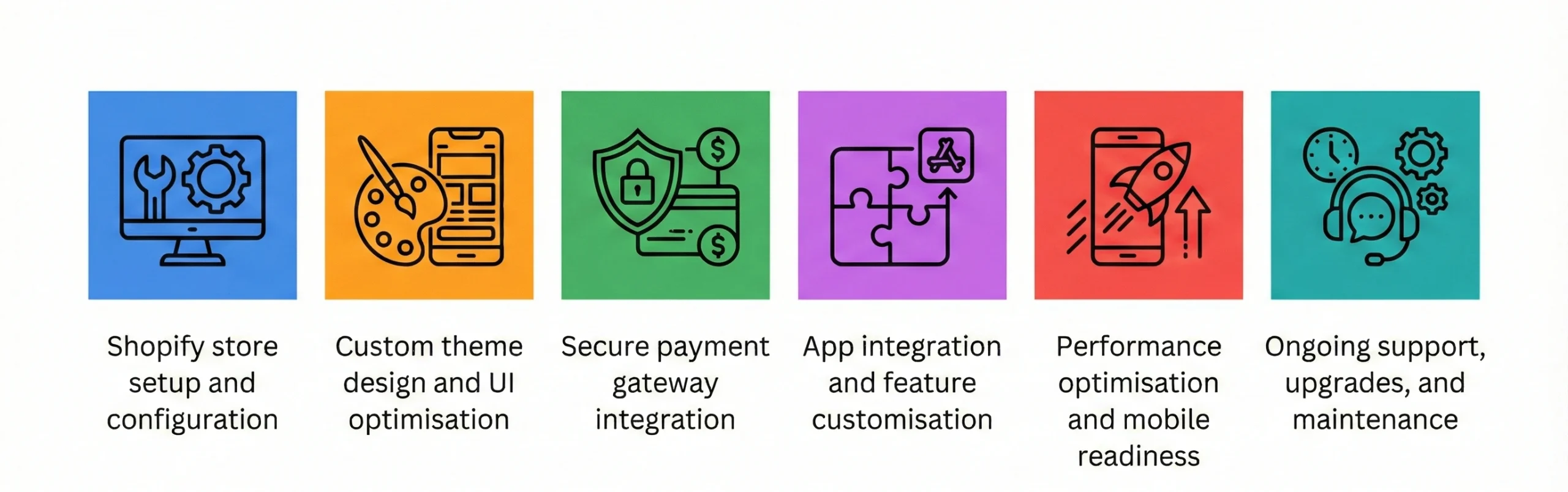
- Shopify store setup and configuration
- Custom theme design and UI optimisation
- Secure payment gateway integration
- App integration and feature customisation
- Performance optimisation and mobile readiness
- Ongoing support, upgrades, and maintenance
With deep experience across industries, IDS Logic helps businesses create scalable, secure, and conversion-focused Shopify stores that stand out in competitive markets.
If you are planning to build, upgrade, or scale your Shopify store in 2026, IDS Logic can help you move faster and smarter.