Get answers to all your questions about eCommerce website development cost in this detailed guide.
Cost of eCommerce Website Development in the UK
If your first thought is “Let’s build an eCommerce store”, the very next one is usually “How much will it cost?” It’s a fair question, but the answer is not always simple. The cost of an eCommerce website in the UK depends on many factors, from the size of your store and the platform you choose to the design complexity and the features you need.
Today, online shopping is no longer a side channel, it is the main driver of retail growth. Research shows that there are now over 27 million eCommerce websites worldwide, and in the UK alone, over 80% of shoppers buy online regularly. With such competition, having a well-built eCommerce website is no longer optional, it’s essential.
In 2025, the biggest changes influencing e-commerce website design cost UK include higher expectations for mobile speed, integration with AI-driven tools like chatbots or personalisation engines, and stronger compliance requirements for GDPR and payment security. These aren’t optional extras anymore, they’ve become part of the standard build for most UK businesses.
Design is another big cost driver. A simple template design may only cost a few thousand, while a unique, high-end design for a large-scale store can reach £100,000 or more. And let’s not forget the UK-specific costs, like 20% VAT compliance, GDPR, HIPAA, and COPPA requirements, and local payment gateway integrations, all of which add to the overall price.
So, if you are planning to create an online store, this blog will guide you through the factors affecting web development costs in the UK. From basic functionality for small businesses to advanced features for enterprise-level solutions, we’ll explore what really drives pricing and how you can budget wisely. By understanding these costs early, you’ll be able to balance functionality with budget and set realistic expectations for your project.
A reliable eCommerce web design agency won’t just give you an estimate. They’ll ask the right questions to understand your needs and provide a clear, accurate quote. That way, you’ll know exactly what you’re investing in, and how it will support your growth.
How Much Does It Cost to Develop an eCommerce Website in the UK?
When planning an online store, one of the first things you’ll want to know is the ecommerce website development cost. The truth is, there isn’t a single price tag, because the cost of an e-commerce website in the UK varies widely depending on your needs.
A clear budget helps you decide which platform (Shopify, Magento, WooCommerce, or a custom build) is right for you, and what features you can afford. Without one, you risk overspending on extras you don’t need, or underinvesting in areas that matter, such as design, speed, and security.
So, let’s get straight to the numbers. When it comes to ecommerce website development cost, UK businesses should expect to spend between £1,500 for a simple store and £25,000 or more for a complex, bespoke solution. The final figure varies depending on your platform (Shopify, Magento, WooCommerce, or custom build), design requirements, integrations, and ongoing support. For instance, Shopify’s basic plan starts from £25 per month, while Magento development or other custom solutions can run into thousands.
Why is the range so big? It comes down to:
Catalogue size – A store with 50 products is far cheaper to build than one with thousands.
Level of customisation – Using free Shopify themes and basic plugins is affordable, while custom Magento development can run into tens of thousands.
Features – From subscriptions to advanced shipping rules, extra functions increase the e-commerce website design cost in the UK.
Compliance & security – GDPR, PCI DSS, and VAT requirements in the UK also add to ongoing expenses.
For perspective: Shopify’s basic plan starts at £25 per month, which is enough for a startup store. But larger UK businesses often spend £10,000-£50,000 to create an advanced eCommerce platform with tailored design, robust integrations, and scalability.
The key is knowing where to spend and where to save. Cutting corners on user experience or security often costs more later, while investing in a solid foundation sets you up for long-term growth.
In the sections below, we’ll break down each major cost area, so you know what to expect and how to budget wisely.
Factors That Influence the Cost of eCommerce Website Development
The cost of an eCommerce website in the UK is never a one-size-fits-all number. Every project is different, and the price depends on several moving parts. The platform you choose, the design you want, and the features you need will all play a big role in shaping the final figure.
A small online shop using a ready-made template will cost far less than a fully customised eCommerce store built to handle thousands of products. Add-ons such as advanced payment systems, strong security layers, and SEO support will also increase your spend.
It’s important to think about your business goals before setting a budget. Do you need something simple to get started, or a scalable solution that supports long-term growth? Understanding these factors helps you avoid overspending and ensures you invest in areas that matter most.
-
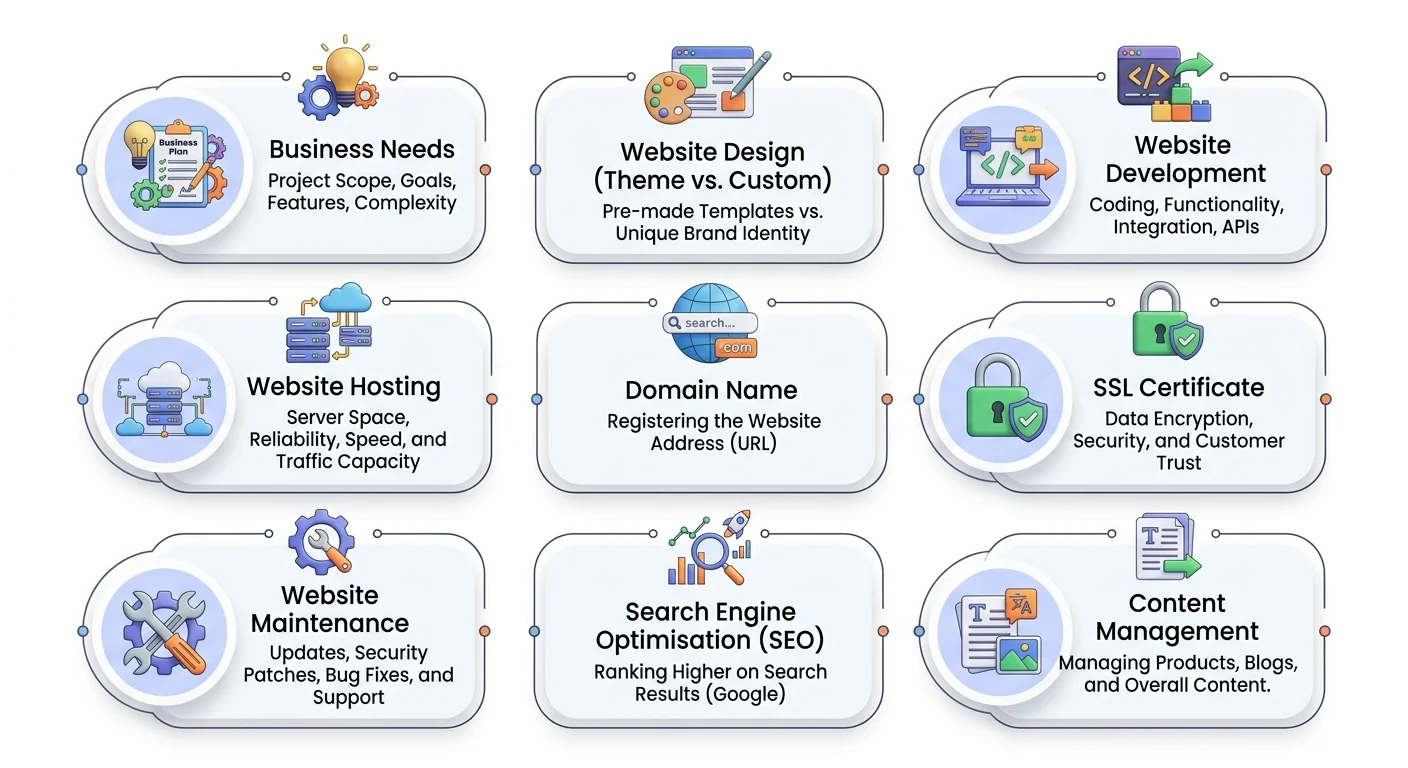
Business Needs
Every online store is different, and so are its costs. The first step is to be clear about your goals. Do you want a small online shop to start with, or a large store with advanced features? Write down the must-have functions in a spreadsheet or even outline your minimum viable product (MVP).
This planning makes the first discussion with a web design company smooth. It also ensures you get a more accurate eCommerce website cost UK estimate and avoid surprises later.
-
Website Design (Theme vs. Custom)
Most platforms, including Magento eCommerce, come with pre-made themes. These are quick to use and budget-friendly, especially for startups.
However, if your aim is long-term growth, a custom UI design is worth the investment. While it costs more than an off-the-shelf theme, it helps you:
- Stand out from competitors
- Strengthen brand identity
- Build deeper trust with customers
Your website design is the first impression, so think of it as an investment rather than an expense.
-
Website Development
After design, development is the most resource-heavy step. A simple store using standard packages can be built faster and cheaper.
But if you need custom features like advanced filtering, multi-vendor setups, or tailored checkout flows, the process will take more time and budget. A professional Magento development agency UK ensures your site is smooth, scalable, and consistent with your brand.
-
Website Hosting
Hosting is the backbone of your store. It’s what keeps your site fast, secure, and always accessible. Costs vary depending on:
- Type of server (shared vs. dedicated)
- Bandwidth and storage needs
- Traffic volume
A reliable provider also gives you support when things go wrong. Skimping on hosting often leads to slow sites and poor customer trust.
-
Domain Name
Your domain is your store’s online address. Prices in the UK typically range from £8 to £15 per year, though premium names can cost more.
While domains are a small cost, they have a huge impact on:
- SEO rankings
- Brand recognition
- Customer trust
Choose a short, memorable, and relevant domain name to boost visibility.
-
SSL Certificate
No eCommerce store can run without security. An SSL certificate protects customer data during transactions and builds trust.
Costs range from £50 for a basic certificate to several thousand for enterprise-grade protection. Compare providers carefully, but never cut corners on security.
-
Website Maintenance
Launching your store is just the start. You’ll need ongoing maintenance for:
- Software updates
- Security patches
- Customer support tools
- Domain and hosting renewals
In the UK, eCommerce website maintenance costs vary from a few hundred to several thousand pounds per month, depending on the complexity of your site. Regular upkeep keeps your store secure and performing well.
-
Search Engine Optimisation (SEO)
Without SEO, your store risks being invisible. A proper Search Engine Optimisation strategy ensures customers can find you in search results.
Costs may include:
- One-time setup (keyword research, site audit)
- Monthly content creation
- Ongoing link building and reporting
Hiring SEO experts with eCommerce experience can make a big difference in driving traffic and sales.
-
Content Management
Managing product data, pricing, orders, and customer communication is an ongoing job. Larger stores with thousands of products need more resources, tools, and manpower.
In the UK, content management costs can range from a few thousand pounds a year to well over £100,000, depending on store size. Make sure to include this in your budget planning.
Key Things to Keep in Mind When Building an eCommerce Website in the UK
Starting an online store in the UK involves more than just design and coding. You need to think about laws, payments, shipping, and customer trust. Below are the main points you must plan for before investing in eCommerce website development in the UK.
Following UK Laws and Regulations
Running an online shop means playing by the rules. In the UK, you must follow:
- GDPR and Data Protection Act (2018) – rules about collecting and handling customer data safely.
- E-Commerce Regulations – you must display clear prices, contact details, and order terms before checkout.
- Consumer Protection and Consumer Rights Acts – you’re required to describe products honestly, deliver on time, and offer refunds for faulty items.
- Privacy and Electronic Communications Regulations – no sending marketing emails or tracking cookies without customer consent.
Following these rules builds customer trust and keeps you safe from costly fines.
VAT and Tax Rules
If you’re selling online in the UK, you need to charge 20% VAT on most products. Make sure your prices include this and keep your VAT records in order. Mistakes here can eat into profits and create compliance issues.
Payment Options for UK Shoppers
The right payment gateway makes buying easy and secure. Popular options in the UK include PayPal and Stripe. They usually charge 1-3% per transaction and sometimes a small monthly fee. Offering trusted payment methods can reduce cart abandonment and boost sales.
Delivery and Order Fulfilment
Shipping is a big part of customer experience. You’ll need to plan for:
- Storage costs (about 15-30% of your stock value)
- Packing costs (around 10-40% of each product’s price)
- Delivery charges – for example, sending a 1kg parcel within the UK starts from £4.25 + VAT
Choose reliable couriers and offer clear delivery timelines. Good logistics can make or break your online reputation.
Website Look and Ease of Use
Your eCommerce design must be clean, simple, and mobile-friendly. Focus on:
- Clear menus so products are easy to find
- High-quality images and honest descriptions
- A quick, simple checkout with minimal steps
Design costs vary but usually range between £15-£77 per hour in the UK. Remember: design isn’t just about looks, it directly impacts conversions.
SEO for UK Buyers
If your store doesn’t show up in search results, customers won’t find you. SEO for UK eCommerce websites helps your store rank higher. Costs vary:
Basic SEO – £200 to £2,000 per month
Full SEO Campaign – £1,000 to £10,000+ per month
One-off SEO audit – £500 to £7,500+
SEO is not a one-time job, it needs ongoing effort with keywords, content, and backlinks to bring steady traffic.
Security and Customer Trust
Security is non-negotiable in eCommerce. The cost of securing your site is low compared to the damage a breach can cause. Basic measures like SSL certificates, encrypted payments, and regular backups cost between £18-£210. Shoppers trust stores that take security seriously.
Should You Build It Yourself or Hire a Developer?
If you have coding skills, time, and patience, you can use free platforms like Wix or Squarespace to build a simple online shop.
But if you want a scalable and professional eCommerce website, it’s better to hire an expert. A good eCommerce development company in the UK can build a store that’s reliable, SEO-friendly, and designed to convert visitors into buyers. Costs typically range from £10,000–£50,000, depending on features and complexity.
Free vs Paid eCommerce Platforms
Free platforms (like Wix, Squarespace) are good for testing ideas or very small stores, but they limit features.
Paid platforms (like Shopify, WooCommerce, Magento) give you more flexibility, better integrations, and stronger security. They cost more upfront but save you headaches later.
Best eCommerce Platforms in 2026
- Shopify – Simple, no coding required, great for small to mid-sized shops.
- WooCommerce – Highly flexible, good for selling physical, digital, and subscription products.
- Magento – Built for large businesses with complex needs, scalable and secure.
- BigCommerce – Great for big retailers who need lots of built-in features.
In Conclusion
Understanding the cost of eCommerce website development in the UK is crucial for every business planning to compete online. These costs are shaped by several factors, including the choice of platform, the complexity of the design, integrations, and ongoing support.
For small and medium-sized businesses, a simple store with essential features may be enough to get started. Larger enterprises, however, often require bespoke eCommerce solutions with advanced functionalities, which naturally drive up costs.
But remember, investing in a professional eCommerce website is not just about the upfront expense, it’s a strategic decision. A well-designed site improves customer experience, builds trust, boosts sales, and strengthens your brand reputation. In fact, studies show that 75% of customers judge a business’s credibility based on its website design, proving that quality pays for itself in the long run.
The cheapest option may look attractive at first, but it rarely delivers sustainable growth. The smarter approach is to strike the right balance between eCommerce website cost and functionality. By doing so, you’ll create a future-proof platform that supports business growth, attracts more customers, and helps you stay competitive in the UK market.
Why Partner with IDS Logic for eCommerce Website Development?
At IDS Logic, we specialise in building custom eCommerce websites that are tailored to your goals, scalable for future growth, and designed with the UK market in mind. Whether you need a simple Shopify store, a flexible WooCommerce site, or a feature-rich Magento solution, our team can guide you through every stage from planning and design to launch and ongoing support.
By choosing us, you’ll benefit from:
- Transparent eCommerce website pricing that fits your budget.
- User-friendly designs that boost engagement and conversions.
- Compliance with UK regulations, VAT, and GDPR.
- Scalable solutions that grow alongside your business.
If you’re ready to build or upgrade your online store, get in touch with IDS Logic today. Let’s create an eCommerce website that doesn’t just look great but also delivers measurable results.