Not sure how to add a related products block in Magento 2? Discover all the steps and details right here.
Adding a Related Products Block in Magento 2: Step-by-Step Guide
Showing relevant products to your customers is one of the smartest ways to increase sales and improve the shopping experience. Magento 2 Related Products feature makes this easy, allowing you to suggest items that complement what a shopper is viewing. When used strategically, it can guide customers towards additional purchases and boost your store’s average order value.
Using the Magento 2 related products block isn’t just a minor add-on, it’s a powerful cross-selling tool. By setting up rules for automatic display, you can ensure the right products appear at the right time, keeping customers engaged. In fact, according to McKinsey, effective cross-selling can increase sales by up to 20% and profit by nearly 30%. This makes it an essential tactic for any Magento 2 store.
This guide will show you how to add and manage Magento 2 related products blocks across product pages, categories, CMS pages, and shopping carts. You’ll also learn how to automate the process for large catalogues and explore the different product types Magento 2 offers. By the end, you’ll be able to create a dynamic, engaging store that encourages customers to explore more and buy more.
Before diving into the setup, it’s important to understand what related products are and how they differ from up-sells and cross-sells. Knowing this distinction will help you make the most of Magento 2’s built-in tools and improve your overall sales strategy.
Magento 2 Product Types Explained: Related, Up-Sell and Cross-Sell
In Magento 2, product recommendations play a key role in influencing buying decisions. The platform offers three main types of product suggestions, Related Products, Up-Sells, and Cross-Sells. Each serves a different purpose but together they help you increase conversions, enhance user experience, and grow your average order value.
When these features are positioned smartly within your store layout, they act as subtle sales boosters. Let’s look at each type more closely and understand how you can use them effectively in 2025.
1. Related Products – Encourage Complementary Purchases
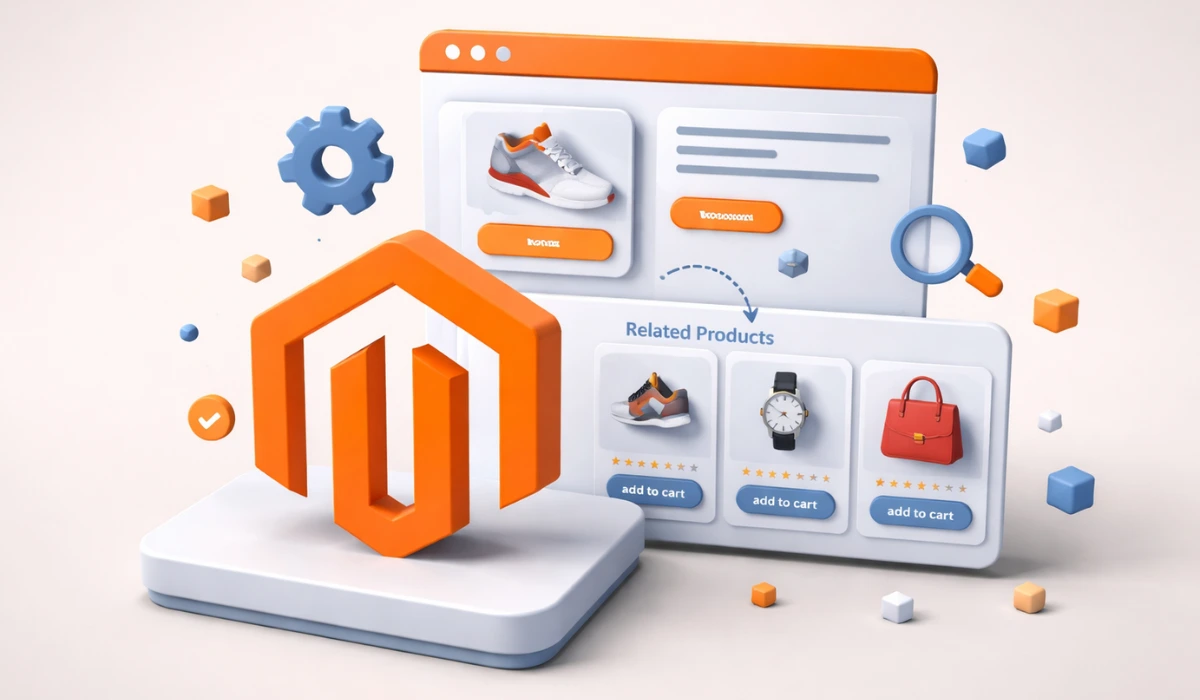
Magento 2 related products allow you to showcase items that go well with the one a shopper is viewing. These could be products from the same category, style, or function, for example, pairing a phone case with a smartphone or a cushion cover with a sofa.
They appear on the product page, usually at the bottom or in the sidebar, depending on your theme layout. For instance, in a two-column layout, the Magento 2 related products block often displays on the right-hand side. This placement helps customers discover complementary items without interrupting their browsing experience.
By making these suggestions relevant, you make shopping easier and increase the chance of multiple-item purchases. Magento also allows store owners to automate this feature based on buying patterns, creating automatic related products for Magento 2 without manual effort.
2. Up-Sell Products – Promote Better Alternatives
Up-sell products in Magento 2 give customers a chance to upgrade. These are usually higher-end versions or premium alternatives of what they’re currently viewing, for example, a laptop with more storage or a higher-quality fabric for clothing.
They typically appear under the section “You may also be interested in” on the product page. By displaying them there, Magento taps into a simple sales psychology: customers often prefer to choose the “better” version when it’s presented clearly.
In 2025, many eCommerce stores will use Magento 2 automatic related products extensions to personalise up-sell recommendations dynamically. This not only saves time but ensures your offers are based on real customer behaviour rather than assumptions.
3. Cross-Sell Products – Inspire Impulse Buys
Cross-sell products are all about timing. These suggestions appear near the checkout or shopping cart page to encourage impulse buying. Common examples include offering batteries when buying electronics, or socks when purchasing shoes.
The idea is to remind customers of smaller add-ons that complete their purchase. Magento allows you to easily manage this setting through Store > Configuration > Sales > Checkout > Shopping Cart. Here, you can choose to show or hide cross-sells depending on your marketing strategy or seasonal promotions.
Using Magento 2 display cross-sell on product pages is also a growing trend. It keeps the buying flow consistent and helps increase micro-conversions without making the checkout process longer.
How to Add and Manage Related Product Blocks in Magento 2 (Updated for 2025)?
Adding related product blocks in Magento 2 is one of the easiest ways to increase average order value and enhance customer experience. These product suggestions appear on product pages, showing visitors more items they might like. You can either add them manually through Magento’s native settings or automate the process using an extension.
Let’s look at both methods in detail.
Method 1: Add Related Products Manually (Default Magento 2 Settings)
You can set up related products directly from your Magento admin panel. Here’s how to do it:
1. Open Your Product Catalogue
Go to Catalog > Inventory > Products.
Pick the product you want to edit and click Edit.
2. Locate the Related Products Section
In the product settings, find Related Products, Up-Sells, and Cross-Sells.
Expand the section to manage your product relations.
3. Add Related Products
Click Add Related Products.
Use filters to find the items you want to link and tick the boxes next to them.
Once done, select Add Selected Products and save your changes.
4. Control the Display
Magento automatically adjusts the number of products shown based on the user’s screen size. On desktop, customers might see several related products at once; on mobile, they’ll scroll through them.
In the default Luma theme, these blocks appear at the bottom of the product page.
For custom themes, you can modify the placement using layout files.
Tip: You can also reorder or remove items anytime by dragging them or clicking Remove next to a product.
Method 2: Automate Related Products with an Extension
If you manage a large catalogue, adding related items manually can take forever. The smarter approach is to use an Automatic Related Products extension.
These extensions use defined rules to automatically display related products on product, category, or even checkout pages, based on product type, attributes, or customer behaviour.
Here’s how to configure it:
1. Install and Enable the Extension
After setup, navigate to Stores > Settings > Configuration > Extensions > Automatic Related Products and enable the feature.
2. Create a New Display Rule
Go to Marketing > Automatic Related Products > Manage Rules, then click Add Rule.
Give your rule a name, activate it, select your store view, and define customer groups and priority.
3. Set the Conditions
Choose which products should appear in the related block. You can set rules such as “show products from the same category” or “display items with similar attributes”.
You can even preview matching products before saving.
4. Decide Where to Display the Block
Extensions now offer flexible placement options, above or below content, in sidebars, or replacing the default related products area.
You can even embed snippets on CMS pages, shopping carts, or success pages.
-
Customise the Display Layout
Choose between a slider or grid layout. Define how many products appear per view, whether out-of-stock products are shown, and how they’re sorted (by popularity, price, or newest arrivals).
-
Save and Test
Once saved, the rule will automatically populate related product blocks across your site. You can edit or clone rules anytime to test performance or apply different strategies to various categories.
Why Use Automatic Related Products tool in Magento 2 in 2025?
Automation tools have become more intelligent, using shopper data and behaviour analytics to suggest highly relevant items. This not only saves manual effort but also improves conversions, with studies showing that AI-driven product recommendations can increase sales by up to 30%.
Whether you run a small online store or a large enterprise catalogue, combining manual control with automated rules ensures your related product strategy stays accurate, dynamic, and conversion-focused.
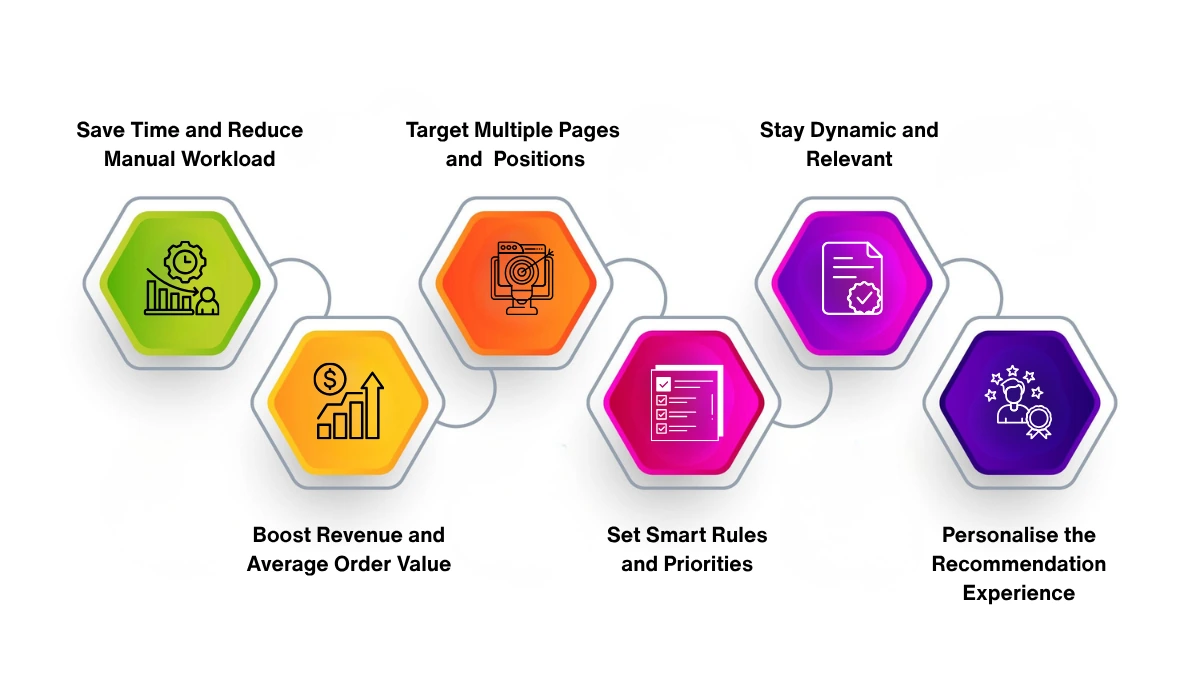
Using an automatic related products tool in Magento 2 offers some strong advantages. Here’s why it’s worth serious consideration for your store in 2025 and beyond:
1. Save Time and Reduce Manual Workload
If you’re managing a large product catalogue, manually picking related items for each product becomes tedious. An extension automates this process so you can focus on strategy rather than admin.
2. Boost Revenue and Average Order Value
Smart product suggestions help customers add more items to their shopping carts. Studies show that cross-selling and up-selling can contribute 10-30% of online store revenues. In 2025 the payoff is clearly stronger when done well.
3. Target Multiple Pages and Positions
Automatic tools let you display related products not just on the product page, but on category pages, CMS pages and the shopping cart. That flexibility means you can spot opportunities at several points in the buyer’s journey.
4. Set Smart Rules and Priorities
You can create rules that decide which products get shown, when and where. Priorities mean you can give some blocks more visibility than others, helping you promote specific items, bundles or campaigns.
5. Stay Dynamic and Relevant
With large and changing inventory sets, new launches, seasonal items, out-of-stock products, automation helps your related product blocks remain up to date and relevant without constant manual updates.
6. Personalise the Recommendation Experience
More advanced extensions can use product attributes, customer groups and behaviour to tailor the recommendations. That means better relevance, which shoppers expect. In fact, personalised suggestions can increase average order value by up to 30%.
Final Thoughts
Whether you choose to stick with Magento 2’s built-in related products features or move to a dedicated automatic solution, the goal remains the same: present the right products at the right time. For smaller stores, manual setup might suffice. For larger inventories or growth-focused merchants, a reliable related product extension becomes almost indispensable in 2025.
If you’re looking to enhance your store’s performance, boost order value, and create a seamless shopping experience, IDS Logic can help. Our Magento eCommerce experts specialise in building, customising, and optimising Magento 2 stores to deliver stronger sales and better customer engagement.
Discover our Magento eCommerce development services and see how we can help your business grow.

Frequently Asked Questions
Q1. What exactly is a “Related Products” block in Magento 2?
A “Related Products” block is a feature or module that displays additional items on or around the product page that complement the product a customer is viewing. Unlike up-sells (which suggest higher value alternatives) or cross-sells (which appear at checkout), related products aim to offer complementary or associated items that enrich the shopping experience.
Q2. How easy is it to integrate related products into my Magento 2 store?
If you’re doing it manually, you simply navigate to the product edit screen in the admin panel and add related items under “Related Products, Up-Sells and Cross-Sells”. For automated solutions, you install the extension, configure your rules and placement, and the system takes care of populating the blocks.
Q3. Do automatic related product rules really make a difference?
Yes. Because they map product attributes, customer views and purchase behaviour, they show more relevant items, which tends to increase engagement, cart size and order value. Using smart rules means your suggestions stay up-to-date and aligned with your catalogue.
Q4. Will rule conflicts or overlaps cause issues?
When you have multiple active rules, the system uses priorities to determine which rule applies first. For example, Rule A might show for a specific category and has higher priority than Rule B which shows for all products. Proper rule ordering ensures the most relevant suggestions are shown.
Q5. How can we measure whether our related products are working well?
Key metrics include:
Attachment rate: percentage of orders with a related product added.
Average order value (AOV): whether your AOV rises after enabling related product blocks.
Conversion rate for recommended items: how many suggestions result in actual purchases.
Customer satisfaction: shopper feedback or reduced cart abandonment can indicate your suggestions are seen as helpful, not intrusive.