WordPress powers millions of business websites. That’s one reason it remains such a popular choice. It’s flexible, familiar, and quick to launch.
But there’s a problem.
Many WordPress websites perform well when traffic is low. Things look fine. Pages load. Forms work. Nobody complains.
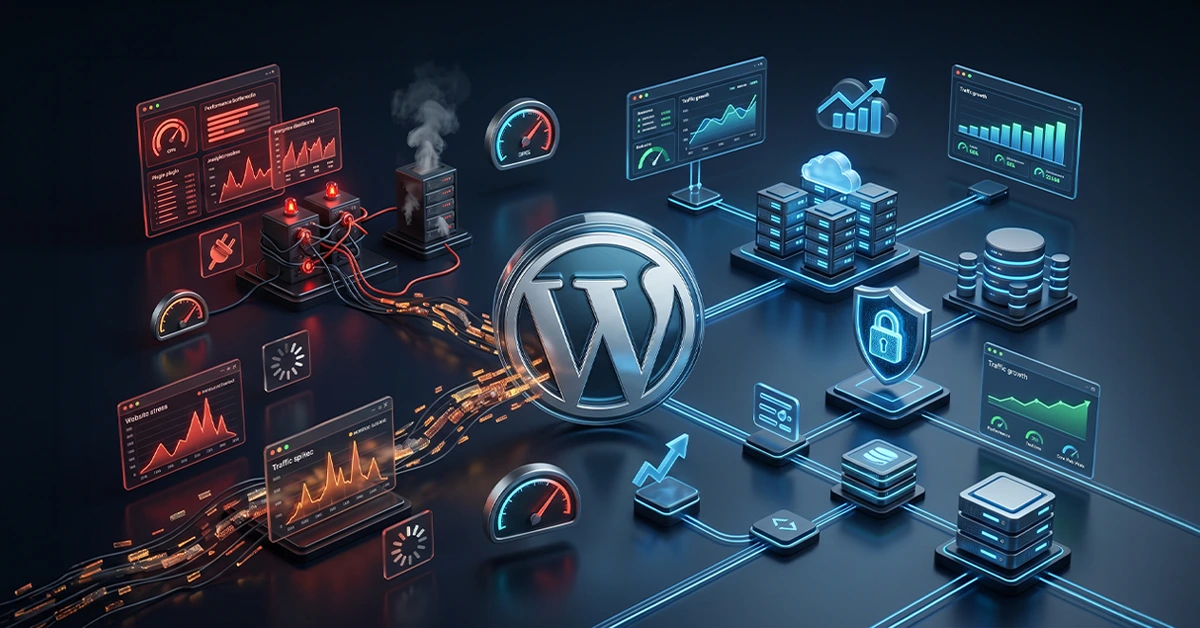
Then a marketing campaign goes live. Traffic spikes. Pages slow down. The website struggles. Sometimes it crashes altogether.
Most businesses don’t notice the warning signs until performance starts affecting customers.
Slow websites create real business problems. Visitors leave. Search rankings suffer. Conversions drop. Teams spend more time fixing issues than moving projects forward.
The causes are often surprisingly familiar. Too many plugins. Bloated themes. Poor hosting decisions. Weak caching. Outdated PHP versions. Little or no monitoring.
None of these issues appear overnight. They build up gradually.
A website that felt fast two years ago can become difficult to manage as content grows, functionality expands, and traffic increases.
Speed is only part of the challenge. Scalability matters too.
Many WordPress environments are never designed for product launches, seasonal demand, marketing campaigns, or sudden increases in visitors. They work under normal conditions but struggle when the business needs them most.
Security adds another layer of complexity. Outdated plugins, neglected updates, and reactive maintenance approaches can create vulnerabilities that affect both stability and performance.
This is why high-performing WordPress websites are rarely the result of a single optimisation plugin or a hosting upgrade.
They are built on strong architecture, efficient infrastructure, continuous monitoring, and a long-term optimisation strategy.
The good news is that most performance issues can be identified and addressed before they impact customers.
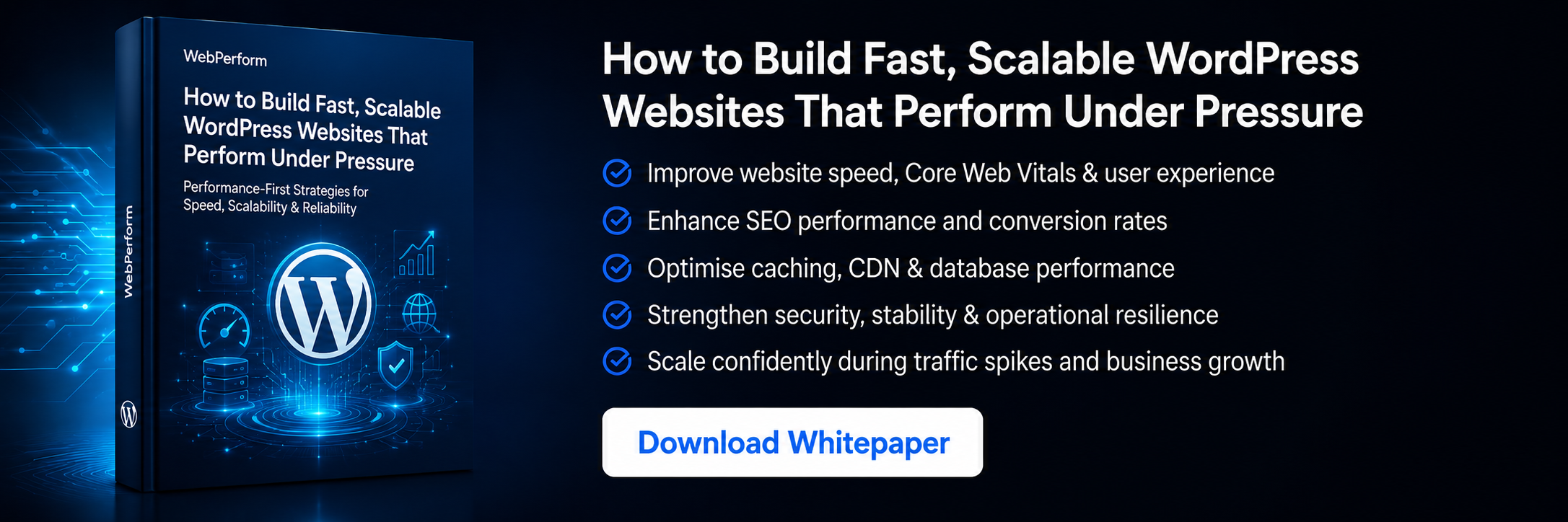
Our latest whitepaper, How to Build Fast, Scalable WordPress Websites That Perform Under Pressure, explores the practical steps organisations can take to improve speed, strengthen resilience, and prepare WordPress environments for future growth.
Inside, you’ll learn:
- Why do WordPress websites become slow over time?
- Common performance and scalability mistakes.
- Practical optimisation techniques that deliver measurable improvements.
- The role of hosting, caching, and infrastructure design.
- How to improve Core Web Vitals and user experience.
- What to look for in a WordPress performance partner.
If your website plays an important role in lead generation, customer engagement, or online revenue, performance is no longer something you can treat as an afterthought.
Get the Full Whitepaper
Complete the form to download the complete Whitepaper (PDF), including performance optimisation frameworks, scalability strategies, Core Web Vitals guidance, infrastructure recommendations, and operational best practices.