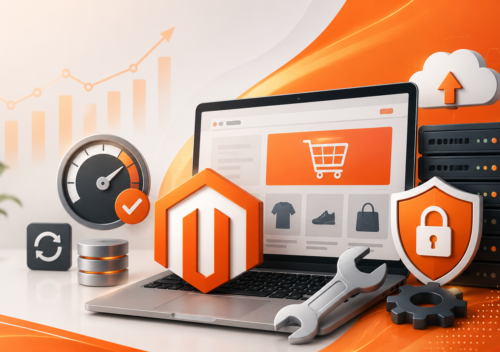
Ensuring the high-grade performance of your eCommerce website is crucial to survive in the competitive landscape. This should be the topmost priority of every retailer who have shifted from their brick and mortar stores to online.
Key Takeaways:
- Slow websites cost sales. Research from Google shows that as page load time increases from 1 to 3 seconds, the probability of a visitor leaving rises by 32%. Regular ecommerce website maintenance keeps your store fast, responsive and conversion-ready.
- Checkout problems directly impact revenue. According to Baymard Institute, the average online shopping cart abandonment rate remains close to 70%, making routine checkout testing one of the most valuable ecommerce website maintenance tasks.
- Security updates protect your business and your customers. The National Cyber Security Centre recommends keeping software, plugins and systems fully updated because unpatched vulnerabilities remain one of the most common causes of cyber attacks.
- Technical SEO and website maintenance go hand in hand. Fixing broken links, improving Core Web Vitals, updating product pages and maintaining clean site architecture help search engines crawl your website more effectively while improving user experience.
- Preventive maintenance costs far less than emergency repairs. Regular backups, performance monitoring, compatibility testing and security audits reduce downtime, protect revenue during peak trading periods and make it easier to scale your ecommerce business as it grows.
Launching your online store is only the beginning. Keeping it secure, fast and reliable is what drives long-term success. As online shopping continues to grow, customer expectations are rising just as quickly. Shoppers expect every page to load instantly, every payment to work without issues, and every interaction to feel smooth. Even a small technical problem can damage customer trust and cost you sales.
The numbers make this clear. Global retail ecommerce sales are expected to exceed US$8 trillion in 2026, while online competition continues to intensify. At the same time, research from Baymard Institute shows that ecommerce businesses lose significant revenue because of preventable issues such as checkout failures, slow-loading pages, broken user journeys and outdated product information. These aren’t isolated technical problems. They directly affect conversions, customer retention and revenue.
Today an e-commerce website is much more than a digital catalogue. It handles customer accounts, payment transactions, inventory updates, marketing tools, third-party integrations and sensitive business data every second of the day. As your store grows, so does the complexity behind it. Without regular ecommerce website maintenance, small issues can quickly become expensive problems.
Think about it for a moment. A single plugin conflict could prevent customers from completing purchases. An outdated security patch could expose confidential customer information. A slow product page during a major sales campaign could push shoppers straight to a competitor. Most visitors won’t tell you something is broken. They’ll simply leave.
That’s why ecommerce website maintenance services have become a business necessity rather than an optional technical task. Regular maintenance helps you identify issues before your customers do. It improves website performance, strengthens security, keeps your software up to date and ensures every part of your online store works exactly as expected.
In this blog, you’ll discover the most important ecommerce website maintenance tips for 2026. You’ll learn practical ways to improve website speed, reduce downtime, strengthen security, optimise the shopping experience and keep your online store performing at its best throughout the year.
Essential Ecommerce Website Maintenance Tips to Keep Your Store Performing at Its Best
Your ecommerce website should never be left on autopilot. Every update, new product, marketing campaign and third-party integration can affect how your store performs. A structured ecommerce website maintenance checklist helps you spot issues early, reduce downtime and protect your revenue before customers notice something has gone wrong.
Here are the website maintenance practices every ecommerce business should prioritise in 2026.
1. Back Up Your Ecommerce Website Before Problems Occur
If your website crashes tomorrow, how quickly could you recover?
Many businesses only think about backups after something goes wrong. By then, valuable customer orders, product data and business information may already be lost. A reliable ecommerce website maintenance service should include automated daily backups, database backups and secure off-site storage. During busy sales periods, hourly incremental backups provide another layer of protection.
Don’t stop at creating backups. Test them regularly to make sure you can restore your website without delays if a server failure, cyberattack or accidental update causes problems. A proper backup strategy keeps your business running even when unexpected issues occur.
2. Keep Security Updates, Plugins and Extensions Fully Updated
Cybercriminals constantly look for websites running outdated software. Every ecommerce platform, whether Shopify, Magento, WooCommerce or another solution, regularly releases security patches to fix newly discovered vulnerabilities. Ignoring these updates leaves your online store exposed.
Review your:
- Platform updates
- Plugins and extensions
- Payment gateway integrations
- Third-party apps
- SSL certificates
Update them only after testing compatibility. Many website failures happen because businesses install updates directly on live stores without checking for conflicts first. Regular updates improve security, stability and overall website performance.
3. Test Your Checkout Process from Start to Finish
Your checkout is where revenue happens. Even a tiny issue can stop customers from completing their purchase. The worst part? Most shoppers won’t report the problem. They’ll simply leave.
Every month, complete a full purchase yourself. It is found that checkout friction remains one of the biggest causes of lost online sales. Regular testing helps you identify problems before they affect your customers.
Check whether customers can:
- Add products to the basket
- Apply discount codes
- Select delivery options
- Complete secure payments
- Receive confirmation emails
4. Improve Website Speed and Core Web Vitals
Speed directly affects conversions. Research from Google has repeatedly shown that visitors abandon slow websites quickly. Search engines also use page experience signals when evaluating websites.
Your maintenance routine should include:
- Compressing images
- Removing unused code
- Optimising databases
- Clearing cache
- Monitoring Core Web Vitals
- Using a Content Delivery Network (CDN)
Fast websites keep visitors engaged, improve SEO performance and encourage more completed purchases. Even shaving one second off your loading time can make a noticeable difference to sales.

5. Monitor Broken Links, Errors and User Journeys
Broken pages quietly damage your business. Visitors become frustrated when they click links that lead nowhere. Search engines notice them too, which can affect your rankings over time.
Schedule regular website audits to identify:
- 404 errors
- Broken internal links
- Broken product pages
- Redirect issues
- Missing images
- Navigation problems
You must also review how customers move through your website. If users repeatedly abandon the same page, there’s usually a reason worth investigating. Fix small issues early before they become expensive ones.
6. Review Product Information and Keep Content Up to Date
Your product catalogue changes constantly. Prices change. Stock levels change. Promotions end. Products get discontinued.
Old information creates confusion and damages customer confidence. Fresh content also supports your SEO efforts by showing search engines that your website remains active and relevant.
Regularly review:
- Product descriptions
- Pricing
- Stock availability
- Product images
- Specifications
- FAQs
- Promotional banners

7. Protect Customer Data and Stay Compliant
Customers expect their personal information to remain secure. Your website should comply with regulations such as GDPR while protecting payment information and customer accounts.
Security is no longer just an IT responsibility. It’s part of your customer experience. When shoppers trust your website, they’re far more likely to complete a purchase.
Regular maintenance should include:
- Security scans
- Malware detection
- Firewall monitoring
- Login activity reviews
- User permission audits
- Cookie consent updates
- Privacy policy reviews
8. Monitor SEO Health Every Month
SEO isn’t something you set once and forget. Website updates, new products and platform changes can all affect your search visibility. At the same time, refresh older content where necessary. Updating existing pages often delivers quicker SEO gains than publishing entirely new ones.
Healthy websites usually perform better in search results.
Review your website regularly for:
- Missing meta titles
- Duplicate content
- Broken redirects
- Missing image alt text
- Crawl errors
- Internal linking opportunities
- Structured data issues
9. Test Your Website Across Different Devices and Browsers
Most ecommerce traffic now comes from mobile devices. That doesn’t mean every visitor uses the same browser or screen size. Pay close attention to menus, product filters, checkout pages, forms and payment gateways. A smooth experience across every device reduces bounce rates and increases customer satisfaction.
Check your website regularly on:
- Smartphones
- Tablets
- Desktop computers
- Chrome
- Safari
- Edge
- Firefox
10. Use Analytics to Improve Your Website Continuously
Maintenance isn’t only about fixing problems. It’s also about finding opportunities to improve.
Use heatmaps, session recordings and A/B testing to understand real customer behaviour. Small improvements made consistently often produce much bigger results than one large redesign every few years.
Review your analytics every month to understand:
- Which pages convert best
- Where customers leave your website
- Which products perform well
- Which devices generate the highest sales
- Where checkout abandonment happens
Why Regular Ecommerce Website Maintenance Matters for Business Growth?
Launching an online store is only the beginning. Keeping it secure, fast and reliable is what drives long-term success. As your business grows, your ecommerce website handles more visitors, more orders and more customer data. Without regular maintenance, even small technical issues can turn into lost sales, poor customer experiences and lower search rankings.
Think about it from your customer’s perspective. They expect every page to load quickly, every payment to go through without errors and every product to display the right information. If your website fails at any stage, they’ll simply move to another retailer. That’s why ecommerce website maintenance is no longer just an IT task. It’s an essential part of running a successful online business.
A proactive maintenance plan helps you spot problems before they affect your customers. It also keeps your website aligned with changing search engine requirements, evolving security standards and growing customer expectations. Instead of fixing expensive problems after they happen, you prevent them altogether.
Key Benefits of Regular Ecommerce Website Maintenance
Investing in ecommerce website maintenance services does far more than keep your website online. It helps you protect revenue, improve customer satisfaction and create a better shopping experience that supports long-term business growth.
Improved Search Engine Rankings and Online Visibility
Search engines favour websites that stay updated, load quickly and deliver a great user experience. Regular maintenance helps you fix broken links, improve page speed, optimise technical SEO and refresh outdated content. These improvements make it easier for your store to rank higher and attract more qualified organic traffic.
Better Website Performance and Faster Page Speed
Every second counts in ecommerce. Slow-loading pages often lead to frustrated visitors and abandoned baskets. Regular optimisation keeps your website running efficiently by reducing page load times, improving Core Web Vitals, compressing images and removing unnecessary code that slows your store down.
Stronger Website Security
Cyber threats continue to increase every year, and ecommerce websites remain one of the most common targets. Routine maintenance includes software updates, security patches, malware scans, firewall monitoring and SSL certificate checks. These measures help protect your business, customer data and online reputation from costly attacks.
Lower Cart Abandonment Rates
A smooth checkout experience encourages customers to complete their purchases. Regular maintenance helps identify broken payment gateways, faulty forms, expired discount codes and checkout errors before they affect sales. Fewer interruptions mean more completed orders and happier customers.
Higher Sales and Better Conversion Rates
A fast, secure and reliable website builds trust from the moment visitors arrive. When customers can browse products, add items to their basket and complete payments without issues, they are far more likely to buy. Small improvements made through ongoing maintenance often lead to measurable increases in conversions and revenue.
Improved Customer Experience
Customers expect websites to work perfectly across every device. Regular maintenance ensures your online store remains mobile-friendly, easy to navigate and fully functional on all major browsers. A better experience keeps visitors engaged and encourages repeat purchases.
Reduced Downtime and Business Disruptions
Unexpected downtime can cost your business far more than lost sales. It can damage customer trust and affect your search visibility. Regular monitoring, automated backups and proactive issue detection help keep your ecommerce website available when your customers need it most.
Easier Scalability as Your Business Grows
As you add more products, traffic and integrations, your website becomes more complex. Ongoing maintenance ensures your store continues to perform well without slowing down. It also makes introducing new features, expanding into new markets and handling seasonal traffic much easier.
Long-Term Cost Savings
Ignoring small technical issues often leads to expensive repairs later. Regular maintenance fixes problems while they are still minor, reducing emergency support costs and extending the lifespan of your ecommerce website. Preventative maintenance almost always costs less than rebuilding or recovering a neglected website.
Greater Customer Trust and Brand Credibility
Your website represents your business 24 hours a day. A professional, secure and well-maintained ecommerce store gives customers confidence to shop with you. Accurate product information, reliable performance and a smooth buying journey all strengthen your brand and encourage long-term customer loyalty.

Final Thoughts – Keep Your Ecommerce Website Working as Hard as Your Business
Your ecommerce website is never truly “finished”. It grows with your business, adapts to changing customer expectations and evolves alongside new technology. The stores that continue to perform well in 2026 aren’t necessarily the ones with the biggest budgets. They’re the ones that consistently invest in keeping their websites fast, secure and easy to use.
Regular ecommerce website maintenance isn’t just about fixing bugs or installing updates. It’s about protecting your revenue, strengthening customer trust and giving every visitor a smooth shopping experience from the moment they land on your site until they complete their purchase.
Small issues rarely stay small for long. A slow product page can reduce conversions. An outdated plugin can create security risks. A broken checkout can cost you hundreds of sales before anyone notices. Taking a proactive approach helps you avoid these problems instead of reacting after the damage is done.
Whether you manage your website internally or work with an experienced ecommerce website maintenance partner, consistency is what makes the difference. Ongoing monitoring, regular optimisation, security updates and performance improvements all contribute to better search visibility, higher customer satisfaction and sustainable business growth.
As online competition continues to increase, businesses that treat website maintenance as a long-term strategy rather than an occasional task will always be in a stronger position to attract, convert and retain customers.
Need Expert Ecommerce Guidance to Keep Your Store Growing?
Keeping an ecommerce website performing at its best requires more than routine updates. You need the right strategy, technology and technical expertise to support your business as it grows.
At IDS Logic, our ecommerce consultants work closely with businesses across the UK to improve website performance, strengthen security, optimise customer journeys and identify opportunities for long-term growth. Whether you’re planning a platform upgrade, improving conversions, scaling your online store or looking for expert guidance on your ecommerce strategy, we’re here to help.