Ecommerce platforms have opened an excellent opportunity for retailers across industries to grow beyond borders. They can now sell products worldwide, expand their customer base, and maximise revenue. Recent research shows that global ecommerce sales are expected to reach $7.4 trillion in 2025, and the numbers continue to climb.
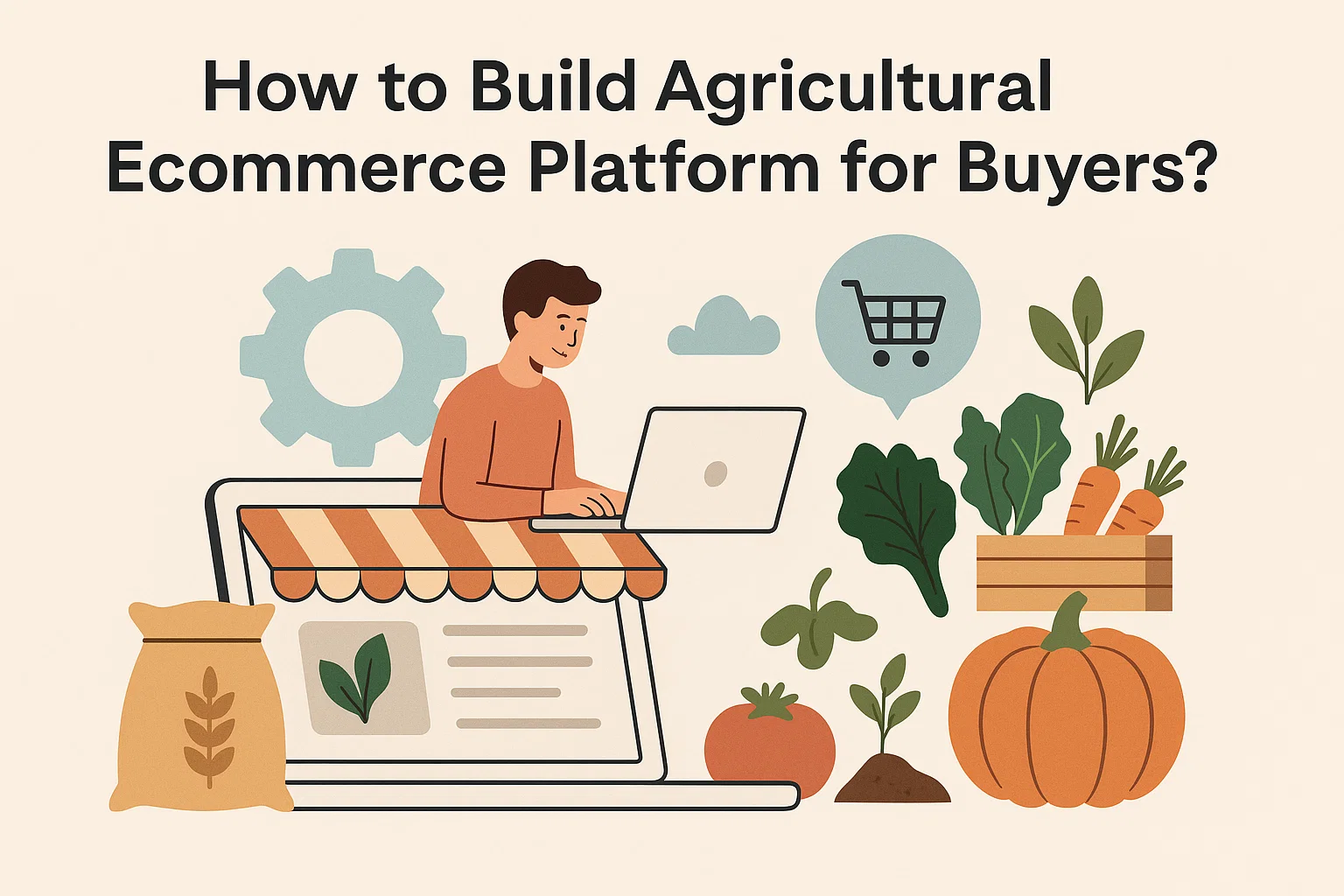
The agriculture sector has been one of the biggest winners of this digital wave. Farming ecommerce has given farmers a direct route to buyers, without relying only on middlemen or local markets. Through an agriculture ecommerce website, they can showcase fruits, vegetables, dairy, grains, and even organic produce to customers who are actively looking for fresh and reliable options. This direct approach means higher sales, fairer pricing, and stronger connections with consumers.
The COVID-19 pandemic proved how important digital platforms are. With traditional supply chains disrupted, many farmers turned to ecommerce for farms as a way to survive. What began as a necessity soon became an advantage, as sales volumes improved and buyers gained quick access to fresh produce.
Today, ecommerce for farmers is more than just a trend—it is the future of food supply. B2B agriculture marketplaces now connect farmers and suppliers with restaurants, wholesalers, and end consumers. These agricultural e-commerce solutions not only bring more exposure but also help farms reach new markets that were once out of reach.
This shift marks a huge transformation for the industry. Farmers are no longer restricted by geography, and buyers can trust the transparency of sourcing. In the next sections, we’ll explore how to build a powerful agriculture ecommerce platform, the must-have features, benefits, and the challenges that need to be addressed.
Best Features of an Agriculture Ecommerce Platform
The demand for fresh, safe, and traceable food continues to grow, no matter the season or situation. Farmers now have an excellent opportunity to sell faster and more efficiently through farming ecommerce platforms. To build a strong and reliable agriculture ecommerce website, certain features are essential. These features not only help farmers connect with buyers but also make the shopping experience smoother for consumers.
Simple Sign-Up and Onboarding
First impressions matter. A user-friendly sign-up process allows farmers, suppliers, and buyers to join the platform with ease. The fewer steps involved, the better. Quick onboarding means farmers can start listing products right away, while buyers can begin purchasing without delay.
Product Management and Listings
Farmers need full control over their products. An easy product management system lets them add, update, or remove items quickly. Detailed listings with prices, product descriptions, and high-quality images build trust and transparency. Categorisation is also key, with clear sections for seeds, fertilisers, tools, equipment, fruits, vegetables, and dairy products.
Smooth Order and Payment Management
Order processing is the backbone of any agricultural e-commerce solution. Farmers and buyers want clarity on costs, order history, delivery schedules, and invoices. Secure payment gateways with options like mobile wallets, bank transfers, and even installment payments for equipment make transactions stress-free. Offering flexible payment modes is particularly important in ecommerce for farmers, where both small and large purchases are common.
Inventory and Supply Chain Management
A strong inventory management system ensures products are in stock and ready for buyers. Real-time updates help farmers avoid overselling and allow them to plan better. Supply chain integration also matters, especially for perishable goods. Cold-chain support, local logistics tie-ups, and delivery tracking options keep the process reliable and transparent.
Mobile-Friendly Design
Most farmers and consumers now use smartphones. A mobile-responsive agriculture ecommerce website is non-negotiable. It should allow buyers to browse, add to cart, and pay without switching devices. This flexibility increases engagement and repeat purchases.
Delivery Options and Tracking
Customers want flexibility. Whether it’s local delivery, scheduled slots, or pick-up options, a good farming ecommerce platform must offer choice. Real-time tracking with SMS or email updates builds confidence and ensures transparency throughout the delivery journey.
Customer Reviews and Community Trust
Trust is vital in farming ecommerce. Verified reviews and ratings give buyers confidence in the quality of products. Farmers also benefit from constructive feedback. Adding discussion forums or Q&A sections with agricultural experts can further strengthen the sense of community and knowledge sharing.
Analytics and Insights
An analytics dashboard helps farmers and suppliers make better decisions. Sales trends, customer behaviour, and seasonal demand patterns provide actionable insights. With these, farmers can adjust their stock, plan marketing efforts, and grow their businesses more strategically.
What is Driving Agriculture Towards E-commerce?
The agriculture industry is no longer limited to local mandis or wholesale markets. Farmers and agribusinesses are now using agriculture eCommerce platforms to connect directly with buyers, expand their reach, and sell smarter.
Several trends are shaping this digital shift:
Smarter supply chains
Online platforms cut down delays and reduce wastage by connecting farmers directly with end buyers.
Technology adoption
Tools like AI, blockchain, and mobile apps are making it easier to track inventory, pricing, and logistics.
Consumer demand for fresh produce
Shoppers today prefer farm-fresh, chemical-free, and traceable products, which ecommerce for farmers makes possible.
Transparency and trust
Buyers can now check real-time data on crop origin, product quality, and stock availability.
New business models
Direct-to-consumer (D2C) channels and B2B agriculture ecommerce solutions reduce dependency on middlemen, helping farmers earn better margins while meeting consumer needs for organic and sustainable food.
What Can Farmers Sell on an Agriculture eCommerce Website?
The beauty of farming ecommerce platforms is that they don’t limit farmers to just one revenue stream. From fresh produce to packaged goods, the opportunities are plenty.
Here are some of the most popular categories:
Fresh Farm Produce
Fruits, vegetables, dairy, poultry, meat, and seafood remain at the heart of agriculture ecommerce. The rising demand for chemical-free, fresh food means farmers can directly reach buyers who value quality and authenticity.
Packaged and Processed Goods
Items like organic honey, handmade cheese, fruit juices, jams, and pickles are gaining traction. Shoppers love artisanal and value-added farm products, and ecommerce for farms makes it easy to sell them nationwide.
Seeds, Fertilisers, and Farm Supplies
Farmers aren’t just sellers, they’re also buyers. On B2B agriculture ecommerce platforms, they can sell seeds, fertilisers, pesticides, and farm inputs directly to other farmers or agribusinesses.
Tools, Equipment, and Machinery
From tractors to irrigation systems, farm tools and equipment are being bought and sold online. With ecommerce platforms, farmers can skip middlemen and negotiate better deals.
Subscription-Based Services
Subscription boxes offering weekly or monthly deliveries of fresh farm produce are growing in popularity. They give buyers convenience and provide farmers with steady, predictable income.
How Farmers Are Thriving with Farming E-commerce?
The shift to agricultural e-commerce solutions has created inspiring success stories across the globe. Farmers who once relied only on local sales are now expanding their reach and enjoying more financial stability.
A small organic vegetable farmer reported tripling her income within a year of listing her produce online. Direct buyer feedback not only improved her sales but also helped her build long-term customer relationships.
A family-owned farm diversified its offerings through an agriculture ecommerce website, moving beyond crops into dairy and packaged foods. This opened new customer segments, boosted sales, and gave their brand a stronger identity.
Many similar stories highlight how eCommerce for farmers is not just about technology, it’s about empowerment. Farmers gain control over pricing, reduce dependency on intermediaries, and enjoy the satisfaction of delivering food directly to the people who value it most.
Benefits of Agriculture eCommerce Platforms
The rise of agriculture eCommerce platforms is transforming how farmers sell and how buyers purchase fresh produce. These platforms are more than just online shops — they’re creating fairer markets, stronger farmer-buyer connections, and a more sustainable food chain.
Below are some of the biggest benefits for both farmers and buyers:
Direct Market Access and Fairer Prices
For farmers, the biggest win is direct access to consumers without middlemen. Instead of relying on wholesalers, they can now sell straight to households, restaurants, and businesses.
- For Farmers – They set their own prices, keep a larger share of profits, and avoid unnecessary markups. This means more financial freedom and stability.
- For Buyers – They get fresh farm produce at fair prices without the inflated costs usually added by intermediaries.
This direct link not only increases profit margins for farmers but also makes quality food more affordable for buyers.
Greater Visibility Beyond Local Markets
In traditional systems, farmers are often limited to their village or nearby town. With an agriculture eCommerce website, that barrier disappears.
Farmers can now:
- Showcase unique products like organic vegetables, exotic fruits, or handmade cheese to a national or even global audience.
- Build their farm’s identity and brand, something that was rarely possible earlier.
For buyers, this means they can access specialty produce that would otherwise be hard to find in local shops.
Transparency and Stronger Connections
Farming eCommerce platforms don’t just enable transactions — they build trust. Farmers can share details about their crops, growing practices, and harvest cycles directly with buyers.
- Farmers get instant feedback on what people love.
- Buyers get to know where their food comes from and how it’s grown.
This two-way connection improves customer loyalty and helps farmers create repeat sales. It’s storytelling meets commerce, and it works.
Financial Stability Through Faster Payments
One of the pain points for farmers has always been delayed payments in traditional markets. With agriculture eCommerce platforms, secure payment gateways make transactions quicker and safer.
- Farmers receive money on time, helping them reinvest in seeds, tools, and resources without financial stress.
- Buyers enjoy transparent pricing and easy online payment options, which makes the purchase process smoother.
Efficiency With Digital Tools
Modern agricultural e-commerce solutions often come with built-in tools for inventory management, sales tracking, and logistics support.
- Farmers save time, reduce waste, and plan production better.
- Buyers benefit from real-time updates, order tracking, and reliable delivery timelines.
This efficiency makes the entire farm-to-table process faster and more predictable.
Support for Sustainability and Eco-Friendly Farming
Consumers are increasingly conscious of how their food is produced. eCommerce for farmers gives them the chance to highlight sustainable practices — like organic farming, water-saving irrigation, or chemical-free cultivation.
- Farmers who use eco-friendly methods can showcase them to win trust.
- Buyers who care about the environment can choose responsibly produced goods.
The result is not just healthier eating but also a farming system that supports long-term environmental balance.
Boosting Local Economies
When farmers succeed online, it’s not just their own families who benefit. Entire rural communities gain from the growth of farming eCommerce.
- Small-scale farmers scale up operations sustainably.
- More job opportunities are created in packaging, transport, and logistics.
- Rural regions see steady income flow, strengthening local economies.
Scaling Agriculture eCommerce with the Right Delivery Approach
As agriculture eCommerce platforms continue to evolve, building and managing a scalable, reliable solution becomes more complex for many organisations. From handling integrations and logistics to ensuring performance, security, and long-term growth, these platforms demand specialised expertise and consistent execution. Many UK businesses are now adopting strategic outsourcing and nearshore models to bridge capability gaps, accelerate delivery, and reduce operational risks while maintaining full control over outcomes. A structured approach allows organisations to scale confidently while focusing on innovation and market expansion.
Download the whitepaper to discover how UK organisations are reducing risk and maximising value through strategic outsourcing in large-scale digital commerce projects.

Why Choose IDS Logic for Your Agriculture eCommerce Platform?
Building a successful agriculture eCommerce platform requires more than just technology, it needs deep knowledge of the farming sector and an understanding of how farmers and buyers connect. At IDS Logic, we bring both.
Our team specialises in developing custom agricultural e-commerce solutions designed for farmers, cooperatives, agribusinesses, and B2B marketplaces. Every feature we build is aimed at solving a real problem, whether that’s making transactions faster, boosting visibility, or helping farmers showcase sustainable practices.
What sets IDS Logic apart?
Customised Development
We design platforms that reflect the unique needs of agriculture businesses, from fresh produce sellers to large farming enterprises.
End-to-End Support
From launch to long-term maintenance, we make sure your platform runs smoothly and scales with demand.
Actionable Insights
With built-in analytics, farmers can track sales, monitor customer preferences, and adjust strategies in real time.
Future-Ready Solutions
Our eCommerce for farmers includes features like AI-powered recommendations, blockchain for traceability, and mobile-ready platforms that keep up with consumer expectations.
Embracing the Future of Agriculture with eCommerce
The growth of farming eCommerce platforms has reshaped how farmers reach buyers. These platforms break down old barriers, giving farmers direct access to wider markets and helping buyers enjoy fresh, quality products at fair prices.
For farmers, this means:
- Bigger market access beyond local boundaries
- Better profit margins through direct sales
- Stronger control over pricing and operations
For buyers, this means:
- Fresher produce straight from the farm
- Transparency about sourcing and production
- Affordable options without unnecessary markups
As technology continues to evolve, from AI and data-driven insights to blockchain for supply chain transparency, the opportunities in agriculture eCommerce are only getting bigger. Farmers who adopt these platforms today are not only increasing sales but also building long-term trust with consumers who value sustainability and quality.
Conclusion
Agriculture eCommerce websites are no longer optional, they are essential for modern farming. By connecting farmers directly to buyers, these platforms empower farmers, cut out middlemen, and create a fairer, more sustainable food system.
At IDS Logic, we help farmers, cooperatives, and agribusinesses build agriculture eCommerce platforms that are scalable, user-friendly, and future-ready. Whether you’re a small farmer looking to sell directly to consumers or a large enterprise aiming to streamline B2B transactions, we can design a solution tailored to your goals.
Ready to take the next step? Contact IDS Logic today and let’s build a platform that brings your farm closer to the people who value it most.
Frequently Asked Questions
Q1. What is an agriculture eCommerce platform, and how does it work?
An agriculture eCommerce platform is an online marketplace where farmers list and sell their products directly to buyers. It integrates payments, logistics, and real-time updates to make transactions easy, transparent, and efficient.
Q2. What are the key benefits for farmers and buyers?
Farmers gain wider market reach, fairer pricing, and timely payments. Buyers get fresher, high-quality produce, full transparency into sourcing, and competitive prices without retail markups.
Q3. Can small-scale farmers succeed on these platforms?
Yes. Most farming eCommerce platforms are designed with simple interfaces and support services, making it easy for small farmers to set up shops, list products, and manage sales, even with limited digital skills.
Q4. How do these platforms help reduce food waste?
By connecting farmers directly with consumers and businesses, agriculture eCommerce platforms allow better demand forecasting. This reduces overproduction and helps ensure fresh goods are delivered quickly, cutting down spoilage.
Q5. What features make a strong agriculture eCommerce website?
Key features include:
- Easy-to-use seller dashboards
- Integrated payment gateways
- Logistics and delivery tracking
- Real-time inventory management
- Ratings and reviews for trust building
- Advanced tools like AI insights and blockchain for traceability
Q6. How do farmers get started with selling online?
Farmers can begin by registering on a platform, listing their products with clear details, setting prices, and configuring delivery options. With marketing tools and analytics, they can then grow sales step by step.