Key Takeaways
- Apple's App Store generated $1.3 trillion in billings and sales in 2024
- Over 1 billion active iOS users worldwide
- App Store hosts 2.1 million+ apps with 850 million weekly visits
- iOS users spend more and convert faster than other platforms
- 56% market share in the US; dominates high-revenue markets globally
Building an iOS app was never easy. Earlier, developers had to juggle design, code, testing, and deployment manually. That process took time, effort, and constant troubleshooting. Even small mistakes could affect performance, security, or user experience.
Now, when it comes to 2026, expectations have changed. Users now demand speed, clean design, and flawless performance. At the same time, businesses want faster launches and better returns. This is where modern iOS app development tools make a real difference.
Today’s tools help developers build high-quality iOS apps faster, with fewer errors. They also support better UI design, stronger security, and smoother testing. As a result, teams can focus more on innovation and less on fixing issues.
In this guide, we explore the best iOS app development tools in 2026. We also explain why and how choosing the right tools can directly impact your app’s success.
This updated iOS development tools list covers the technologies used across design, coding, testing, data storage, automation, and App Store delivery. It will also help businesses understand when standard tools are enough and when custom iOS app development requires support from experienced developers.
iOS App Development in 2026: Market Growth, Opportunities, and Business Value
iOS continues to set the benchmark for mobile app quality and revenue. Apple’s ecosystem attracts users who expect speed, security, and premium experiences. Most importantly, these users are willing to spend. For businesses, this makes iOS mobile app development a strong long-term investment.
Market data supports this trend. Apple’s App Store ecosystem generated $1.3 trillion in billings and sales in 2024. Today, more than 1 billion users actively use iOS apps worldwide. The App Store also sees around 850 million visits every week, showing steady and repeat demand.
Growth has remained consistent. The ecosystem more than doubled from $514 billion in 2019 to $1.3 trillion in 2024. Consumer spending hit $25 billion in Q2 2024 alone. At the same time, the App Store now hosts over 2.1 million apps, with thousands added each day.
For UK businesses, this growth brings both opportunity and pressure. Simply launching an app no longer guarantees success. Users expect fast load times, smooth navigation, and strong security. As a result, choosing the right iOS app development software has become a business decision, not just a technical one.
Modern iOS app development tools help teams build faster and release sooner. They also improve quality, reduce rework, and support future updates. This allows businesses to scale without constant rebuilds.
Understanding the iOS App Development Landscape in 2026
Apple remains a dominant force in the mobile market. The platform is known for performance, design consistency, and strict privacy standards. In recent years, the number of active iPhone devices has grown rapidly. By 2026, active iPhone units are estimated to exceed 1.4 billion worldwide.
As the user base grows, demand for high-quality iOS apps continues to rise. Businesses across retail, healthcare, finance, and education are investing more in iOS solutions. This has increased the need for skilled iOS app developers and reliable development tools.
Industry reports suggest that nearly 60% of global developers work with Apple’s operating system in some capacity. This has led to better tools, stronger communities, and faster innovation. Developers now benefit from higher demand, improved pay scales, and wider career scope.
For businesses, iOS development offers clear advantages. These include access to a premium audience, strong brand trust, and higher revenue potential. Apple’s focus on privacy and security also helps businesses build user confidence from day one.
Many organisations now choose to work with experienced iOS development teams rather than building in-house. This approach reduces overheads while giving access to proven expertise. When paired with the right Apple app development tools, it creates a faster and more cost-effective delivery model.
In the next sections, we explore the best iOS app development tools for 2026. These tools help businesses build secure, scalable, and high-performing iOS apps that meet modern user expectations.
Read more: Effective Reasons to Choose iOS Platform for Mobile App Development
Top iOS App Development Tools to Build High-Performing Apps in 2026
Choosing the right iOS app development tools can decide how fast your app launches and how well it performs. In 2026, speed, quality, and scalability matter more than ever. Users expect smooth apps. Businesses expect quick returns.
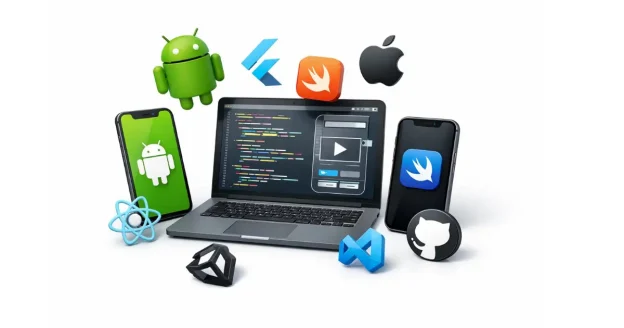
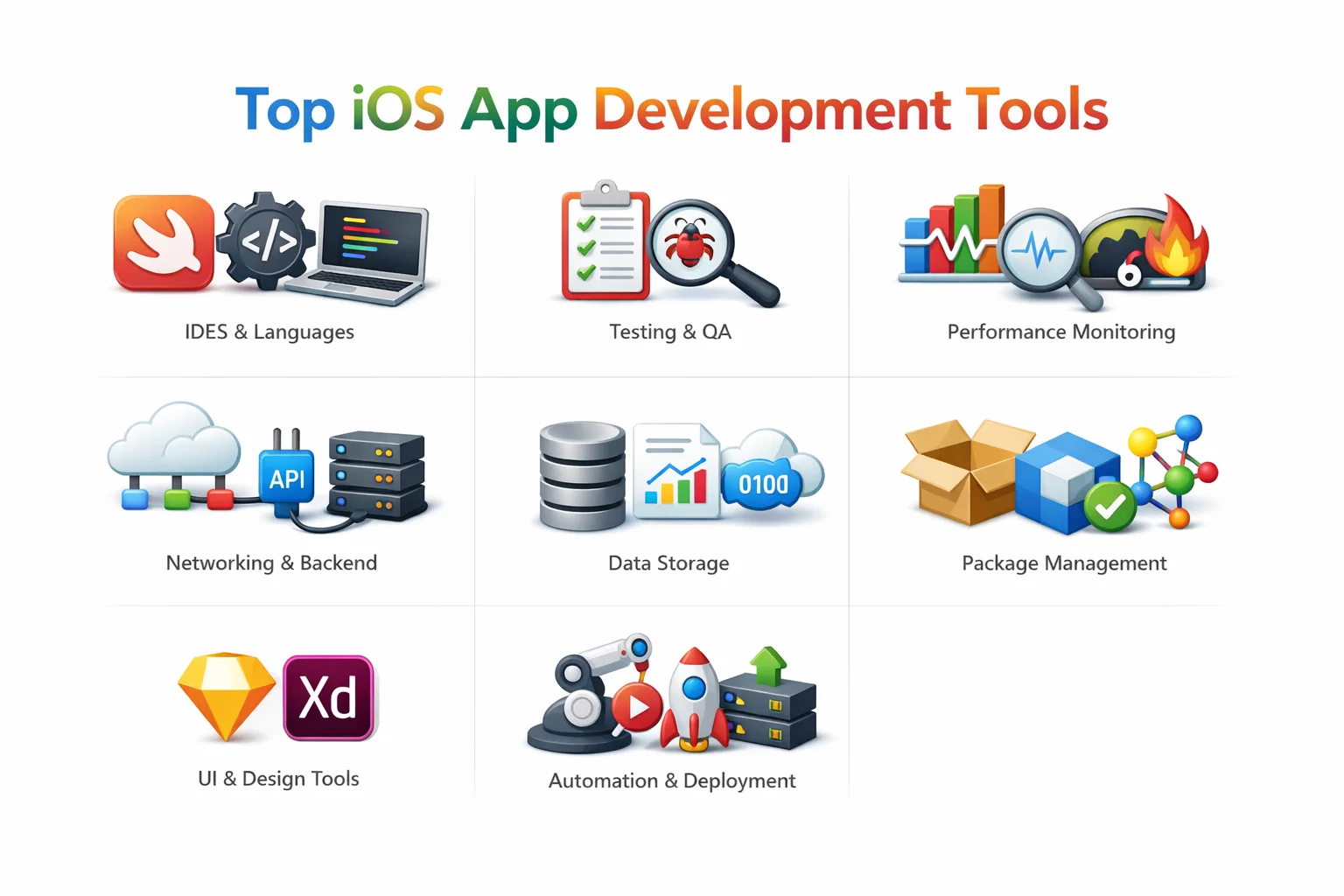
Modern iOS development relies on a well-balanced toolset. This usually includes tools for coding, design, testing, networking, data handling, and deployment. Below, we break down the best iOS app development software by purpose, not hype.
-
Core iOS Development Tools (IDEs and Languages)
1. Xcode – The Foundation of iOS App Development
Type: IDE
Price: Free
Xcode remains the backbone of iOS mobile app development. It is Apple’s official development environment and the only tool allowed to publish apps on the App Store.
In 2026, Xcode supports iOS, iPadOS, macOS, watchOS, tvOS, and visionOS. Developers use it to write code, design interfaces, test apps, and monitor performance.
Xcode includes built-in simulators, debugging tools, and performance instruments. These features help teams spot issues early and reduce delays. It also integrates smoothly with Swift, SwiftUI, TestFlight, and App Store Connect.
For UK businesses, Xcode offers stability, long-term support, and full access to Apple’s ecosystem.
2. Swift – The Preferred iOS Programming Language
Type: Programming language
Price: Free
Swift is the primary language for iOS app development. It is fast, secure, and easy to read. Compared to older languages, Swift reduces crashes and improves performance.
Apple continues to update Swift with better safety features and faster execution. It also works well with modern backend services and server-side applications.
For businesses, Swift helps reduce development time and long-term maintenance costs.
3. SwiftUI – Modern UI Development for Apple Devices
Type: UI framework
Price: Free
SwiftUI simplifies how developers build app interfaces. Instead of complex layouts, developers describe how screens should look and behave.
SwiftUI works across Apple devices and supports accessibility by default. It also reduces code size, which helps teams move faster.
SwiftUI has become a standard choice for building clean and responsive iOS apps.
-
Testing, Quality, and Performance Tools
1. TestFlight – Beta Testing Made Simple
Type: Testing
Price: Free
TestFlight allows teams to test apps before public release. Developers can invite up to 10,000 testers and collect real feedback.
Crash reports and usage data help teams fix issues early. This improves app quality and reduces negative App Store reviews.
-
Performance and Monitoring Tools
Tools such as Firebase Crashlytics and monitoring platforms help track app health after launch. These tools highlight crashes, slow screens, and user drop-offs.
For UK businesses, this insight supports better decisions and ongoing improvements.
-
Networking and Backend Support Tools
1. URLSession – Native Networking Control
Type: Networking API
Price: Free
URLSession is Apple’s built-in networking solution. It gives developers full control over data transfers, uploads, and downloads.
It supports background tasks, security settings, and caching. Teams often use it when they want fewer external dependencies.
2. Alamofire – Simplified Networking in Swift
Type: Networking library
Price: Free
Alamofire builds on URLSession and simplifies network requests. It handles APIs, JSON data, authentication, and progress tracking.
Many developers choose Alamofire to speed up development while keeping networking reliable.
3. Firebase – Backend Services for iOS Apps
Type: Backend platform
Price: Free tier available
Firebase supports authentication, databases, push notifications, analytics, and performance tracking. It helps teams avoid complex backend setups.
Firebase will remain popular for startups and enterprises alike. It shortens development time and supports fast scaling.
-
Data Storage and Management Tools
Realm – Mobile Database for Scalable Apps
Type: Database
Price: Free tier available
Realm is a mobile database designed for speed and offline use. It supports real-time sync across devices and platforms.
Security remains a strong point. Realm uses encryption to protect data at rest and in transit.
For apps handling large or complex data, Realm offers reliability and performance.
-
Dependency and Package Management Tools
1. CocoaPods – Library Management Made Easy
Type: Dependency manager
Price: Free
CocoaPods helps manage third-party libraries in Xcode projects. Developers define dependencies in a single file and let the tool handle setup.
It reduces manual work and prevents version conflicts.
2. Swift Package Manager – Native Dependency Control
Type: Package manager
Price: Free
Swift Package Manager works directly with the Swift ecosystem. It manages libraries, versions, and builds with minimal setup.
In 2026, many teams prefer it for its simplicity and native support.
-
UI, UX, and Design Collaboration Tools
1. Figma – Design and Collaboration Platform
Type: UI/UX design
Price: Free with paid plans
Figma allows designers and developers to collaborate in real time. Teams can design, prototype, and review interfaces in one place.
Its cloud-based access suits remote and hybrid teams across the UK.
-
Sketch and Adobe XD – Design and Prototyping Tools
Both tools support wireframes, prototypes, and interface design. Designers use them to test ideas before development begins.
These tools help reduce rework and improve user experience.
-
Automation and Deployment Tools
1. Fastlane – Faster App Releases
Type: Deployment automation
Price: Free
Fastlane automates testing, signing, and App Store uploads. It saves time and reduces release errors.
For businesses with frequent updates, Fastlane speeds up delivery without added complexity.
Why iOS App Development Gives Businesses a Competitive Edge in 2026
Hiring the right mobile app development company shapes your app’s success from day one. In 2026, iOS continues to stand out as a platform built for quality, trust, and long-term value. Businesses that invest in iOS mobile app development often see stronger engagement, better returns, and fewer technical hurdles.
Apple’s focus on performance, privacy, and user experience creates a reliable foundation for business apps.
Below, we break down why iOS remains a smart choice for growth-focused organisations.
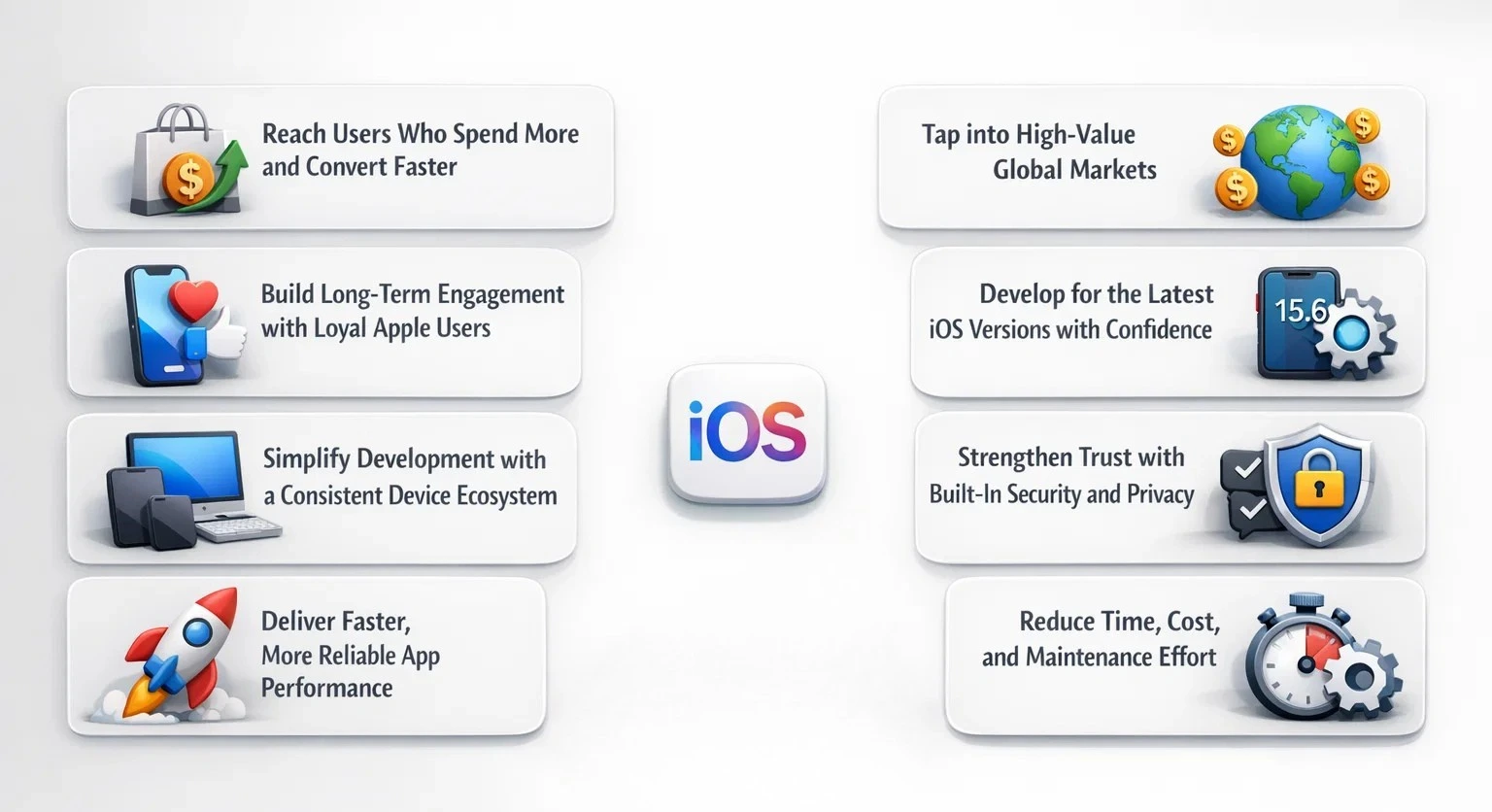
1. Reach Users Who Spend More and Convert Faster
iOS users consistently show higher spending behaviour. They are more likely to pay for apps, upgrades, and subscriptions. This makes iOS an ideal platform for businesses focused on revenue, not just downloads. For UK companies targeting premium customers, this higher spending power often results in better ROI, even with a smaller user base.
2. Build Long-Term Engagement with Loyal Apple Users
Apple users tend to stay within the ecosystem once they join. This loyalty leads to higher retention rates and more frequent app usage. Users also adopt updates and new features faster. For businesses, this means stronger engagement without constant re-acquisition efforts.
3. Simplify Development with a Consistent Device Ecosystem
iOS offers a controlled and predictable device environment. Apple releases fewer devices with standard screen sizes and performance levels. This consistency reduces development complexity. Teams spend less time testing and more time improving features. As a result, apps reach the market faster.
4. Deliver Faster, More Reliable App Performance
Performance plays a major role in user satisfaction. iOS apps are known for smooth navigation, fast load times, and stable behaviour. Apple’s tight integration of hardware and software reduces crashes and compatibility issues. This creates a dependable experience for users and fewer support issues for businesses.
5. Tap into High-Value Global Markets
Although Android leads in global volume, iOS dominates in key revenue-driven regions. In the US, iPhones hold over 56% market share, making iOS a strong platform for international expansion. For UK businesses looking beyond local markets, iOS apps open doors to high-spending audiences worldwide.
6. Develop for the Latest iOS Versions with Confidence
Most Apple users update their devices quickly. Around 80% of iPhones released in recent years run the latest iOS version. This allows developers to focus on modern features instead of supporting outdated systems. Cleaner code and faster innovation follow.
7. Strengthen Trust with Built-In Security and Privacy
Apple places privacy and security at the core of its platform. Strict App Store reviews and strong data protection policies create a safer environment for users. This trust benefits businesses, especially in regulated industries. Secure apps build confidence and protect brand reputation.
8. Reduce Time, Cost, and Maintenance Effort
iOS apps often have shorter development cycles. Fewer device variations and mature tools improve efficiency. Long-term maintenance is also simpler. Updates roll out smoothly, and ongoing costs stay predictable. This makes budgeting easier for businesses.
iOS App Development Trends Shaping 2026 and Beyond
 iOS app development does not stand still. Each year brings new expectations from users and new standards from Apple. In 2026, businesses must adapt quickly to stay relevant and competitive. The following iOS app development trends are already influencing how successful apps are built. Understanding them helps businesses plan smarter and invest wisely.
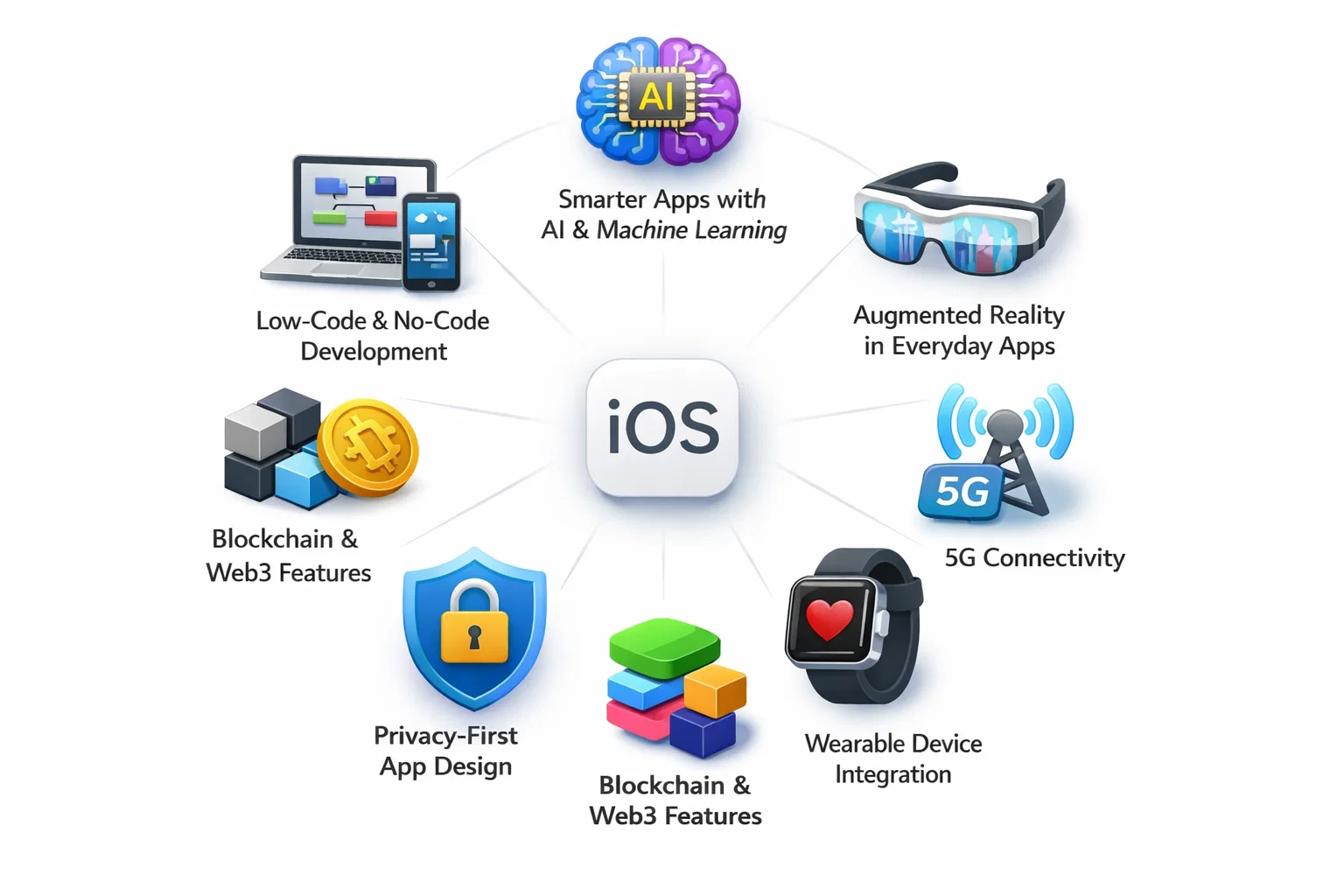
1. Smarter Apps with AI and Machine Learning
Artificial intelligence now plays a central role in iOS mobile app development. Apple’s on-device AI capabilities allow apps to respond faster and protect user privacy. In 2026, businesses use AI to personalise content, automate support, and analyse user behaviour. Features such as voice recognition, image detection, and smart recommendations feel natural to users. Apps that learn from user behaviour now outperform static experiences.
2. Augmented Reality Becoming Part of Everyday Apps
Augmented Reality is no longer limited to games. With Apple’s AR tools, businesses now create immersive and practical experiences. Retail brands use AR for virtual product previews. Education apps rely on interactive learning. Property and travel apps use AR for real-world visualisation.
3. Faster Experiences Powered by 5G Connectivity
The expansion of 5G continues to change what iOS apps can do. Faster speeds and lower latency unlock smoother video, live features, and real-time interactions. For businesses, this enables richer experiences without delays. Apps can now support high-quality streaming, instant updates, and collaborative features.
4. Deeper Integration with Wearable Devices
Wearables play a bigger role in the Apple ecosystem each year. Apps increasingly connect with devices like smartwatches to deliver real-time insights. Health, fitness, and productivity apps benefit the most. Users expect seamless syncing across devices. This wearable integration improves engagement and keeps users connected throughout the day.
5. Privacy-First App Design as a Business Requirement
Privacy is no longer optional. Users want to know how apps handle their data. Apple continues to enforce strict privacy rules across the App Store. Modern iOS apps now rely more on on-device processing, secure storage, and limited tracking. These practices help build trust and protect brand reputation. For UK businesses, strong privacy standards also support regulatory compliance.
6. Faster Prototyping with Low-Code and No-Code Tools
Low-code and no-code tools help businesses test ideas quickly. These platforms allow basic app features without heavy development effort. Companies use them for internal tools, MVPs, and rapid validation. However, they do not replace custom iOS app development. Instead, they support faster decision-making before full investment.
7. Growing Interest in Blockchain and Web3 Features
Blockchain technology continues to mature. Some iOS apps now use decentralised features for payments, identity, and digital ownership. While still selective, Web3 use cases are expanding in finance, gaming, and digital assets. Businesses explore these features where transparency and security matter.
Final Thoughts – Building Future-Ready iOS Apps in 2026
iOS app development in 2026 is no longer just about writing clean code. It is about choosing the right tools, following the right trends, and building apps that scale with user expectations. From development and design to testing and deployment, every decision plays a role in long-term success.
The iOS app development tools discussed in this guide help businesses build secure, high-performing, and user-focused applications. When used correctly, these tools reduce development time, improve quality, and support faster growth. However, tools alone are not enough. Expertise and experience matter just as much.
This is where working with the right development partner makes a difference.
At IDS Logic, we help businesses turn ideas into reliable iOS applications that deliver real results. Our team uses proven tools, modern frameworks, and best practices to build apps that perform well today and stay relevant tomorrow. We focus on user experience, scalability, and security at every stage.
If you’re planning to build a new iOS app or modernise an existing one, our experts are ready to help.
Let’s build an iOS app that supports your business goals in 2026 and beyond.