Key Takeaways
- Regular mobile app maintenance services help improve app performance, security, and long-term user retention.
- Apps that receive frequent updates achieve better visibility and rankings on app stores.
- Timely bug fixes and app performance optimization reduce crashes and improve customer experience.
- Ongoing mobile app security updates protect user data and help businesses stay compliant with modern privacy standards.
- Businesses that invest in proactive app maintenance and support are more likely to retain loyal users and reduce downtime.
- Continuous maintenance helps apps stay compatible with new operating systems, devices, and evolving technologies.
- User feedback plays a major role in improving app functionality and increasing engagement over time.
- Partnering with an experienced app maintenance company helps businesses keep their apps scalable, secure, and future-ready.
Launching a mobile app is only the beginning. The real challenge starts after the app goes live. Today, the mobile app market is more competitive than ever. Millions of apps compete for user attention across the App Store and Google Play. At the same time, user expectations continue to rise. People expect apps to load quickly, work smoothly, stay secure, and deliver a seamless experience every time they open them.
If an app crashes, slows down, or fails to meet expectations, users move on instantly. In fact, recent industry reports show that a large percentage of users uninstall apps within the first few months because of poor performance, bugs, or outdated functionality. This is exactly why mobile app maintenance services have become essential for modern businesses.
Modern users rely heavily on mobile apps for everyday activities such as shopping, banking, healthcare, communication, entertainment, and online learning. Businesses therefore cannot afford downtime, security risks, or poor app experiences. Even a small issue can affect customer trust, app ratings, and revenue.
That is why companies across industries now invest in professional mobile app support services as part of their long-term digital strategy. Regular updates, bug fixes, security improvements, and app performance optimisation help businesses stay competitive while improving customer retention.
Businesses that prioritise maintenance keep their apps reliable, relevant, and future-ready. Those that ignore it often face rising uninstall rates, poor reviews, lower engagement, and lost opportunities.
In the below sections, we will explore why investing in the right Mobile app maintenance company is critical for sustaining app success in today’s fast-moving mobile landscape.
The Business Impact of Mobile App Maintenance
Mobile apps are at the core of how many UK businesses connect with their customers. Apps allow people to search, shop, book, and interact with brands at their convenience, but building an app is just the beginning. After the launch, the real work begins, when you focus on keeping the app fast, secure, and relevant. Maintenance is vital to achieving long-term success of mobile apps.
Many business owners assume that once the app goes live, the job is complete. In reality, the app market moves quickly. User expectations change. Devices and operating systems update often. New security threats appear every month. If your app does not keep up, its performance drops, users leave, and the app becomes expensive to recover later.
Recent industry data shows how brutal the app market can be. Across both Android and iOS, more than 80% of users uninstall or abandon an app within 90 days. In some sectors, the number is closer to 95%. One major reason for this is poor or irregular app maintenance, which leads to crashes, slow loading times, and weak security.
Why Mobile App Maintenance Services Matter More Than Ever in 2026?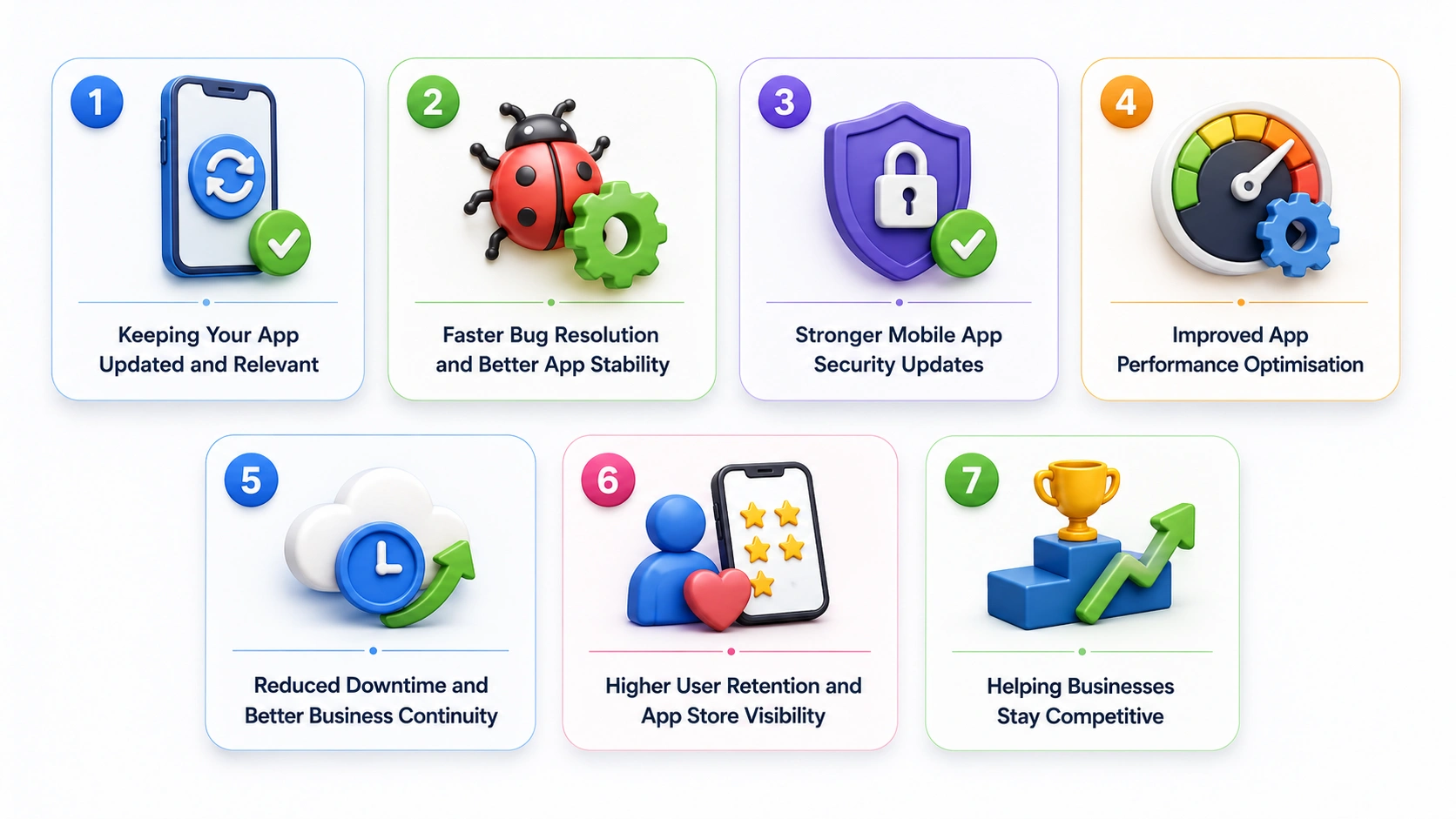
Launching an app is only the beginning. The real challenge starts after users download it. In today’s highly competitive market, businesses cannot afford to ignore ongoing mobile app maintenance services if they want to retain users and stay relevant.
With millions of apps available across Android and iOS platforms, users now expect flawless performance, stronger security, faster loading speed, and regular feature improvements. Even a minor issue can push users towards a competitor within seconds. This is exactly why businesses are investing heavily in reliable app maintenance and support to keep their applications stable, secure, and user-friendly.
Recent industry reports show that more than 70% of users uninstall apps because of crashes, poor performance, or outdated functionality. At the same time, app stores continue to prioritise actively maintained applications in their rankings. Regular updates now play a direct role in improving visibility, downloads, and user retention.
1. Keeping Your App Updated and Relevant
Technology changes rapidly, and user expectations evolve even faster. Regular mobile application maintenance services help businesses keep their apps aligned with the latest operating system updates, device requirements, and market trends.
Whether it is introducing new features, improving navigation, or updating the interface, maintenance ensures the app remains fresh and engaging. Businesses that consistently improve their apps are more likely to retain customers and increase long-term engagement.
Modern users also expect apps to adapt to new technologies like AI-driven personalisation, voice search, wearable integrations, and cloud connectivity. Without regular updates, apps quickly start feeling outdated.
2. Faster Bug Resolution and Better App Stability
Bugs and technical glitches damage user trust instantly. Slow loading screens, app crashes, payment failures, or broken features can lead to negative reviews and abandoned sessions.
Professional mobile app support services focus on identifying and resolving issues before they impact the user experience. Regular testing, monitoring, and performance checks help businesses maintain app stability across different devices and operating systems.
This proactive approach improves reliability and reduces customer frustration. In turn, businesses experience higher retention rates and stronger app store ratings.
3. Stronger Mobile App Security Updates
Cybersecurity threats continue to rise across the mobile ecosystem. Apps that handle personal information, payment details, or sensitive business data are now major targets for cyber attacks.
This makes regular mobile app security updates extremely important. Maintenance teams continuously monitor vulnerabilities, update security protocols, and implement the latest protection measures to reduce security risks.
Compliance with regulations such as GDPR and app store privacy policies is essential. Businesses that fail to maintain secure applications risk financial penalties, reputational damage, and loss of customer trust.
4. Improved App Performance Optimisation
Users expect apps to work instantly and smoothly. Delays of even a few seconds can increase uninstall rates and reduce conversions. Regular app performance optimisation helps improve speed, responsiveness, battery efficiency, and overall usability. Maintenance teams optimise backend processes, update software libraries, and monitor app analytics to ensure consistent performance.
This becomes even more important as businesses scale their user base. A well-maintained app can handle increased traffic without affecting user experience or causing downtime.
5. Reduced Downtime and Better Business Continuity
Unexpected downtime directly impacts revenue, customer confidence, and brand reputation. If users cannot access your app when needed, they may never return.
Reliable mobile app maintenance helps reduce downtime by monitoring infrastructure, fixing issues early, and maintaining app compatibility with changing environments. Businesses can continue operating smoothly without major disruptions.
For eCommerce, healthcare, banking, and service-based businesses, uninterrupted app performance is now a business necessity rather than a technical preference.
6. Higher User Retention and App Store Visibility
App stores reward active and updated applications. Frequent updates signal quality, reliability, and long-term support. As a result, maintained apps often achieve better rankings and improved visibility. At the same time, users are more likely to trust apps that receive regular improvements. Positive reviews, higher engagement, and better retention all contribute to stronger growth over time.
This is why leading businesses now treat mobile app maintenance services as a long-term growth strategy instead of a post-launch expense.
7. Helping Businesses Stay Competitive
The mobile app market continues to evolve rapidly. Competitors constantly introduce new features, better experiences, and improved technologies.
Without ongoing maintenance, even a successful app can quickly lose its market position. Businesses that invest in continuous improvements remain more adaptable, innovative, and competitive. A trusted app maintenance company not only fixes technical issues but also helps businesses evolve their apps based on user behaviour, market demands, and future opportunities. Ultimately, regular maintenance protects your investment, strengthens customer loyalty, and keeps your mobile app ready for long-term business growth.

Types of Mobile App Maintenance Every Business Should Know

Keeping a mobile app healthy is an ongoing job. Different issues require different kinds of support, and not all updates serve the same purpose. Most businesses rely on a mix of maintenance types to keep their apps fast, secure, and relevant. Below are the main categories of mobile app maintenance services and why each one matters.
1. Corrective App Maintenance (Fixing Errors Early)
Corrective maintenance deals with issues that already exist. This includes bugs, small design faults, logic errors, and crashes that users may report. Even minor errors can affect trust and lead to a drop in reviews. With more than 60% of users abandoning an app after two glitches, quick corrective action is essential. This type of support helps you resolve problems early, improve the app’s function, and protect user experience.
2. Preventive App Maintenance (Stopping Problems Before They Happen)
Preventive maintenance focuses on avoiding future problems. Developers review the code, monitor performance, run routine security checks, and optimise the app before issues appear. This is especially important today because mobile apps process large amounts of user data.
Preventive care often includes performance audits, security checks, code clean-up and optimisation, and regression testing. The goal is to keep the app stable and reduce the risk of big, expensive failures later. Businesses that follow preventive maintenance often see up to 30% fewer user-reported issues.
3. Adaptive App Maintenance (Keeping Up With New Technology)
Operating systems, device models, and third-party tools evolve quickly. Adaptive maintenance helps your app stay compatible with these changes. This includes updates to support new iOS/Android versions, screen sizes, API changes, and hardware updates.
Without adaptive updates, even a high-performing app may start to break or become slow. With around 80% of UK users installing OS updates within the first month, businesses must ensure their app stays aligned with the latest systems.
4. Perfective App Maintenance (Improving Features and Experience)
Perfective maintenance improves what already works. This type of maintenance is driven by user feedback, analytics, and market trends. It involves adding new features, refining existing ones, and removing features that users no longer find helpful. Perfective updates help your app stay competitive and keep users engaged for longer periods.
Apps that evolve with customer needs typically see higher retention and stronger loyalty.
Examples include:
- Enhancing navigation
- Improving accessibility
- Adding new in-app functions
- Refreshing visual design
5. Predictive App Maintenance (Using Data to Guide Updates)
Predictive maintenance relies on analytics and behavioural data. It helps you understand how people use your app, where they face problems, and which areas need attention. With AI-driven tools now common in 2025, predictive maintenance has become a practical way to manage performance.
This approach lets you identify unusual patterns, spot early warning signs, fix problems before they impact users, and reduce downtime and support costs. Predictive maintenance lowers the frequency of avoidable errors and improves long-term stability.
6. Emergency App Maintenance (Handling Critical Failures)
Sometimes things go wrong without warning. A server issue, a sudden crash after an OS update, or a major security threat may require urgent action. Emergency maintenance focuses on fixing these critical issues as quickly as possible.
A fast response matters because downtime can lead to lost revenue, negative reviews, and user frustration. In sectors like finance, travel, and retail, even 15 minutes of downtime can affect thousands of users.
A Clear Step-by-Step Mobile App Maintenance Process
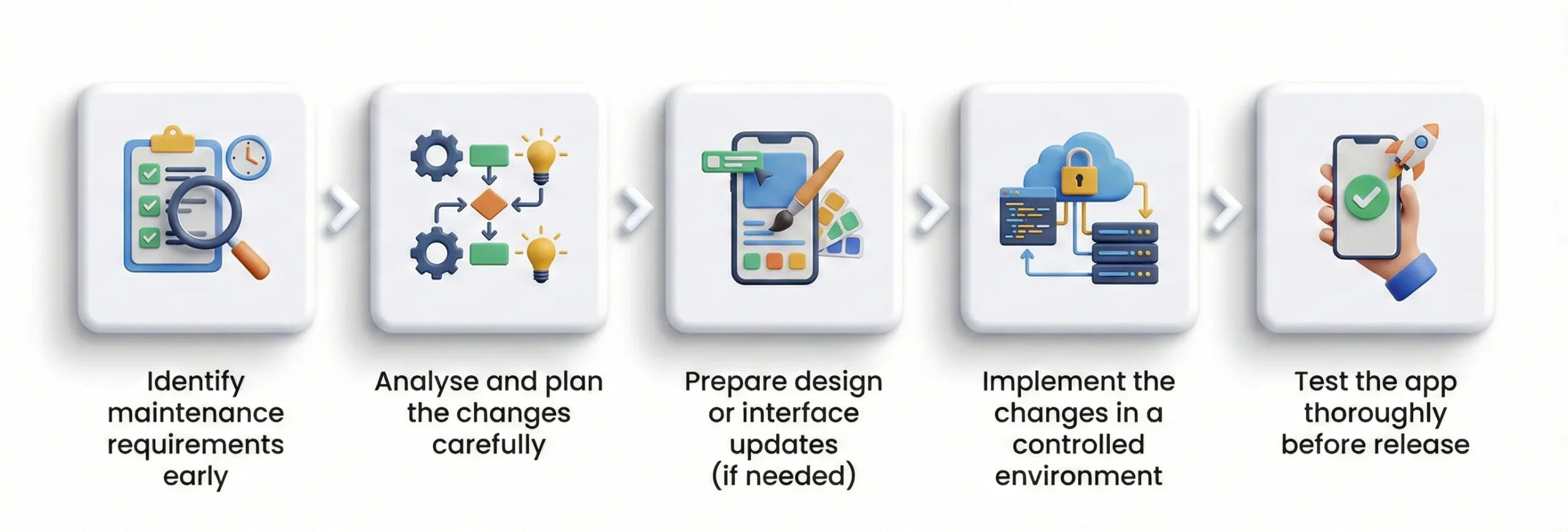
Mobile app maintenance works best when it follows a clear and repeatable process. Successful apps rely on structured mobile app maintenance services that reduce risk, control costs, and keep users satisfied. Below is a simple step-by-step approach that many UK businesses follow to maintain long-term app performance and security.
1. Identify Maintenance Requirements Early
Every maintenance cycle starts with understanding what needs attention. This includes reviewing user feedback, monitoring app performance, and checking for security gaps. Analytics tools now make it easier to spot slow screens, feature drop-offs, and unusual behaviour.
Clear requirement tracking helps teams avoid guesswork later. It also ensures that updates focus on real user problems instead of unnecessary changes. Apps that act on user feedback early often see higher retention and fewer negative reviews.
2. Analyse and Plan the Changes Carefully
Once the requirements are clear, the next step is planning. This stage checks feasibility, effort, and timelines. Teams review what changes are needed, how long they will take, and whether they align with business goals.
Good planning reduces delays and avoids rushed releases. It also helps control costs. In the UK market, unplanned updates are one of the main reasons app maintenance budgets overrun.
3. Prepare Design or Interface Updates (If Needed)
Some updates involve visual changes or new features. When that happens, design planning becomes essential. Simple wireframes or mock-ups help teams see how updates will fit into the existing app.
This step ensures the app remains easy to use and visually consistent. It also helps prevent confusion for existing users. Clean design updates often lead to better engagement and longer session times.
4. Implement the Changes in a Controlled Environment
After planning and design, developers apply the updates in a test or staging environment. This prevents disruption to live users. Code changes follow best practices and version control to keep everything organised.
Careful implementation reduces downtime and avoids unexpected issues. This matters because even short outages can affect trust, especially for customer-facing apps.
5. Test the App Thoroughly Before Release
Testing is a critical step in the mobile app maintenance process. Every update must go through checks for performance, compatibility, usability, and security. Testing across different devices and operating system versions is essential.
Users expect apps to work smoothly on every update. Research shows that over 50% of users uninstall an app after repeated crashes, making testing non-negotiable.
How Much Does Mobile App Maintenance Cost in the UK?
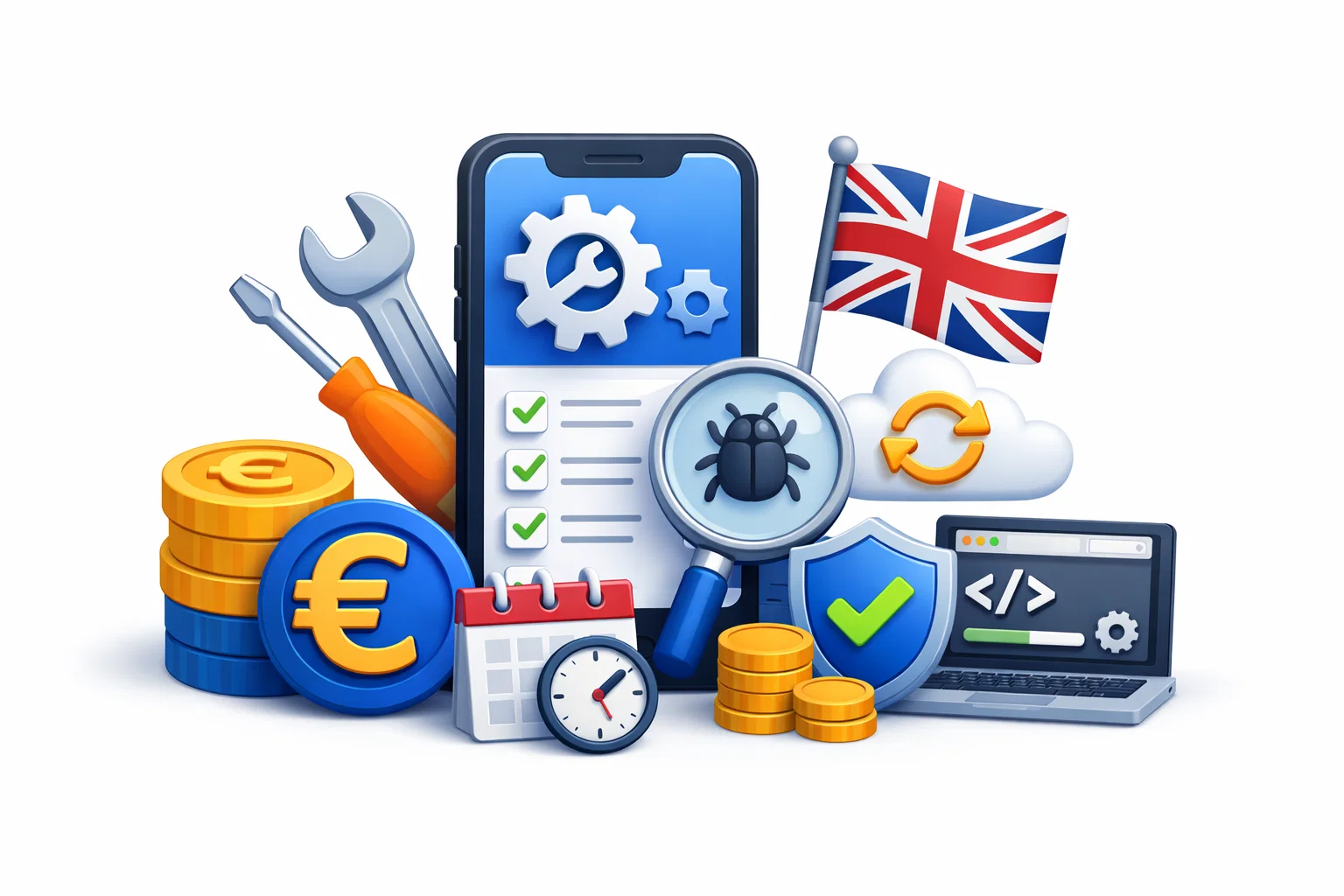
The cost of mobile app maintenance is not fixed. It varies based on the app’s size, features, and long-term goals. Every app has different support needs, which is why prices differ from one mobile app maintenance company to another.
As a general guide, UK businesses should expect to spend £1,500 to £2,000 per month in the early stages of maintenance. This figure may rise over time as the app grows, adds features, or supports more users. While this may feel like an extra expense, regular maintenance helps avoid larger and more costly problems later.
A widely accepted approach in 2025 is to allocate around 15-25% of the original app development cost towards annual maintenance. For example, if your app costs £100,000 to build, setting aside £15,000-£25,000 per year for maintenance is a sensible benchmark. This level of investment supports performance, security, and user satisfaction.
Key Factors That Affect App Maintenance Costs
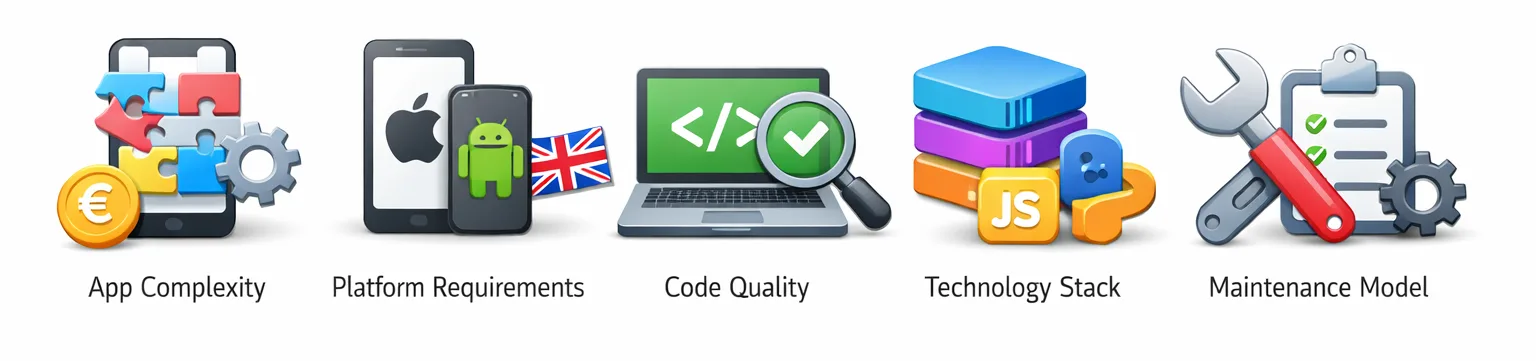
Several elements influence how much you will spend on mobile app support services:
1. App complexity
Apps with more screens, features, integrations, or users require more frequent updates and monitoring. As complexity increases, maintenance effort and cost also rise.
2. Platform requirements
Maintaining apps for both Android and iOS often costs more than supporting a single platform. Each system has its own updates, rules, and compatibility needs.
3. Code quality
Apps built with clean, well-structured code are easier to maintain. Poor-quality code takes longer to fix and update, which increases ongoing costs.
4. Technology stack
Some technologies require specialist skills. Native apps often cost more to maintain than hybrid or cross-platform apps due to separate updates and testing cycles.
5. Maintenance model
Some providers offer fixed monthly plans, while others charge hourly or per task. Long-term support contracts often offer better value and predictability.
Typical App Maintenance Cost Ranges in 2026
While exact figures vary, current industry estimates suggest:
Simple apps: £4,000–£10,000 per year
Mid-level apps: £10,000–£40,000 per year
Enterprise apps: £40,000+ per year
Although these costs may seem high, they are usually far lower than the cost of losing users, fixing major failures, or rebuilding an app later.
Why Planning Ahead Saves Money?
Discussing maintenance early with your app partner helps you plan budgets and avoid surprises. Costs may increase slightly year on year as operating systems change and security standards tighten. Clear service agreements help define scope, response times, and responsibilities.
Most importantly, choosing the right mobile app maintenance services provider matters. Experience, process maturity, and proactive support often make a bigger difference than price alone.
Best Practices for Effective Mobile App Maintenance
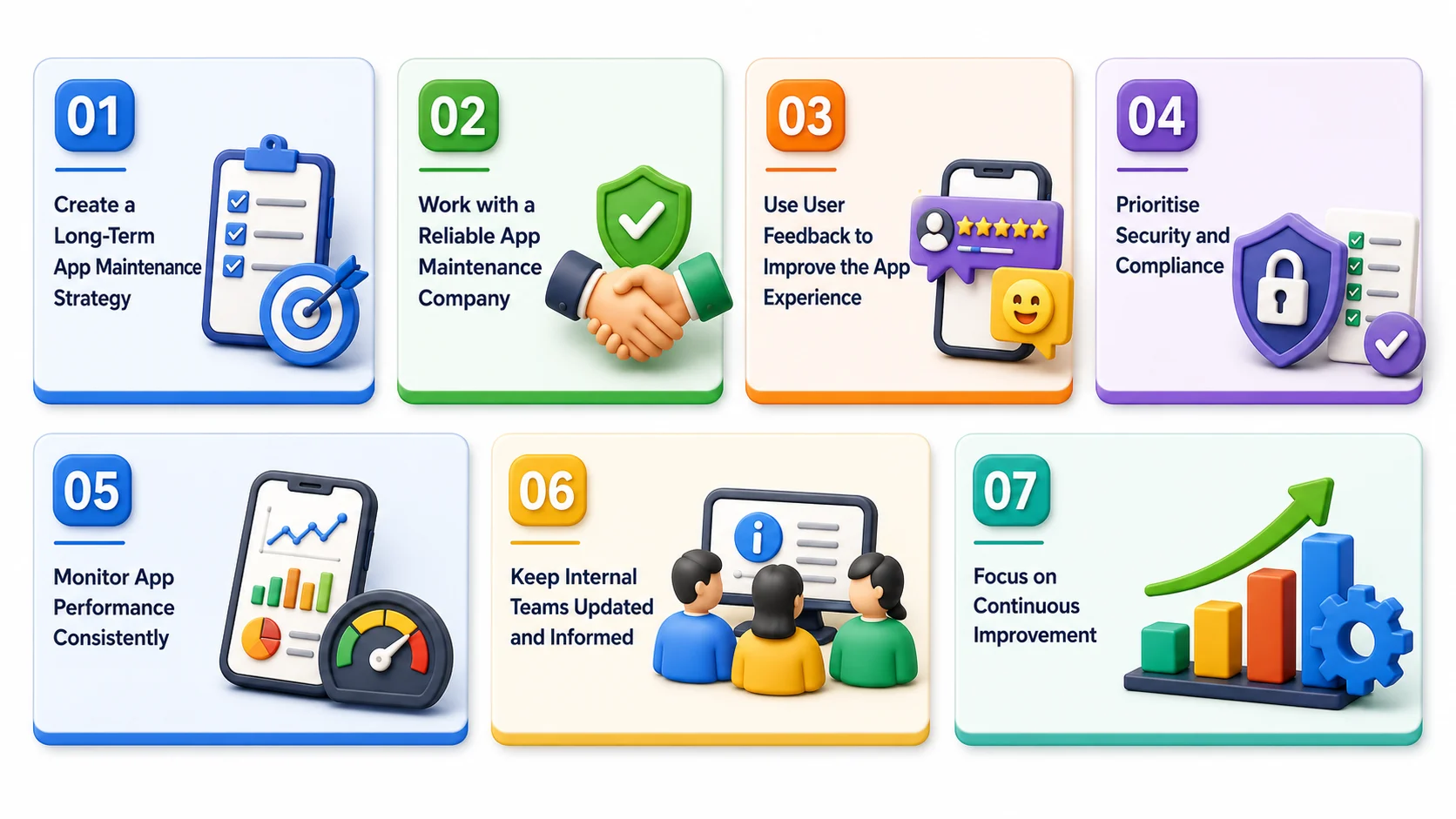
Maintaining a successful app requires more than occasional updates. Businesses now need a structured and proactive approach to mobile app maintenance services to keep applications secure, stable, and competitive in a fast-changing digital environment.
Apps that receive consistent maintenance perform better, retain users longer, and adapt more easily to changing customer expectations. Below are some of the most effective practices businesses should follow to improve long-term app performance and reliability.
1. Create a Long-Term App Maintenance Strategy
A successful app always has a clear maintenance roadmap behind it. Businesses should plan regular updates, performance reviews, security checks, and feature improvements well in advance instead of reacting only when issues appear.
Using proper strategy helps reduce unexpected downtime, avoids costly disruptions, and ensures the app continues to support business goals. It also allows teams to prioritise updates based on user behaviour, analytics, and market trends.
2. Work with a Reliable App Maintenance Company
Choosing the right app maintenance company is just as important as the original development process. Experienced maintenance teams understand how to manage updates, monitor app health, improve performance, and resolve issues quickly.
A professional partner like IDS Logic also helps businesses stay aligned with new operating system requirements, app store policies, and security standards. This reduces risks while ensuring smoother app operations over time.
3. Use User Feedback to Improve the App Experience
User expectations continue to change rapidly in 2026. Businesses that actively listen to customer feedback are more likely to improve retention and engagement.
Reviews, ratings, surveys, and behavioural insights provide valuable information about what users enjoy and what frustrates them. Regularly improving features based on this feedback creates a better experience and strengthens customer loyalty. This approach also supports better app performance optimisation by helping businesses identify weak areas that affect usability or satisfaction.

4. Prioritise Security and Compliance
Security should remain a continuous process, not a one-time setup. Businesses handling customer information, payments, or personal data must invest in ongoing mobile app security updates to protect against emerging threats.
Regular security audits, encrypted data storage, secure authentication methods, and compliance with GDPR and app store privacy guidelines are now essential parts of responsible app maintenance. Strong security practices help protect user trust while reducing the risk of financial and reputational damage.
5. Monitor App Performance Consistently
Continuous monitoring helps businesses identify technical issues before users experience them. Tracking app speed, crash reports, loading times, battery usage, and engagement levels provides valuable insights into overall performance.
Modern mobile app support services often include real-time monitoring tools that allow teams to respond faster and maintain smoother functionality across different devices and operating systems. Apps that perform consistently well are more likely to achieve better ratings, stronger retention, and higher app store visibility.
6. Keep Internal Teams Updated and Informed
Technology evolves quickly, and businesses must ensure their internal teams stay informed about new tools, security standards, and app trends. Regular training helps teams understand how updates, integrations, and workflows affect app performance and customer experience.
Better collaboration between internal teams and external maintenance experts also improves efficiency during future updates and feature rollouts.
7. Focus on Continuous Improvement
The most successful apps never remain static. Businesses should treat their app as an evolving digital product that grows with user needs and market demands.
Regular improvements, feature enhancements, UI refinements, and performance updates help apps stay competitive and relevant. This ongoing approach ensures the application continues delivering value long after launch.

Conclusion – Mobile App Maintenance Is the Key to Long-Term App Success
Building a mobile app is only the first step. The real challenge is keeping that app secure, fast, relevant, and valuable as technology and user expectations continue to evolve. Businesses can no longer treat maintenance as an optional activity. It has become a critical part of long-term digital success.
Regular mobile app maintenance services help businesses improve app performance, strengthen security, reduce downtime, and deliver a smoother user experience. From fixing bugs and optimising speed to adapting to new operating systems and introducing feature updates, ongoing maintenance ensures your app continues to meet modern user demands.
Apps that fail to evolve often lose visibility, engagement, and customer trust. On the other hand, businesses that invest in continuous app maintenance and support are more likely to achieve stronger retention, better app store rankings, and higher customer satisfaction.
As mobile technologies continue to advance with AI, cloud integration, 5G, and smarter user experiences, maintaining your app proactively becomes even more important. A well-maintained application not only protects your investment but also helps your business remain competitive in an increasingly crowded digital market.
Keep Your App Performing at Its Best with IDS Logic
At IDS Logic, we provide reliable and scalable mobile application maintenance services designed to keep your app secure, updated, and high-performing. From regular updates and mobile app security updates to bug fixing, monitoring, and app performance optimisation, our team helps businesses maintain apps that users trust and enjoy.
Explore our mobile app maintenance and support services and keep your application ready for long-term growth.