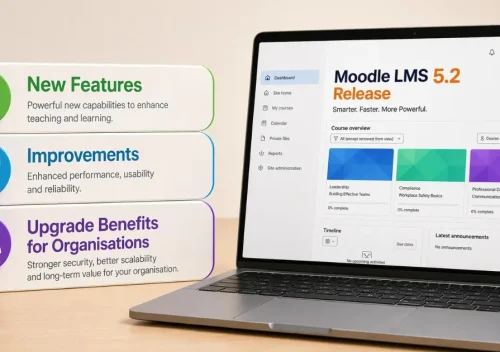
Moodle LMS advantages offers an edge to the learners using the system. Here is everything to know about Moodl.
Education and training have changed for good. Traditional classrooms no longer meet the needs of modern learners or organisations. Today, flexibility, remote access, and measurable progress matter more than ever.
This shift has made online learning a necessity, not a choice. As a result, the Moodle learning management system has become a trusted platform for delivering education and training at scale.
The global online learning market continues to grow rapidly, driven by remote work, digital skills demand, and lifelong learning. Universities, training providers, and businesses now rely on Learning Management Systems to manage content, track progress, and engage learners from anywhere.
Among all available platforms, Moodle stands out as the most widely used open-source LMS Moodle solution worldwide. Its popularity comes from flexibility, cost-effectiveness, and strong community support.
But before exploring the benefits of Moodle LMS, it helps to understand the role of Learning Management Systems and why they matter in today’s learning landscape.
What Are Learning Management System (LMS)?

A Learning Management System, often called an LMS, is software that helps organisations manage learning from one central place. It allows teams to create courses, share content, track progress, and measure results with ease.
Today, LMS platforms support far more than academic learning. They power employee training, compliance programmes, onboarding, and professional development. For UK organisations, an LMS also reduces manual work and keeps learning consistent across teams and locations.
With the advent of remote and on-demand learning, an LMS provides people with the opportunity to learn at their own pace. A key part of modern education and training is Moodle, which provides administrators with a clear view of participation, completion, and performance.
What is Moodle LMS?

Moodle is a free and open-source Learning Management System built to support online learning at scale. It helps educators, trainers, and organisations design courses, structure learning paths, and engage learners through interactive content.
The name Moodle stands for Modular Object-Oriented Dynamic Learning Environment. While the name sounds technical, the idea is simple. Moodle gives you a flexible platform where learning can be shaped around your audience.
Launched in 2002, Moodle has grown into one of the most widely used LMS platforms in the world. Millions of learners use it every day across education, healthcare, government, and business sectors. Its long-term success comes from flexibility, reliability, and strong community support.
As an open-source LMS Moodle platform, it allows organisations to adapt the system without being tied to a single vendor. This freedom makes Moodle a popular choice for long-term learning strategies.
Why is Moodle LMS Widely Used?
Moodle simplifies how learning is delivered and managed. It brings content, learners, and reporting into one secure system.
Key strengths of what is Moodle LMS include:
- Centralised course and user management
- Personalised learning environments
- Secure access and role-based permissions
- Strong reporting and progress tracking
These features help organisations deliver learning that is structured, measurable, and easy to scale.
What is Moodle Used For? Key Uses of Moodle LMS
Moodle supports learning on desktops, tablets, and mobiles, which suits modern work and study habits. Its modular design also allows organisations to add features as needs change. From assessments and collaboration tools to analytics and integrations, Moodle evolves with your learning goals.
The uses of Moodle LMS go far beyond hosting online courses. Its flexibility allows it to support many learning and training needs.
Common use cases include:
- Compliance and regulatory training
- Employee onboarding and induction
- Skills and competency development
- Ongoing professional learning
- Product and service training
Both educational institutions and businesses use Moodle in different ways. Some focus on formal education, while others use it for internal training and knowledge sharing. This adaptability explains the wide adoption of Moodle LMS for education and training.
Top Benefits of a Moodle-Based Learning Management System (LMS)
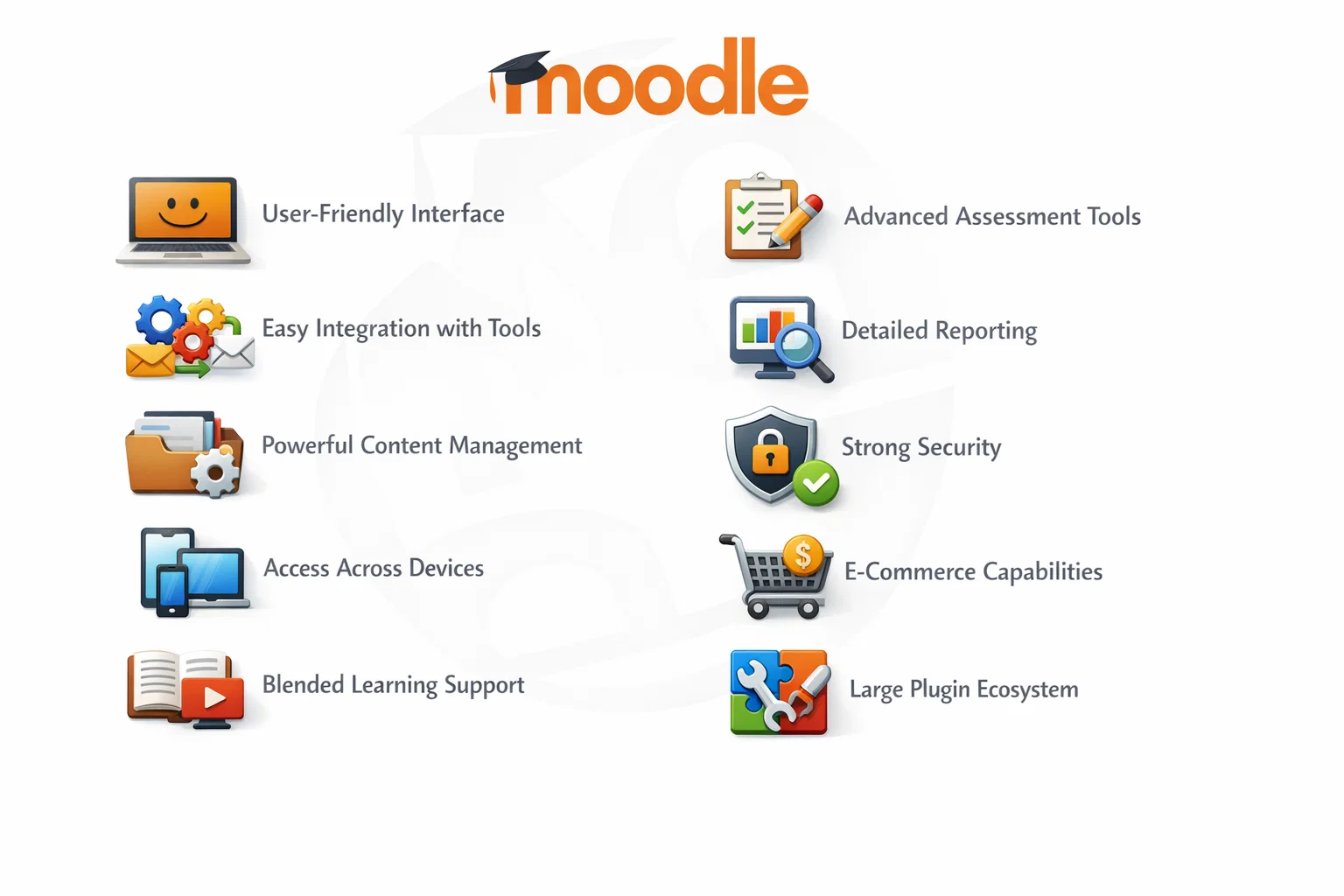
Choosing the right LMS plays a big role in how effective your learning strategy becomes. The Moodle learning management system continues to stand out because it balances flexibility, usability, and long-term value.
Below are the key benefits of Moodle LMS, rewritten for today’s learning needs and UK organisations.
1. User-Friendly Interface That Reduces Learning Time
One of the biggest Moodle LMS benefits is ease of use. The platform offers clear navigation and simple layouts for both learners and administrators.
Users spend less time learning how the system works and more time focusing on actual learning. This reduces onboarding time and improves adoption across teams.
2. Easy Integration with Business and Learning Tools
The uses of Moodle LMS extend beyond education. Moodle integrates smoothly with HR systems, CRM tools, payment gateways, compliance platforms, and reporting tools. This makes it suitable for both academic institutions and enterprises managing large training programmes. It also supports data sharing across locations, which helps global teams stay aligned.
3. Powerful and Flexible Content Management
Moodle supports modern eLearning standards such as SCORM and xAPI. This allows organisations to reuse existing content and deliver consistent learning experiences. Administrators can manage documents, videos, quizzes, and interactive content from one place. Version control and real-time updates make content management simple and reliable.This flexibility is a major reason behind the popularity of the open-source LMS Moodle platform.
4. Easy Access Across Devices and Locations
Learning today happens everywhere. Moodle is fully responsive and works smoothly on desktops, tablets, and mobile devices. Learners can access content on the move, which supports flexible and remote learning models. Discussion boards and collaboration tools also encourage social learning, which improves engagement and knowledge sharing.
5. Strong Support for Blended Learning Models
The Moodle learning management system supports both online and offline learning activities. Educators and trainers can track classroom sessions alongside digital learning. This blended approach works well for organisations that mix in-person training with online modules. It allows teams to cater to different learning styles without losing visibility or control.
6. Advanced Assessment and Testing Tools
Moodle offers built-in tools for quizzes, assignments, and evaluations. Organisations can run pre-tests, post-tests, and ongoing assessments. Automatic and manual grading options give flexibility, while detailed records help track learner progress over time. This makes Moodle suitable for both academic evaluation and workplace skill assessment.
7. Detailed Reporting and Progress Tracking
Tracking performance is one of the strongest benefits of Moodle LMS. The platform provides clear reports on course completion, learner progress, and assessment results. Organisations can identify gaps, measure outcomes, and improve learning programmes using real data. For commercial learning, Moodle can also track sales and performance metrics.
8. Strong Security and Controlled Access
Security matters when managing learning data. Moodle includes secure login, role-based access, and regular security updates. These features help protect personal data, course content, and organisational information. For UK organisations, this focus on security supports compliance and trust.
9. Built-In E-commerce Capabilities
Moodle supports paid courses and online learning sales. It integrates with payment gateways such as cards and digital wallets, making it suitable for training providers and organisations selling courses. Built-in tracking helps monitor revenue and learner activity. This expands the uses of Moodle LMS into commercial learning models.
10. A Large Plugin Ecosystem for Customisation
Moodle’s flexibility comes from its extensive plugin library. With hundreds of plugins available, organisations can add features such as gamification, attendance tracking, analytics, and more. This allows Moodle to adapt as learning needs evolve. This level of customisation is a key reason why Moodle LMS remains a common question among organisations exploring scalable learning platforms.
How Does Moodle LMS Work? A Step-by-Step Overview
The Moodle learning management system helps organisations create flexible and personalised learning experiences. It does this by bringing content, learners, and progress tracking into one secure platform.
At its core, what is Moodle LMS really about? It is about giving educators and training teams control. They can design learning journeys, deliver the right content, and track results with ease. In 2026, this structured yet flexible approach is why Moodle remains a leading choice for online learning.
Let’s look at how Moodle LMS works in practice.
1. Setting Up Learning Space
Every Moodle journey starts with a learning space. An administrator or course creator sets up a learning site where all training materials live in one place. This space acts as the central hub for courses, resources, and activities.
Course creators can upload their own content or use existing learning materials. They can also organise lessons, topics, and activities using simple drag-and-drop tools. This makes setup quick, even for non-technical users. This flexibility is one of the key Moodle LMS benefits, especially for organisations managing multiple courses.
2. Managing Online Learning
Once courses are live, Moodle makes daily learning management straightforward. Administrators can control enrolments, manage assessments, and monitor learner activity from a single dashboard. This helps ensure learners stay engaged and complete courses on time.
For businesses and institutions, this visibility supports better planning and learning outcomes. It also removes the guesswork from managing remote or hybrid learning.
3. Reward Achievement
By using scores, completion status, and digital badges, Moodle allows course leaders to recognise learner progress. Using these badges provides learners with a visual record of achievement, promoting student engagement. This recognition feature is especially beneficial for long-term training and professional development programs.
4. Getting Learners on Site
Upon the completion of courses, learners can be invited by direct links, email invitations, or internal channels. Once learners gain access, they can enroll in courses and begin learning at their own pace. Moodle LMS has an extremely easy-to-use interface, supporting one of its most common uses, scalable learning for large or distributed teams.
5. Tracking Progress
The real value of Moodle lies in its ability to provide real-time tracking of student performance and engagement. The platform records activity completion, assessment results, and course progress in real time.
With centralised tracking, remote learning becomes easier. It replaces manual tracking and scattered systems with a reliable source of insight. Organisations can then measure success, identify gaps, and tweak their learning strategies accordingly.
Conclusion – Why Moodle LMS Is a Smart Long-Term Choice
Moodle has earned its place as one of the most trusted platforms for online learning. Its flexibility, reliability, and open-source foundation make it suitable for education providers and businesses alike. From personalised learning paths to strong reporting and progress tracking, the Moodle learning management system supports the full learning lifecycle.
One of the biggest benefits of Moodle LMS is adaptability. It works equally well in classrooms, blended environments, and fully online programmes. Organisations can scale learning without losing control or clarity. Its open-source nature also keeps costs manageable while allowing deep customisation.
Moodle’s large plugin ecosystem and regular updates ensure the platform keeps pace with changing learning needs. Whether you want to add new features, integrate with other systems, or improve the learner experience, Moodle provides the flexibility to do so.
How IDS Logic Can Help You Get More from Moodle?
Choosing the right LMS is only the first step. Long-term success depends on how well the platform is designed, supported, and maintained.
At IDS Logic, we help organisations build scalable and future-ready learning platforms using Moodle. Our LMS development solutions focus on creating customised learning environments that align with your training goals and business needs.
We also provide reliable Moodle support and maintenance to ensure your platform remains secure, stable, and up to date. From performance optimisation to ongoing updates, our team supports you at every stage.
If you’re planning to launch a new LMS or improve an existing Moodle platform, IDS Logic can help you move forward with confidence. Let’s build a learning experience that grows with your organisation.