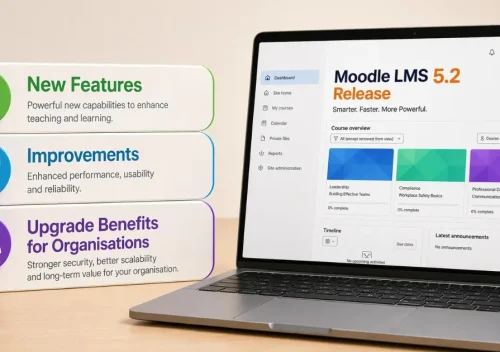
Helping you understand all the aspects of Moodle centric personalized learning. Get to know the details.
- Moodle is the world’s most widely adopted open-source LMS, used by millions of learners and organisations globally.
- Personalised learning significantly improves outcomes, with studies showing over 60% higher learner confidence and up to 95% improved engagement in tailored LMS environments.
- A Moodle LMS development company enables fully customised learning experiences, helping organisations adapt content, pace, and learning paths to individual users.
- Moodle’s open-source and cost-effective model allows businesses to avoid licence fees while building scalable and flexible learning platforms.
- With access to 2000+ plugins and integrations, Moodle supports advanced features such as AI-driven learning, gamification, analytics, and automation.
- Modern Moodle LMS platforms support AI-assisted learning, adaptive pathways, and real-time analytics, making training more data-driven and efficient.
- Mobile-first and accessible design ensures learners can access training anytime, anywhere, improving completion rates and user experience.
- Moodle enables seamless integration with enterprise systems like HRMS, CRM, and collaboration tools, creating a unified digital learning ecosystem.
- Organisations using Moodle benefit from better scalability, governance control, and long-term cost predictability, making it ideal for enterprise-level learning strategies.
- In 2026, the focus is shifting from content delivery to learner experience, engagement, and measurable ROI, and Moodle is well-positioned to support this transformation.
Learning expectations have changed significantly in recent years. People no longer engage with generic training programmes that treat every learner the same. Instead, they expect experiences that match their role, pace, and individual goals. This shift has made personalised learning a priority for organisations across the UK. As a result, the demand for a reliable Moodle LMS development company has increased, as businesses look for flexible platforms that can adapt to different learning needs.
At the same time, the rapid growth of digital learning has made the LMS market more crowded than ever. There are now hundreds of platforms available, each offering different features and capabilities. This creates a common challenge for organisations. Choosing the right solution that truly supports learner-centric experiences is not always straightforward. Many businesses struggle with systems that lack flexibility, limit personalisation, or fail to integrate with existing tools.
This is where Moodle stands out. As a highly flexible and scalable platform, it allows organisations to build customised learning environments that go beyond traditional training methods. Unlike classroom-based learning, which follows a fixed structure, Moodle enables users to access content anytime and from anywhere. It also supports self-paced learning, allowing individuals to fully understand one concept before moving to the next. This not only improves engagement but also leads to better learning outcomes.
In this blog, we explore how a Moodle LMS development company helps organisations build personalised, learner-centric experiences that improve engagement, performance, and long-term learning outcomes.
What Are Personalised Learner-Centric Experiences in Moodle LMS?
Personalised learner-centric experiences focus on adapting learning to each individual rather than following a fixed approach. In the context of a Moodle LMS development company, this means designing a system that adjusts content, pace, and learning paths based on user needs, skills, and goals. Instead of treating all learners the same, Moodle enables organisations to deliver tailored experiences that match different learning styles and preferences.
This approach allows learners to progress at their own pace, ensuring they fully understand one concept before moving forward. It also provides flexibility to access learning anytime and from anywhere, which is essential for modern workplaces and remote teams. In addition, personalised learning uses data and performance insights to recommend relevant content, helping learners stay engaged and focused on areas that need improvement.
As a result, learner-centric Moodle LMS solutions improve engagement, motivation, and knowledge retention. Studies show that personalised learning environments increase learner confidence and participation, making training more effective. For UK organisations, adopting custom Moodle LMS development is no longer optional. It is a key step towards building scalable, flexible, and results-driven eLearning experiences.
Why Moodle LMS Development Company Solutions Deliver the Best Learner-Centric Experiences?
Organisations nowadays need more than a basic learning platform. They need a system that adapts to users, scales with growth, and delivers personalised learning at every level. This is where a Moodle LMS development company plays a critical role.
Moodle stands out because it offers flexibility, cost efficiency, and deep customisation. Understanding the cost and feature set is equally important before implementation. Learn more about Moodle LMS cost and features.
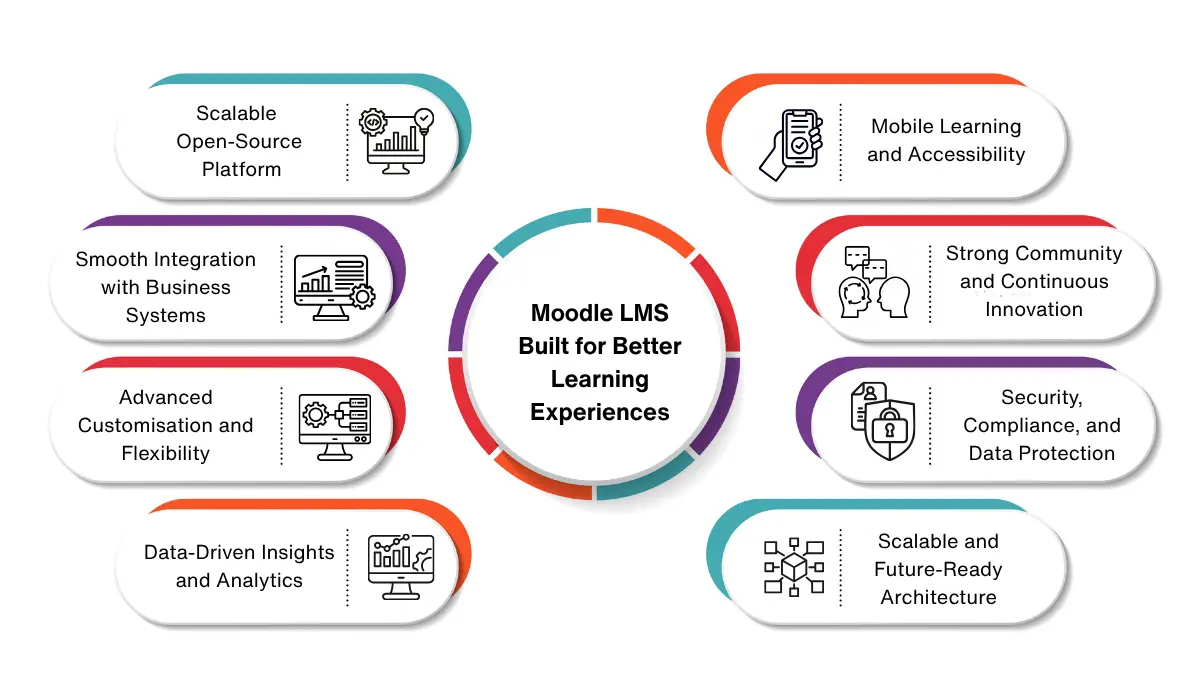
Moodle helps businesses move beyond generic training and create learning environments that truly match user needs. As organisations shift towards measurable outcomes, Moodle provides the right balance of performance, usability, and long-term value.
1. Reliable and Scalable Open-Source Platform
Moodle is one of the most trusted open-source LMS platforms globally. It evolves continuously through a strong developer community and regular updates. This ensures long-term reliability and performance. Its modular architecture allows organisations to scale from small teams to large enterprises without system limitations.
2. Smooth Integration with Business Systems
A key advantage of Moodle LMS development services UK is easy integration. Moodle connects smoothly with HR systems, CRMs, and enterprise tools. This creates a unified learning environment where data flows easily across platforms. As a result, businesses reduce manual work and improve operational efficiency.
3. Advanced Customisation and Flexibility
Moodle offers unmatched flexibility. Organisations can customise features, design learning paths, and add plugins based on their needs. With access to thousands of plugins, businesses can build tailored solutions that support different roles and learning styles. This makes custom Moodle LMS development highly effective for personalised learning.
4. Data-Driven Insights and Analytics
Modern learning requires measurable outcomes. Moodle provides detailed analytics on learner progress, engagement, and performance. These insights help organisations improve training programmes and identify skill gaps. In 2026, data-driven learning is essential for making informed decisions and improving results.
5. Mobile Learning and Accessibility
Learners expect access anytime and anywhere. Moodle supports responsive design and mobile learning, ensuring a smooth experience across devices. It also follows accessibility standards, making learning inclusive for all users. This is especially important for UK organisations with remote and hybrid teams.
A strong mobile experience plays a key role in learner engagement.
Discover how Moodle app development improves user experience.
6. Strong Community and Continuous Innovation
Moodle benefits from a global community of developers and educators. This ensures continuous improvements, new features, and reliable support. Organisations can stay updated with evolving learning trends without rebuilding their systems.
7. Security, Compliance, and Data Protection
Security remains a top priority in eLearning. Moodle offers secure authentication, controlled access, and compliance with regulations like GDPR. This helps organisations protect learner data while maintaining trust and reliability. Maintaining security and performance requires ongoing updates and monitoring.
Read more about Moodle maintenance best practices.
8. Scalable and Future-Ready Architecture
Moodle is designed to grow with your organisation. Its flexible architecture supports increasing users, content, and integrations without affecting performance. This makes it a future-ready solution for businesses planning long-term digital learning strategies.
Build a Custom Moodle LMS That Works for Your Business
Choosing the right platform is only the beginning. The real value comes from how well it is designed and implemented.
At IDS Logic, we build custom Moodle LMS solutions that align with your business goals. From integrations and feature development to optimisation and support, we ensure your LMS delivers real results.
Explore our Moodle LMS services today
Personalized Learner-Centric Experiences: Benefits of Taking Services from a Moodle LMS Development Company
There is a growing expectation among organizations to get more from their learning systems in terms of measurable outcomes, higher levels of engagement, and better retention of knowledge. This is where a Moodle LMS development company delivers real value. Personalised learner-centric experiences are not just about flexibility. They are about improving performance, reducing training gaps, and helping learners achieve results faster.
Modern learners prefer control, relevance, and convenience. A well-designed custom Moodle LMS development approach ensures that learning adapts to each individual. This improves motivation and makes training more effective. Studies show that personalised learning can increase engagement and completion rates significantly, which is critical for both corporate training and education sectors in the UK.
1. Flexible Learning Pace and Self-Directed Growth
One of the biggest benefits of personalised learning is flexibility. Learners can progress at their own pace without pressure. They can take time to understand concepts before moving forward. This approach builds confidence and improves knowledge retention. It also allows learners to take ownership of their learning journey. In modern workplaces, this flexibility is essential, especially for remote and hybrid teams.
2. Personalised Content Based on Performance
A Moodle LMS development company enables systems that deliver content based on learner performance. This is especially effective when supported by strong feature planning and implementation strategies, as explained in this detailed guide on Moodle LMS development cost and features. This ensures that advanced users can skip basic material, while beginners receive additional support. As a result, learning becomes more efficient and relevant. It also reduces time spent on unnecessary content.
3. Targeted Learning and Skill Gap Improvement
Personalised LMS platforms allow trainers to focus on specific learning needs. Before training begins, organisations can analyse learner behaviour and performance. This helps identify skill gaps and areas that require improvement. Learners can then focus only on what matters. This targeted approach saves time and improves outcomes. This is especially important for organisations aiming to upskill employees quickly and efficiently.
4. Higher Engagement Through Interactive Learning
Engagement is a major challenge in eLearning. Traditional methods often fail to keep learners interested. However, personalised Moodle LMS solutions include interactive elements such as quizzes, gamification, and collaborative tools. These features make learning more engaging and enjoyable. When learners are actively involved, they are more likely to complete courses and retain information.
5. Improved Learning Outcomes and Performance
Personalised learning leads to better results. When learners receive relevant content and support, they perform better. They can apply knowledge more effectively in real-world situations. This is a key performance indicator for both educational institutions and businesses. Organisations using Moodle LMS development services UK often see improvements in productivity, skill development, and training ROI.
6. Continuous Feedback and Learning Optimisation
Modern LMS platforms provide real-time feedback. Learners can track their progress and identify areas for improvement. At the same time, organisations can use analytics to refine their training strategies. This creates a continuous improvement cycle. In 2026, data-driven learning is essential for staying competitive and ensuring long-term success.
How Moodle LMS Development Enables Personalised Learner-Centric Experiences?
Delivering personalised learning is not just about content. It depends on how effectively a platform engages learners and adapts to their behaviour. A Moodle LMS development company makes this possible by combining interactive features, flexible design, and modern learning approaches. Moodle supports multiple learning methods that improve engagement, retention, and participation, making it easier for organisations to build learner-centric environments.
1. Social Learning and Collaborative Engagement
Moodle supports strong social learning features that encourage collaboration and interaction. Learners can participate in discussion forums, group activities, and peer-based assessments. This helps them learn from each other while maintaining their individual pace.
Such collaboration improves understanding and keeps learners engaged. It also creates a more dynamic learning environment compared to traditional methods. With custom Moodle LMS development, organisations can further enhance these features by adding tailored social tools and modules that match their learning goals.
2. Gamification for Better Engagement and Motivation
Gamification has become a key trend in modern eLearning. Moodle allows organisations to integrate game-based elements such as rewards, badges, leaderboards, and interactive quizzes.
These features make learning more enjoyable and encourage participation. Instead of passive learning, users actively engage with content. This improves completion rates and motivation levels. In 2026, gamification is widely used across corporate training and education sectors to increase learner involvement and performance.
3. Microlearning for Faster and Effective Learning
Microlearning focuses on delivering content in small, easy-to-understand segments. Moodle supports this approach by allowing organisations to break courses into short modules. This makes it easier for learners to absorb information and retain knowledge. It also fits well into busy schedules, especially for working professionals.
Microlearning improves focus and reduces cognitive overload. As a result, learners can progress more efficiently while maintaining better understanding.
4. Adaptive Learning Paths for Personalised Journeys
Moodle enables adaptive learning paths that adjust based on learner performance. This means users receive content that matches their progress and skill level. Such personalisation ensures that learners do not waste time on irrelevant topics. It also helps them focus on areas that need improvement.
This is a key feature of Moodle LMS development services UK, as organisations aim to deliver tailored learning experiences at scale.
Create Engaging Learning Experiences with Moodle LMS
Modern learners expect interactive, flexible, and personalised training. Moodle provides the tools, but the real impact comes from how those tools are implemented.
At IDS Logic, we build custom Moodle LMS solutions that combine social learning, gamification, and adaptive features to deliver real results.
Contact us today to discuss your Moodle LMS requirements and build a platform that truly supports your learners.
Conclusion – The Future of Learner-Centric Moodle LMS in 2026
Moodle continues to lead as one of the most flexible and widely adopted LMS platforms. It supports personalised learning, scalability, and integration across systems. In 2026, the demand for such platforms is growing rapidly. The LMS market itself is expanding at a strong pace, with Europe alone expected to reach over $6 billion in 2026, driven by digital learning adoption and corporate training needs.
At the same time, organisations are focusing more on learner experience. Personalised learning, mobile access, and data-driven insights are now key priorities. Studies show that AI-driven and adaptive learning models can improve efficiency by over 50% and significantly increase engagement.
This means one thing. A standard LMS is no longer enough. Businesses need a system that adapts to users, supports growth, and delivers long-term value. With the right custom Moodle LMS development, organisations can create learning environments that are flexible, engaging, and future-ready.
How IDS Logic Can Help You Build a Future-Ready Moodle LMS
At IDS Logic, we understand that every organisation has unique learning needs. We specialise in delivering Moodle LMS development services UK that focus on personalisation, performance, and scalability.
Our team helps you design and build Moodle platforms that align with your business goals. From customisation and integrations to optimisation and ongoing support, we ensure your LMS delivers real results.
We focus on creating systems that are easy to manage, engaging for users, and adaptable for future growth.
Frequently Asked Questions
Q1. What is a Moodle LMS development company?
A Moodle LMS development company specialises in designing, customising, and managing Moodle-based learning platforms. It helps organisations build systems that align with their training goals, user needs, and business processes. This includes adding custom features, integrating third-party tools, improving user experience, and providing ongoing support to ensure the platform performs effectively over time.
Q2. Why is Moodle popular for personalised learning?
Moodle is widely used because it is flexible, scalable, and open-source. It allows organisations to customise learning paths, content, and features based on individual learner needs. This makes it easier to deliver personalised experiences. In addition, Moodle supports plugins, analytics, and integrations, which help businesses create more engaging and data-driven learning environments.
Q3. How does Moodle support learner-centric experiences?
Moodle supports learner-centric experiences by allowing content to adapt based on user behaviour and performance. Learners can move at their own pace, access content anytime, and receive feedback in real time. Features such as discussion forums, gamification, and adaptive learning paths further improve engagement and make learning more interactive and effective.
Q4. Is Moodle suitable for corporate training in the UK?
Moodle is highly suitable for corporate training across the UK. It supports onboarding, compliance training, and continuous skill development. Businesses can use it to train employees across multiple locations while maintaining consistency and control. Its scalability makes it ideal for both small organisations and large enterprises.
Q5. What are the key benefits of custom Moodle LMS development?
Custom Moodle LMS development allows organisations to build a platform tailored to their exact needs. This includes personalised learning paths, better system integration, and improved user experience. It also ensures the platform can scale as the organisation grows, making it a long-term solution rather than a short-term fix.
Q6. How secure is a Moodle LMS platform?
Moodle offers strong security features such as secure login, role-based access, and data protection controls. It supports compliance with regulations like GDPR, which is important for UK organisations. Regular updates and community support also help keep the platform secure and reliable.
Q7. How can IDS Logic support Moodle LMS projects?
IDS Logic provides complete Moodle LMS development services, from planning and design to development and ongoing support. We work closely with businesses to understand their requirements and deliver solutions that are scalable, secure, and user-friendly. Our focus is on creating platforms that improve learning outcomes and support long-term growth.