The range of mobile and app development tools play a crucial role in bringing visibility to services of app development companies. Know more about it here.
Choosing a mobile app development tool sounds easy until you start comparing the available options. Some platforms support professional developers and complex applications. Others let you create a working app with little or no coding. You will also find native tools, cross-platform frameworks, backend services and visual app builder software.
Each option solves a different problem.
A no-code builder may suit an early prototype or simple internal application. However, a customer-facing product with advanced integrations may need a fully coded technology stack.
The wrong choice can slow development and create costly limitations later. It may also affect app performance, security, scalability and ongoing maintenance.
This guide compares 15 of the best mobile app development tools for 2026. It covers native development, cross-platform frameworks, open-source options and mobile app development tools without coding.
What Are Mobile App Development Tools?
Mobile app development tools help teams design, build, test, deploy and maintain applications for smartphones, tablets and other connected devices.
The term covers more than coding software.
A complete app development process may involve:
- A code editor or integrated development environment
- A native or cross-platform framework
- A backend service
- A database
- Interface design tools
- Automated testing platforms
- App analytics software
- Crash reporting
- Deployment and release management
Some products combine several of these functions. Others focus on one part of the development lifecycle.
For example, Android Studio provides an environment for building and testing native Android apps. Firebase focuses mainly on backend, analytics, notifications and monitoring services.
Understanding that difference matters. A backend service cannot replace a front-end framework, while a visual builder may not provide the control needed for a complex product.
Types of Mobile Application Development Tools
Before comparing individual options, it helps to understand the main categories.
Native Development Tools
Native tools let you build an application specifically for one operating system. Android Studio supports native Android development. Xcode supports Apple platforms such as iOS, iPadOS, macOS and watchOS. Native development provides direct access to platform features and design systems. It also offers detailed performance control. However, you may need separate Android and Apple development work.
Cross-Platform Frameworks
Cross-platform frameworks let teams share code across several operating systems. Flutter, React Native, .NET MAUI, Kotlin Multiplatform and Ionic fall into this category. Shared development can reduce duplication and support faster releases. Still, complex platform-specific features may require native code.
Low-Code and No-Code App Builders
Low-code and no-code tools provide visual editors, reusable components and workflow builders. They suit prototypes, internal business tools and relatively simple customer applications. However, they can become restrictive when an app needs advanced security, complex integrations or complete control over its source code.
Integrated Development Environments
An integrated development environment, or IDE, brings several development functions into one workspace.
These functions may include:
- Code editing
- Debugging
- Testing
- Device simulation
- Build management
- Performance analysis
- Deployment support
Android Studio and Xcode are full native IDEs. Visual Studio Code provides a lighter and more flexible coding environment.
Backend Development Platforms
Most mobile apps need more than screens and buttons.
They may also require:
- User authentication
- Databases
- Cloud storage
- Notifications
- Server-side functions
- API management
- Real-time updates
Firebase and Supabase provide many of these capabilities without forcing developers to build every backend component from scratch.
Testing and Analytics Tools
Testing tools help teams identify functional, visual and performance issues before release. Meanwhile, mobile app analytics software shows how people use the product after launch.
These insights can reveal:
- Where users leave a journey
- Which features they use
- Which screens cause confusion
- Where crashes occur
- Whether a new release improves engagement
Not Sure Which Mobile App Approach Fits Your Business?
Our mobile app specialists can assess your goals, users, integrations and budget before recommending the right development approach.
How We Selected These Mobile App Development Tools
Popularity alone does not make a platform suitable for your project.
We considered the practical factors that affect real development and business decisions:
- Supported operating systems
- Coding requirements
- Development speed
- Performance
- Scalability
- Integration options
- Testing support
- Community and documentation
- Source code access
- Security capabilities
- Learning difficulty
- Long-term maintenance
- Suitability for UK businesses
- Free and commercial availability
Pricing changes frequently. Therefore, you should confirm current plans, usage limits and licence terms directly with each provider.
Mobile App Development Tools: Quick Comparison
| Tool | Category | Best For | Coding Required | Open Source |
|---|---|---|---|---|
| Flutter | Cross-platform framework | Custom Android and iOS apps | Yes | Yes |
| React Native | Cross-platform framework | JavaScript-led mobile apps | Yes | Yes |
| Android Studio | Native IDE | Android app development | Yes | Core platform is free |
| Xcode | Native IDE | Apple app development | Yes | No |
| Kotlin Multiplatform | Shared development technology | Shared logic with native flexibility | Yes | Yes |
| .NET MAUI | Cross-platform framework | Microsoft-based organisations | Yes | Yes |
| Ionic and Capacitor | Hybrid framework | Web-led mobile applications | Yes | Yes |
| Expo | React Native platform | Faster React Native delivery | Yes | Yes |
| FlutterFlow | Low-code app builder | Visual cross-platform development | Low-code | No |
| Thunkable | No-code app builder | Beginner-friendly applications | No | No |
| Glide | No-code app builder | Internal business applications | No | No |
| Adalo | No-code app builder | Simple customer-facing apps | No | No |
| Firebase | Backend platform | Authentication, data and notifications | Some | Partly |
| Supabase | Backend platform | Open-source backend services | Some | Yes |
| Visual Studio Code | Code editor | Multi-framework development | Yes | Yes |
15 Best Mobile App Development Tools for 2026
1. Flutter
Best for: Custom cross-platform applications with tailored user interfaces
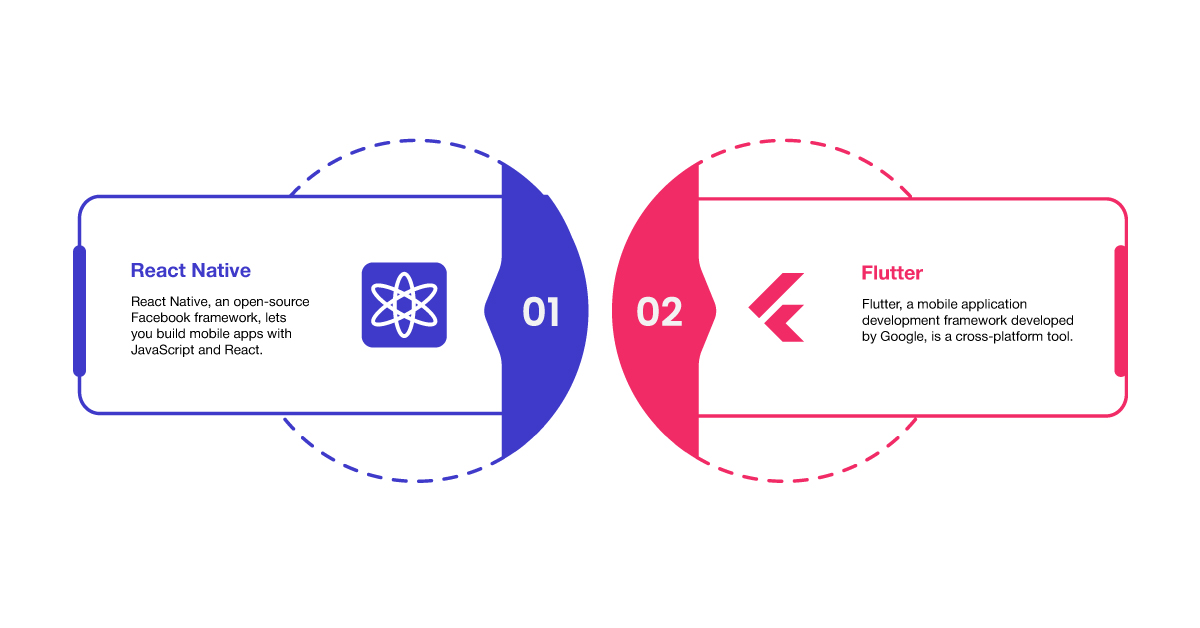
Flutter is an open-source framework for building applications from a shared codebase.
Teams can use it for Android, iOS, web and desktop development. Flutter creates natively compiled applications and provides its own flexible interface system.
It uses the Dart programming language. Its hot reload capability lets developers review many code changes without rebuilding the complete application.
Flutter works well when you need consistent branding and behaviour across platforms. It also offers more technical freedom than most drag-and-drop builders.
Key Features:
- Shared code across multiple platforms
- Customisable interface components
- Hot reload
- Strong animation support
- Native platform integrations
- Large package ecosystem
- Web and desktop support
Advantages:
- Reduces duplicated Android and iOS work
- Offers strong interface control
- Suits prototypes and production applications
- Provides access to the source code
- Free and open source
Limitations:
- Developers must learn Dart
- Some platform-specific functions need native code
- Poorly selected third-party packages can create maintenance problems
Our View
Flutter remains one of the strongest choices for businesses that need a polished Android and iOS application. It suits experienced teams that want cross-platform efficiency without relying on a closed visual builder.
2. React Native
Best for: Cross-platform applications built by React and JavaScript teams
React Native lets developers build Android and iOS applications using JavaScript and React.
Rather than displaying the whole application inside a browser view, it works with native interface components.
Its newer architecture uses technologies such as Fabric and TurboModules. This architecture is enabled by default in current React Native projects.
React Native suits organisations that already use React across their websites or digital platforms.
Key Features:
- Shared Android and iOS code
- Native interface components
- Fast refresh
- JavaScript and TypeScript support
- Access to platform-specific code
- Extensive third-party ecosystem
- Large development community
Advantages:
- Familiar to React developers
- Supports reusable business logic
- Works well for many customer-facing apps
- Offers access to native functionality
- Free and open source
Limitations:
- Third-party library quality varies
- Major upgrades may require additional work
- Complex native features still need platform expertise
Our View
React Native is a practical choice when your team already knows React or JavaScript. However, you should review package support carefully before using it for a long-term business product.
3. Android Studio
Best for: Native Android application development
Android Studio is Google’s official development environment for Android apps.
It includes coding, debugging, device emulation, performance analysis and testing tools. Developers can create applications for phones, tablets, televisions, wearables and other Android devices.
Android Studio now includes Gemini-assisted features for generating code, understanding projects, troubleshooting errors and supporting interface development. Current versions can also create starter projects from natural-language instructions.
Key Features:
- Kotlin and Java support
- Android device emulator
- Jetpack Compose design tools
- Memory and performance profiling
- Build and dependency management
- Testing and debugging
- AI-assisted development
- Direct access to Android APIs
Advantages:
- Provides full control over Android functionality
- Includes official Android testing tools
- Supports the latest platform features
- Offers detailed performance diagnostics
- Free to use
Limitations:
- Focuses mainly on Android
- Can use considerable system resources
- Presents a steeper learning curve for beginners
Our View
Choose Android Studio when Android is your primary platform or your app needs deeper Android integration. It remains the most complete professional environment for native Android development.
4. Xcode
Best for: Native applications across the Apple ecosystem
Xcode is Apple’s official development environment.
It supports applications for iPhone, iPad, Mac, Apple Watch and other Apple platforms.
Developers can use Swift, SwiftUI, Objective-C and Apple’s testing frameworks within one environment.
Xcode includes tools for unit, integration, user-interface and performance testing. Apple also provides TestFlight for distributing beta versions and collecting tester feedback before release.
Key Features:
- Swift and Objective-C support
- SwiftUI previews
- Device simulators
- Performance analysis
- Debugging tools
- Unit and interface testing
- App Store submission support
- TestFlight integration
Advantages:
- Provides direct access to Apple features
- Supports detailed performance optimisation
- Includes official testing and distribution tools
- Works with Apple’s latest interface technologies
Limitations:
- Requires a Mac
- Primarily serves Apple platforms
- App Store publishing requires developer enrolment
Our View
Xcode is the clear choice when you need a fully native Apple application. Cross-platform teams may still need it for signing, testing and releasing their iOS builds.
5. Kotlin Multiplatform
Best for: Sharing code while retaining native flexibility
Kotlin Multiplatform lets teams share business logic across Android, iOS, desktop, web and server applications.
You can share selected components or a much larger part of the application. Teams may keep platform-specific interfaces or use Compose Multiplatform for shared user-interface development.
Kotlin Multiplatform is stable, while Compose Multiplatform is stable across Android, iOS and desktop. Its web interface target remains in beta.
Key Features:
- Shared business logic
- Optional shared user interfaces
- Direct platform API access
- Kotlin-based development
- Gradual adoption
- Android, iOS, desktop and web support
- Native platform integration
Advantages:
- Reduces repeated business logic
- Preserves native development options
- Can be introduced gradually
- Suits existing Kotlin projects
- Free and open source
Limitations:
- Requires experienced developers
- Does not remove every platform-specific task
- Some integrations need Android and iOS knowledge
- Tooling can feel more complex than a single-codebase framework
Our View
Kotlin Multiplatform suits organisations that value native control but want to reduce duplicated logic. It can also help teams extend an existing Android product to other platforms without starting again.
6. .NET MAUI
Best for: Cross-platform apps within the Microsoft ecosystem
.NET MAUI lets developers create mobile and desktop applications using C# and XAML.
Microsoft describes it as the evolution of Xamarin.Forms. It supports shared development across Android, iOS, macOS and Windows.
It works particularly well for organisations already using .NET, Azure, Microsoft 365 or other Microsoft technologies.
Key Features:
- Shared C# codebase
- Android and iOS support
- Windows and macOS support
- Native API access
- Visual Studio Code integration
- Reusable interface components
- Microsoft cloud compatibility
Advantages:
- Familiar to C# developers
- Supports mobile and desktop products
- Works well with Microsoft business platforms
- Allows platform-specific code where needed
- Free and open source
Limitations:
- Smaller mobile ecosystem than Flutter or React Native
- Specialist platform features may need custom code
- Best suited to teams with existing .NET knowledge
- iOS builds still require access to Apple development infrastructure
Our View
.NET MAUI is a sensible replacement for Xamarin on new Microsoft-led projects. Do not keep Xamarin in the updated list. New applications should use a currently supported framework.
7. Ionic and Capacitor
Best for: Mobile applications built by experienced web teams
Ionic lets developers build applications using HTML, CSS and JavaScript.
It supports popular web frameworks such as Angular, React and Vue. Capacitor connects those applications with native device features.
This approach can help established web teams move into mobile development without learning a completely different interface technology.
Key Features:
- HTML, CSS and JavaScript support
- Angular, React and Vue compatibility
- Native device access through Capacitor
- Reusable interface components
- Android, iOS and web deployment
- Plugin ecosystem
Advantages:
- Familiar to web developers
- Supports rapid development
- Works across mobile and web
- Provides a free open-source core
- Useful for content-led and business applications
Limitations:
- Performance depends on application complexity
- Device integrations may rely on plugins
- Demanding graphics may need another approach
- Teams must test carefully across target devices
Our View
Ionic works well for web-led organisations building forms, portals, content apps and internal tools. It may not suit products that rely heavily on advanced animation or intensive device processing.
8. Expo
Best for: Faster React Native development and release management
Expo provides tools and cloud services that simplify React Native projects.
It helps teams create applications, access device features, test builds and manage releases. You can use it for prototypes, minimum viable products and production applications.
Expo reduces some of the setup work associated with React Native. However, advanced native functionality may still require custom development.
Key Features:
- Managed React Native workflows
- Device API access
- Cloud builds
- Over-the-air updates
- Testing through Expo Go
- App submission support
- Development and deployment services
Advantages:
- Reduces initial project setup
- Helps small teams move faster
- Supports rapid prototyping
- Works with React Native
- Offers free and paid services
Limitations:
- Advanced native functions may need custom modules
- Usage limits depend on the chosen service plan
- Teams remain part of the React Native ecosystem
- Release processes still need proper governance
Our View
Expo is a strong option for teams that want React Native without managing every build and configuration task manually.
It works particularly well for an MVP that may later grow into a larger product.
9. FlutterFlow
Best for: Visual cross-platform development with Flutter code
FlutterFlow is low-code app builder software based on Flutter.
It lets users create interfaces, connect APIs, define workflows and integrate backend services through a visual environment.
Unlike many closed app builders, FlutterFlow can provide access to generated Flutter code through eligible plans. That makes it more flexible for projects that may later need custom development.
Key Features:
- Drag-and-drop interface design
- Flutter code generation
- API connections
- Backend integrations
- Reusable components
- Responsive layouts
- Mobile and web support
- AI-assisted design and development features
Advantages:
- Speeds up prototypes
- Supports Android and iOS
- Offers more technical flexibility than many no-code tools
- Can suit both beginners and developers
- Provides a route towards custom Flutter development
Limitations:
- Advanced logic may still require coding
- Generated applications need professional testing
- Code export and advanced capabilities may require paid plans
- Poor workflow planning can create hard-to-maintain projects
Our View
FlutterFlow is one of the best app development software options for beginners who want more flexibility than a basic no-code builder. It also suits product teams that need to validate an idea before investing in complete custom development.
10. Thunkable
Best for: Beginners building simple mobile applications without coding
Thunkable provides a visual environment for creating Android and iOS apps.
Users connect interface components with block-based logic rather than writing traditional code.
It suits learning, prototypes and relatively straightforward business applications.
Key Features:
- Visual block-based logic
- Android and iOS support
- Device feature integrations
- Live testing
- Reusable components
- Data and API connections
- App publishing support
Advantages:
- Does not require traditional coding
- Accessible to beginners
- Supports native mobile publishing
- Useful for testing early ideas
- Helps users understand basic application logic
Limitations:
- Offers limited control over complex architecture
- Paid plans may be needed for publishing
- Large applications may outgrow the platform
- Migration can require redevelopment
Our View
Thunkable is one of the better mobile app development tools without coding for beginners.
Use it for small products and proof-of-concept work rather than highly complex enterprise applications.
11. Glide
Best for: Internal tools and data-led business applications
Glide helps teams create applications from structured data and connected systems.
It works well for:
- Directories
- Dashboards
- Stock management
- Field operations
- Approval processes
- Internal service requests
- Team workflows
Glide focuses more on practical business applications than highly customised consumer products.
Key Features:
- Visual application builder
- Data-driven screens
- User roles and permissions
- Workflow automation
- Business platform integrations
- Responsive interfaces
- Reusable templates
Advantages:
- Fast to learn
- Useful for internal applications
- Requires little technical knowledge
- Can replace manual spreadsheets and forms
- Supports rapid process digitisation
Limitations:
- Limited interface customisation
- Not designed for demanding consumer apps
- Costs can grow with users and data needs
- Complex integrations may require another platform
Our View
Glide is a strong no-code option for organisations that need to improve an internal process quickly.
It is less suitable when the product itself is your main commercial offering.
12. Adalo
Best for: Simple customer-facing applications and prototypes
Adalo provides a visual builder for mobile and web applications.
Users can create screens, data collections, actions and user journeys without conventional coding.
It suits directories, booking platforms, membership apps and simple marketplaces.
Key Features:
- Drag-and-drop interface
- Built-in database
- User authentication
- Workflow actions
- Reusable components
- App store publishing
- Templates and starter layouts
Advantages:
- Accessible to non-developers
- Useful for MVPs
- Supports mobile and web products
- Provides a quick route to a working prototype
Limitations:
- Performance may fall on complex projects
- Advanced integrations can become difficult
- Offers less technical control than coded frameworks
- A growing product may need rebuilding later
Our View
Adalo suits founders who want to test a product concept before committing to complete custom development.
Set clear limits for the prototype so temporary decisions do not become long-term restrictions.
13. Firebase
Best for: Managed backend services, analytics and app monitoring
Firebase provides backend and operational services for mobile and web applications.
Teams can use it for authentication, databases, storage, notifications, cloud functions, crash reporting and analytics.
It can reduce development time because you do not need to create every supporting service independently.
Key Features:
- User authentication
- Cloud databases
- File storage
- Push notifications
- Cloud functions
- Analytics
- Crash reporting
- Performance monitoring
- Application distribution
Advantages:
- Speeds up backend development
- Integrates with native and cross-platform tools
- Supports real-time data
- Includes useful testing and monitoring services
- Provides a free starting tier
Limitations:
- Costs can increase with usage
- Moving to another provider may require significant work
- Data structures may differ from traditional relational systems
- Teams must configure access rules carefully
Our View
Firebase is not a complete mobile app builder.
However, it remains one of the most useful supporting platforms for prototypes and production applications.
14. Supabase
Best for: Open-source backend services and relational data
Supabase is an open-source backend platform built around PostgreSQL.
It provides database services, authentication, storage, real-time updates and server-side functions.
Teams can use its managed service or deploy parts of the platform within their own environment.
Key Features:
- PostgreSQL database
- User authentication
- File storage
- Real-time updates
- Server-side functions
- Automatic APIs
- Self-hosting options
Advantages:
- Open-source foundation
- Uses relational data
- Supports greater hosting flexibility
- Works with many mobile frameworks
- Reduces basic backend setup
Limitations:
- Still requires technical knowledge
- Self-hosting creates infrastructure responsibilities
- Complex enterprise projects may need extra services
- Database design still needs careful planning
Our View
Supabase is a strong open-source backend choice for teams that prefer PostgreSQL and greater control over their infrastructure. Pair it with Flutter, React Native, native development or another front-end framework.
15. Visual Studio Code
Best for: Developers working across several mobile technologies
Visual Studio Code is a lightweight and flexible code editor.
It supports Flutter, React Native, Ionic, .NET MAUI and many backend languages through extensions.
Developers can add source control, debugging, testing and AI-assisted coding capabilities to suit their workflow.
Key Features:
- Extension marketplace
- Integrated terminal
- Git support
- Debugging
- Multiple language support
- Customisable workspaces
- AI coding extensions
- Cross-platform availability
Advantages:
- Free and open source
- Lighter than many complete IDEs
- Supports front-end and backend work
- Works across major desktop operating systems
- Highly customisable
Limitations:
- Requires external SDKs and extensions
- Does not replace Xcode for Apple release work
- Does not replace Android Studio for every Android task
- Setup quality depends on the selected extensions
Our View
Visual Studio Code suits developers who want one consistent editor across several parts of the technology stack.
Which Mobile App Development Tool Is Best for Your Project?
The best choice depends on what you want to build. Below is the table that gives you a starting point. It cannot replace a detailed review of your security, data, user and integration requirements.
| Requirement | Recommended Tools |
|---|---|
| Native Android application | Android Studio |
| Native iPhone or iPad app | Xcode |
| Custom cross-platform application | Flutter or React Native |
| Microsoft-led business application | .NET MAUI |
| Native interfaces with shared logic | Kotlin Multiplatform |
| Web-led mobile product | Ionic and Capacitor |
| Faster React Native delivery | Expo |
| Visual Flutter development | FlutterFlow |
| No-code mobile prototype | Thunkable or Adalo |
| Internal business application | Glide |
| Managed mobile backend | Firebase |
| Open-source backend | Supabase |
| Multi-framework code editing | Visual Studio Code |
What Is the Best Mobile App Builder in 2026?
There is no single best mobile app builder for every business.
FlutterFlow provides a strong balance between visual development and access to Flutter-based code. It suits teams that need a flexible prototype or lower-complexity product.
Thunkable works well for beginners who want to build Android and iOS applications without traditional coding.
Glide suits internal tools and data-led business workflows.
Adalo works better for simple customer applications, directories and early marketplaces.
Before selecting app builder software, check whether it supports:
- Android and iOS publishing
- Source code export
- API integration
- User authentication
- Access permissions
- Push notifications
- Analytics
- Custom domains
- Data ownership
- Backups
- Testing
- Future migration
The quickest builder may not offer the lowest long-term cost.
A simple tool can become expensive when you need a feature it cannot support.
What Are the Best Open-Source App Builders?
The phrase open-source app builder can refer to different types of development technology.
Flutter, React Native, .NET MAUI and Ionic are open-source frameworks. However, they still require programming knowledge.
Kotlin Multiplatform also offers an open-source route to shared mobile development.
Supabase provides an open-source backend rather than a complete visual app builder.
Businesses often choose open-source technologies because they offer:
- Access to source code
- Greater development control
- More hosting options
- Less dependence on one vendor
- Large community ecosystems
- Greater scope for customisation
- More flexible long-term ownership
Open source does not mean the project will cost nothing.
You still need developers, designers, testing, hosting, security management and long-term support.
Best Mobile App Development Tools Without Coding
No-code platforms let you create screens, workflows and data connections through visual interfaces.
They work well when you need:
- A proof of concept
- An internal workflow
- A basic directory
- A membership application
- A simple booking system
- A short-term event app
- An early MVP for user testing
FlutterFlow
Choose FlutterFlow when you want visual development with a route towards custom Flutter code.
Thunkable
Choose Thunkable when you are new to app development and want a simple block-based approach.
Glide
Choose Glide when your application revolves around business data, lists and internal processes.
Adalo
Choose Adalo for simple customer-facing experiences and early product validation.
No-code platforms remove some coding tasks. They do not remove the need for planning.
You must still define:
- User journeys
- Data structures
- Permissions
- Security controls
- Testing requirements
- Analytics
- Maintenance ownership
Best App Development Software for Beginners
Beginners should choose software based on what they want to build or learn.
Best for Non-Programmers: Thunkable
Its visual logic helps you understand how actions, data and conditions work without learning a programming language first.
Best for Visual Cross-Platform Development: FlutterFlow
FlutterFlow lets you design application screens visually while gaining exposure to Flutter-based development.
Best for Internal Tools: Glide
Glide suits simple business workflows, dashboards and data-led applications.
Best for Learning Android Development: Android Studio
Android Studio has a steeper learning curve. However, it provides the official route into professional Android development.
Best for Learning Apple Development: Xcode
Xcode gives beginners direct access to Swift, SwiftUI and Apple’s development environment.
Best for Learning Cross-Platform Coding: Flutter
Flutter requires programming skills. Still, it offers a structured path towards Android, iOS, web and desktop development.
The easiest software is not always the right long-term platform. Think about what the application may need after its first release.
What Is the Best Tech Stack for Mobile App Development?
A mobile technology stack includes every major technology needed to run and maintain the product. It covers far more than the framework used to create the screens.
Front-End Development
Common choices include:
- Flutter
- React Native
- Swift and SwiftUI
- Kotlin and Jetpack Compose
- Kotlin Multiplatform
- .NET MAUI
- Ionic
Backend Development
Common backend technologies include:
- Node.js
- .NET
- Java
- Python
- Firebase
- Supabase
Databases
Applications may use:
- PostgreSQL
- MySQL
- MongoDB
- SQLite
- Cloud Firestore
Cloud Platforms
Common cloud platforms include:
- Microsoft Azure
- Amazon Web Services
- Google Cloud
Testing
A testing stack may include:
- Appium
- XCTest
- Espresso
- Firebase Test Lab
- Unit testing frameworks
- Automated interface testing
- Physical device testing
Analytics and Monitoring
Common options include:
- Firebase Analytics
- Mixpanel
- Amplitude
- UXCam
- Sentry
- Crashlytics
The best tech stack for mobile app development depends on your product and existing systems. A healthcare application may prioritise privacy, audit trails and secure access.
An ecommerce app may focus on payments, product data, search speed and peak demand. A field-service app may need strong offline support and data synchronisation. Do not select every technology separately. Review how the full stack will work together.
Build an Enterprise Application Around Your Existing Systems
Our team develops scalable enterprise applications that connect with your data, internal platforms and operational workflows.
Latest Mobile App Development Technologies to Watch in 2026
Mobile development continues to change. However, not every new technology deserves immediate investment.
The following developments have practical value in 2026.
AI-Assisted Development
Modern development tools can now explain code, suggest changes, create tests and help diagnose errors.
Android Studio’s Gemini features can work with project context, generate code, troubleshoot builds and assist with interface development. Google has also introduced AI-led starter project generation within Android development workflows.
AI can save time. It cannot take full responsibility for architecture, security or product quality.
Developers still need to review generated work.
Agentic Development Workflows
AI tools are moving beyond single code suggestions.
Newer environments can plan tasks, work across several files and help investigate crashes. Android Studio’s 2026 releases have expanded support for multi-step and agent-led development workflows.
These tools may reduce repetitive work. Teams still need human review, coding standards and change controls.
On-Device AI
More apps process selected AI functions directly on a user’s device.
This approach may improve response times and reduce the need to send every interaction to a remote server.
However, teams must consider model size, battery use, device performance and update management.
Declarative User Interfaces
SwiftUI, Jetpack Compose, Flutter and Compose Multiplatform use declarative interface approaches.
Developers describe the desired interface state instead of manually controlling every screen update.
This can simplify interface development and improve consistency.
Kotlin Multiplatform Adoption
Kotlin Multiplatform has moved beyond experimental use for its main mobile targets.
It now gives teams another practical choice between fully native and fully shared development.
Offline-First Applications
Users often expect core features to work when internet access becomes unreliable.
Offline-first development requires:
- Local data storage
- Synchronisation rules
- Conflict handling
- Retry management
- Clear status messages
- Secure local access
This approach matters for logistics, healthcare, field service and travel applications.
Low-Code Development
Low-code platforms now support more integrations, reusable components and custom code.
They can shorten early development. However, businesses should review vendor dependence and migration options before committing.
Best Mobile App Analytics Software
Analytics tools help you understand what happens after users install your app.
They can show:
- Which features users open
- Where users leave a journey
- How often they return
- Which devices experience problems
- Whether new features improve engagement
- Where crashes occur
- Which screens cause confusion
Firebase Analytics
Firebase Analytics offers a practical option for teams already using Google and Firebase services.
It can support event tracking, audiences and product measurement.
Mixpanel
Mixpanel focuses on user actions, funnels, engagement and retention.
It suits product teams that want to understand how people move through an application.
Amplitude
Amplitude provides behavioural analytics, journey analysis and experimentation capabilities.
It works well for teams making regular product decisions based on usage data.
UXCam
UXCam focuses on mobile user experience.
It can help teams investigate navigation problems, user frustration and confusing screens.
Sentry
Sentry helps development teams detect errors and performance problems.
It supports technical monitoring rather than complete marketing analytics.
Crashlytics
Crashlytics helps developers identify crashes, affected versions and device information.
It works naturally within a Firebase-based stack.
UK organisations should not collect data simply because a platform allows it.
Define a purpose, minimise unnecessary information and manage user consent where needed.
How to Choose the Right Mobile App Development Platform
Too many organisations choose a tool before clearly defining the product. You need to reverse that process.
Start With the User Problem
Define what your application needs to achieve.
A development platform cannot fix an unclear idea or unnecessary feature list.
Identify the Required Platforms
Decide whether you need:
- Android
- iOS
- Web
- Desktop
- Wearable support
You may not need every platform in the first release.
Assess the Application’s Complexity
A simple business directory differs from a finance, healthcare or logistics platform.
Complex requirements may include:
- Multiple user roles
- Real-time updates
- Offline access
- Payment processing
- Device sensors
- External hardware
- Complex integrations
- Large data volumes
These features usually require greater technical control.
Consider Your Team’s Skills
The best tool often matches your existing experience.
React Native may suit a JavaScript team.
.NET MAUI may suit a C# team.
Kotlin Multiplatform may suit an organisation with established Android knowledge.
Review Every Required Integration
List the systems your app must connect with.
These may include:
- Payment platforms
- CRM systems
- ERP software
- Ecommerce platforms
- Cloud databases
- Identity providers
- Analytics tools
- Mapping services
- Third-party APIs
Do not assume every app builder can support them properly.
Check Security and Compliance
UK businesses may need to consider:
- UK GDPR
- Data minimisation
- Secure authentication
- Encryption
- Data retention
- Access permissions
- Accessibility
- Sector-specific requirements
No-code apps can still process sensitive information. Review hosting and data controls carefully.
Think Beyond the First Release
Every application needs:
- Bug fixes
- Operating system updates
- Security patches
- Dependency upgrades
- New device support
- Feature improvements
- Monitoring
- User support
Choose a technology your organisation can maintain for several years.
Build a Proof of Concept
Test the most difficult feature before committing to full development.
A small technical prototype can reveal integration, performance or platform restrictions early.
Key Features to Look for in App Builder Software
The best mobile app development platform should support your product without forcing every feature into a fixed template.
Platform Support
Confirm whether the software creates native mobile apps, web apps or browser-based experiences.
Source Code Access
Check whether you can export and maintain the code outside the platform.
Integration Support
Review connections with APIs, payment gateways, databases and existing business systems.
Testing Capabilities
Look for:
- Device testing
- Automated testing
- Debugging
- Error logs
- Performance monitoring
Security Controls
Assess:
- Authentication
- Access permissions
- Encryption
- Secure data storage
- Audit logs
- Environment separation
Scalability
Review limits for:
- Users
- Database records
- Storage
- API calls
- Automated workflows
- Push notifications
Analytics
Built-in reporting may provide a useful start. External tools often provide deeper product insight.
Deployment Support
The platform should simplify:
- Builds
- Code signing
- App store preparation
- Release management
- Version control
Documentation and Support
Clear guidance and an active community can reduce development delays.
Long-Term Portability
Understand what happens if you leave the platform.
Ask whether you can export the code, data and application configuration.
Benefits of Using the Right App Development Tools
Choosing the right tools can improve the whole development process. Benefits mentioned below depend on the platform fitting the project. The wrong choice can create restrictions, migration costs and long-term vendor dependence.
Faster Product Delivery
Shared code, reusable components and automated builds reduce repeated work.
More Consistent Quality
Testing and debugging tools help developers catch problems before release.
Better Collaboration
Designers, developers, testers and product teams can work through a clearer process.
Lower Development Risk
A prototype can test technical assumptions before you invest in the complete product.
Easier Maintenance
Well-supported platforms receive updates for new operating systems, devices and development requirements.
Greater Scalability
A suitable architecture makes it easier to add users, features and integrations later.
Faster Releases
Automated build and deployment tools help teams publish fixes and improvements more efficiently.
Common Mistakes When Choosing Mobile App Development Software
Choosing a Tool Because It Is Popular – A widely used framework may still be wrong for your users, team or product.
Looking Only at the Initial Price – A free platform may still require hosting, plugins, developer support and integration work.
Ignoring Complex Requirements – Test your hardest integration or workflow before full development.
Assuming No-Code Means No Technical Work – No-code tools reduce coding. They do not replace architecture, security, testing or data planning.
Forgetting Ongoing Maintenance – Apple and Google regularly change platform requirements. Your chosen tool must support future updates.
Ignoring Source Code Ownership – A platform may make it difficult to move elsewhere. Review export and migration options before signing a long-term contract.
Skipping Analytics – Without product data, you may improve features that users do not actually value.
Selecting Each Tool Separately – Your front-end, backend, database, testing and analytics choices must work together.
Final Thoughts
The best mobile app development tool is the one that fits your users, product and long-term plans.
Flutter and React Native provide strong cross-platform options.
Android Studio and Xcode offer deeper native control.
Kotlin Multiplatform provides another route for sharing code while retaining platform flexibility.
Meanwhile, FlutterFlow, Thunkable, Glide and Adalo make early app building more accessible.
Still, development software is only one part of the decision.
You must also consider:
- Security
- Backend services
- Integrations
- Testing
- Analytics
- Maintenance
- Scalability
- Source code ownership
A platform that works for a prototype may not support a growing customer product.
Start with your requirements. Test difficult features early. Then choose a technology stack your team can maintain after launch.
That approach helps you move faster without creating unnecessary restrictions later.