Read on the write-up to know everything about enterprise mobile application development and how it is crucial for businesses.
Technology has reshaped how businesses operate and it’s happening faster than ever. For many organisations, the question is no longer whether to embrace digital transformation, but how to do it effectively. That’s where enterprise mobile application development comes in.
But what does that really mean for businesses today? Does it simply lead to tougher competition, or does it open up opportunities for smarter growth, innovation, and better customer experiences? Let’s explore that in this guide.
In today’s fast-moving market, businesses need more than just ambition to stay competitive. They need smarter tools that help them streamline operations, enhance efficiency, and unlock new revenue opportunities. Whether you’re a global enterprise or a mid-sized company, adapting to emerging technologies has become vital to survival.
Trends like AI and automation, cloud computing, cybersecurity, and AR/VR are transforming industries. Yet, keeping up with these changes isn’t always easy. Every organisation faces unique challenges that call for tailored digital solutions, and that’s exactly what enterprise mobile application development services aim to deliver.
By building custom enterprise mobile apps, businesses can boost productivity, improve decision-making, and deliver seamless experiences to both employees and customers.
The Rising Demand for Enterprise Mobile Applications
The global demand for mobile apps is soaring. Reports show that over 6.3 million people download mobile apps every day, with around 250 million app downloads recorded daily and these numbers keep growing. This massive adoption highlights one thing clearly: mobile technology is no longer a trend; it’s the foundation of how people and businesses connect.
For companies, this means one crucial decision, evolve with mobile technology or risk falling behind. Businesses that fail to adapt risk losing efficiency, customer trust, and competitive advantage.
Across industries, organisations are discovering that off-the-shelf solutions often fall short. Many enterprise software vendors charge heavily for upgrades without truly addressing evolving business needs. That’s why more organisations are now turning to custom enterprise mobile app development to create solutions that are flexible, scalable, and designed around their exact requirements.
With the right enterprise mobile application development company, businesses can design mobile platforms that integrate seamlessly with internal systems, enhance workforce productivity, and empower hybrid teams, all while maintaining strong security and compliance.
In this article, we’ll explore every key aspect of enterprise mobile app development, from its benefits and features to the development stages and best practices. By the end, you’ll have a clear understanding of how to plan and implement a strategy that drives growth, efficiency, and digital transformation.
Types of Enterprise Mobile Applications
Enterprise mobile applications are specialised software tools designed to help organisations operate more efficiently, reduce costs, and improve customer service. They empower employees to work productively from any location with internet access while ensuring flexibility and operational efficiency across departments.
Each type of enterprise app focuses on specific organisational needs, helping businesses overcome daily challenges and optimise workflows. Here’s a detailed look at the main categories of enterprise mobile applications and their benefits.
1. Enterprise Resource Planning (ERP)
ERP applications are essential for managing and ERP integrating core business processes. These apps allow organisations to plan and allocate resources efficiently, manage ongoing tasks, and coordinate activities across departments.
Key functions include:
- Purchasing and inventory management – ensuring stock levels are tracked accurately.
- Sales and finance – streamlining invoicing, budgeting, and reporting.
- Human resource management – tracking employee tasks and performance.
With ERP apps, businesses gain visibility into operations, reduce manual errors, and make data-driven decisions.
2. Automated Billing
Managing multiple invoices manually can be time-consuming and error-prone. Automated billing apps simplify this by:
- Generating invoices automatically.
- Tracking payments and transactions in real time.
- Managing large volumes of billing without manual input.
Such apps ensure smooth financial operations, improve cash flow management, and allow teams to focus on higher-value tasks while maintaining excellent customer service.
3. Customer Relationship Management (CRM)
CRM applications help organisations manage and enhance relationships with current and prospective customers. They provide:
- Centralised customer data and service records.
- Tools for tracking leads, sales, and follow-ups.
- Reporting and analytics for better decision-making.
Modern CRM apps integrate with mobile platforms, enabling teams to access real-time customer insights. According to reports, CRM software is projected to generate over $47 billion in revenue, demonstrating its critical role in modern business strategies.
4. Marketing Automation
Marketing automation apps streamline promotional efforts and allow businesses to engage customers more efficiently. Features include:
- Scheduling campaigns and automating messages.
- Tracking employee and partner activities.
- Monitoring customer responses for improved engagement.
These apps not only enhance operational efficiency but also provide insights that help businesses deliver personalised customer experiences, optimising outreach based on location, timing, and preferences.
5. Human Resource (HR) Management
HR management apps are designed to track employee performance, manage HR workflows, and facilitate team collaboration. They support functions such as:
- Performance reviews and feedback.
- Task and leave management.
- Payroll, recruitment, and employee onboarding.
By automating repetitive HR tasks, these apps improve departmental efficiency and help HR teams focus on strategic goals, ensuring employees are engaged and productive.
6. Email Marketing Systems
Email marketing apps enable businesses to send targeted, timely, and personalised messages to customers. Advanced features include:
- Scheduling campaigns based on customer behaviour.
- Customising content for local audiences or specific segments.
- Analysing engagement metrics to optimise future campaigns.
These systems help businesses maintain consistent communication with clients, improve engagement, and strengthen customer relationships.
7. Collaborative Systems
Collaboration apps are critical for team productivity and communication. They provide:
- Task and project tracking.
- Seamless file sharing.
- Messaging, video calls, and workflow management.
Custom enterprise collaboration solutions improve efficiency, organisation, and transparency, especially for remote or hybrid teams. They ensure that all team members remain connected and accountable.
8. Integrated Mobile Workforce
Integrated mobile workforce apps connect employees with essential information, tools, and processes regardless of location. They combine:
- Advanced mobile devices.
- Sophisticated enterprise software.
- Real-time access to organisational data.
This integration ensures that employees can work effectively on the move, improving overall productivity and responsiveness. Hybrid and distributed teams benefit the most, maintaining high performance while staying connected.
9. Productivity Tools and Project Management
Productivity and project management apps help teams manage schedules, tasks, and projects efficiently. Features include:
- Task assignment and progress tracking.
- Team collaboration and document sharing.
- Automation of recurring workflows.
These tools not only support day-to-day operations but also enhance accountability, ensuring projects are delivered on time with minimal friction.
10. Business Analytics and Reporting
Analytics apps allow organisations to monitor performance at multiple levels, department, employee, and process. They provide:
- Key performance indicators (KPIs) and dashboards.
- Predictive insights using AI and machine learning.
- Data-driven decision-making support.
With these apps, businesses can proactively identify trends, measure outcomes, and optimise strategies for growth.
11. Mobile Learning (M-Learning)
M-learning apps support employee training, upskilling, and reskilling. They allow staff to learn anytime, anywhere, often in short, focused modules.
Benefits include:
- Convenient access to educational content.
- Improved engagement and retention.
- Support for organisational change and workforce development.
M-learning is particularly valuable for hybrid workplaces, where employees require flexible and accessible training solutions.
Why Are Enterprise Mobile Applications Critical?
Investing in enterprise mobile application development services provides numerous benefits:
- Increased workforce productivity and collaboration.
- Streamlined workflows and automated repetitive tasks.
- Enhanced customer engagement and service quality.
- Secure, compliant, and flexible access to corporate systems.
- Better decision-making through real-time insights and analytics.
The right enterprise apps can transform operations, boost employee efficiency, and provide a competitive advantage in today’s fast-paced business environment.
Why Does Your Business Need an Enterprise Mobile Application?
In today’s fast-moving business environment, having an enterprise mobile application is no longer optional, it’s essential. A well-built enterprise mobile app strengthens internal collaboration, enhances customer relationships, and improves overall efficiency.
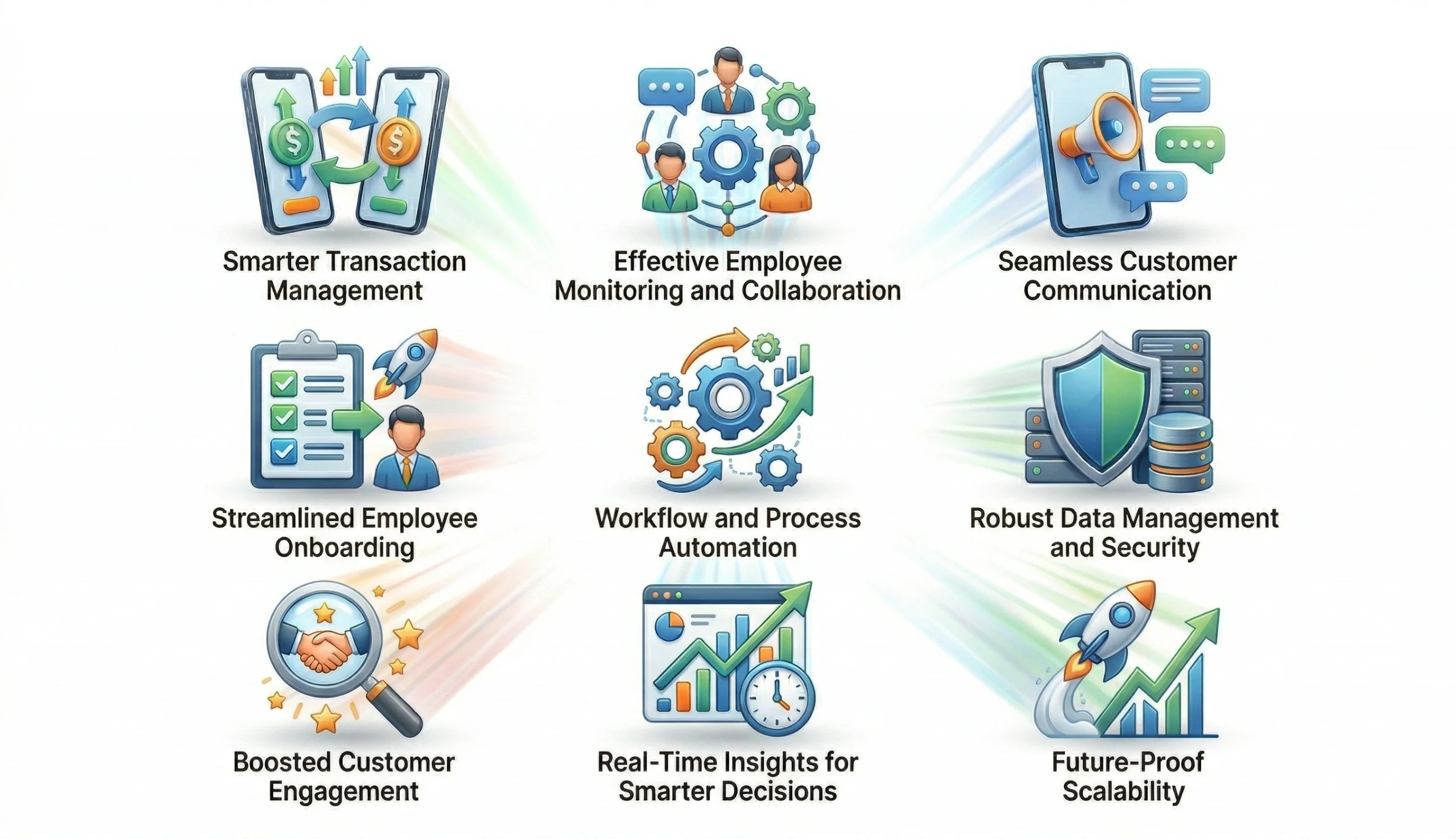
Let’s look at how enterprise mobile application development can add real value to your organisation.
1. Smarter Transaction Management
For organisations dealing with high transaction volumes or eCommerce payments, a dedicated mobile enterprise application makes complete sense. It helps you track, record, and manage every transaction in one place, offering a transparent view of your financial activities.
Modern enterprise apps can generate real-time insights from transaction data, flag potential discrepancies, and notify users of payment deadlines. They can also support multiple payment methods, from digital wallets and bank transfers to newer options like contactless or blockchain-based payments. With everything accessible via an easy-to-use dashboard, your finance team gains more control, accuracy, and speed in day-to-day operations.
2. Effective Employee Monitoring and Collaboration
Keeping teams connected, especially in hybrid or remote work setups, can be challenging. Enterprise mobile apps solve this by uniting employees on a single platform where they can collaborate, share files, exchange updates, and communicate seamlessly.
Supervisors can track employee progress in real time, offer feedback instantly, and ensure alignment across projects. Features like push notifications, group messaging, and live dashboards make collaboration feel natural. The result? Improved accountability, enhanced teamwork, and higher productivity, all from a mobile device.
3. Seamless Customer Communication
Customer communication plays a key role in brand trust and retention. With a mobile enterprise app, you can send instant push notifications to keep customers informed about new products, limited-time offers, or service updates.
In 2025, personalised communication will be the standard. Intelligent apps can segment your audience, automate timely alerts, and even tailor content to customer preferences. This proactive engagement makes customers feel valued and keeps your brand at the front of their minds.
4. Streamlined Employee Onboarding
Hiring and onboarding new employees often involves countless forms, approvals, and checks. A custom enterprise mobile app simplifies the process by automating data collection, verification, and document management.
Instead of lengthy manual paperwork, new hires can complete tasks digitally, saving time for both HR and employees. Apps can also integrate learning materials, orientation guides, and training schedules to make the onboarding process smoother and more engaging.
This not only shortens ramp-up time but also builds stronger first impressions for your organisation.
5. Workflow and Process Automation
Automation is at the heart of enterprise mobile app development services. These applications simplify complex business processes, eliminate bottlenecks, and enhance accuracy across departments.
By linking sales, finance, HR, and operations through one integrated mobile system, teams can automate repetitive tasks, from approvals to reporting, and focus on higher-value work. This boosts operational efficiency, reduces errors, and creates a more agile organisation ready to adapt to future challenges.
6. Robust Data Management and Security
Every organisation relies on data, but how that data is stored, shared, and secured matters most. Enterprise mobile applications now use advanced security measures such as multi-factor authentication, data encryption, and tokenisation to protect sensitive information.
In 2025, data compliance and cyber resilience have become top priorities for businesses in the UK. Mobile enterprise apps can ensure that information remains accessible only to authorised users while meeting GDPR and other industry standards. They also make it easier to manage large data sets efficiently, improving both decision-making and regulatory compliance.
7. Boosted Customer Engagement
Modern customers expect easy, mobile-first experiences. Enterprise mobile app development helps your business deliver just that, by giving users instant access to services, updates, and personalised features.
Whether it’s loyalty programmes, exclusive deals, or quick support options, a mobile app allows customers to stay connected anytime, anywhere. This builds stronger emotional connections, encourages repeat business, and reinforces your brand’s reliability.
8. Real-Time Insights for Smarter Decisions
With access to live dashboards and analytics, enterprise mobile applications empower leaders to make informed decisions. You can monitor sales trends, team performance, and customer behaviour, all in real time.
AI-driven analytics, now widely integrated into enterprise platforms in 2025, can even predict trends and suggest improvements before issues arise. This level of visibility ensures proactive management and consistent business growth.
9. Future-Proof Scalability
As your organisation grows, your systems must scale with it. Enterprise mobile applications are designed to adapt, managing more users, larger data volumes, and integrating new technologies like IoT and AI without disrupting existing workflows.
Whether you’re expanding to new markets, hiring globally, or introducing fresh services, your enterprise app can evolve right alongside your business, ensuring long-term sustainability and performance.
Enterprise Mobile Application Development Process
Building a successful enterprise mobile application takes more than just coding. It requires a clear strategy, the right technology, and a skilled development partner who understands your business goals.
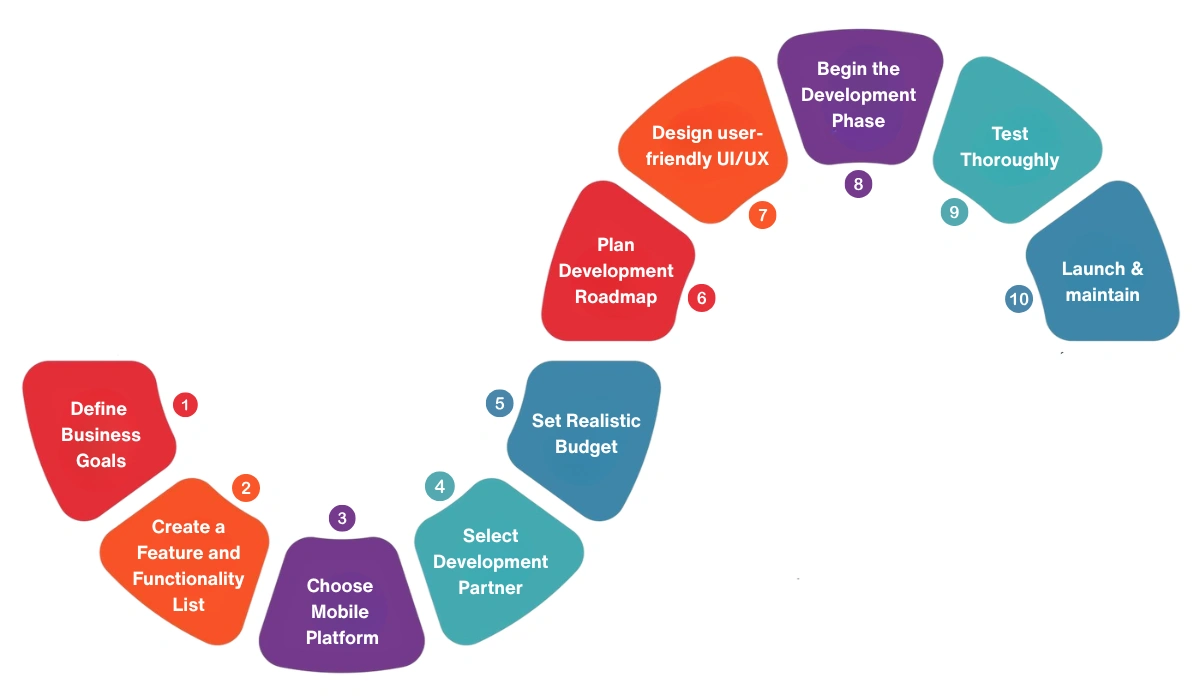
Here’s a detailed breakdown of the enterprise mobile app development process, from the first idea to post-launch maintenance.
Step 1: Identify Clear Business Goals
Every great app starts with a clear purpose. Before writing a single line of code, define what you want your enterprise app to achieve. Are you trying to improve team collaboration, automate workflows, or enhance customer experiences?
Spend time mapping out your short- and long-term objectives. A clear vision helps shape your mobile strategy, set measurable KPIs, and define which app features will truly add value to your organisation. This early focus ensures that every decision during development aligns with your overall business goals.
Step 2: Create a Feature and Functionality List
Once your goals are set, the next step is to create a detailed list of key features and functionalities. Consider what your employees, customers, or stakeholders actually need from the app, not just what’s nice to have.
For example, include features like secure login, data dashboards, document sharing, real-time chat, or workflow automation. Each feature should directly support your business objectives and make everyday operations smoother. This structured approach saves time and cost later in the process.
Step 3: Choose the Right Mobile Platform
Next, decide which platform your app should target, iOS, Android, or cross-platform. This decision depends on your target audience, their preferred devices, and your organisation’s digital ecosystem.
If most users are spread across different devices, a cross-platform enterprise app might be the best choice. It provides consistent experiences on both iPhones and Android devices while saving time on separate builds.
Once the platform is chosen, finalise the app architecture, ensuring it’s scalable, secure, and adaptable for future growth.
Step 4: Select the Right Development Partner
Your choice of a mobile app development company will determine how efficiently your project moves forward. Look for a partner with proven experience in enterprise mobile app development, not just consumer apps. They should understand your industry, ask insightful questions, and be committed to achieving your goals.
A strong development partner doesn’t just build an app, they collaborate closely, offering technical expertise, design advice, and continuous support from concept to launch.
Step 5: Define and Set a Realistic Budget
By this stage, you should have a good idea of your goals and features. Now, it’s time to discuss cost and scope with your chosen developers. Ask for detailed estimates that include design, development, testing, deployment, and post-launch maintenance.
Be transparent about your budget range, it helps your team suggest practical solutions without compromising quality. A realistic budget keeps your project on track and avoids last-minute surprises.
Step 6: Build a Clear Development Roadmap
A software development roadmap acts as your project’s blueprint. It defines key milestones, timelines, deliverables, and responsibilities. Work with your development partner to design this roadmap, turning your vision into structured, achievable steps.
This plan will guide project managers, designers, and engineers throughout the process, ensuring alignment, accountability, and steady progress. It also helps you track development stages and make informed decisions when priorities shift.
Step 7: Design Engaging and User-Friendly UI/UX
An enterprise mobile app must be both powerful and simple to use. That’s where UI/UX design plays a crucial role. A cluttered or confusing interface can stop users from adopting the app, even if it’s functionally sound.
Focus on intuitive navigation, minimal clicks, and responsive design. Create design prototypes and gather early feedback from real users within your organisation. The goal is to make your enterprise app not just functional but enjoyable to use, encouraging engagement and long-term adoption.
Step 8: Begin the Development Phase
Once the designs and roadmap are ready, it’s time to start building the app. Development usually happens in three main layers:
Front-end (Client Side): The part users interact with, including the design, layout, and user experience.
Back-end (Server Side): Handles databases, server logic, authentication, and integrations with your systems.
API Layer: Acts as the bridge between the front-end and back-end, enabling smooth data flow and communication.
Agile development practices are ideal here, allowing for faster iterations, flexibility, and regular testing throughout the build.
Step 9: Perform Rigorous Testing and Quality Checks
Thorough QA (Quality Assurance) testing is vital before launch. Testing helps identify bugs, security gaps, and usability issues early, before they affect real users. QA should start from the early stages of development, not just at the end.
Your testing process should cover performance, security, compatibility, and functionality across multiple devices and operating systems. The goal is to ensure the app runs smoothly, remains secure, and meets enterprise-grade reliability standards.
Step 10: Launch, Support, and Maintain
Once testing is complete, it’s time to launch your enterprise app. But the process doesn’t end there. Continuous support and maintenance are essential to keep your app secure, updated, and compatible with evolving mobile platforms.
Monitor user behaviour, performance metrics, and feedback to identify improvement areas. Regular updates keep the app relevant, while quick fixes ensure stability and high user satisfaction.
What to Consider When Choosing the Best Enterprise Mobile Application Development Company?
Choosing the right enterprise mobile app development company can make or break your project. With so many options out there, it’s essential to look beyond flashy websites or big promises. The ideal partner will understand your business, work transparently, and deliver measurable results.
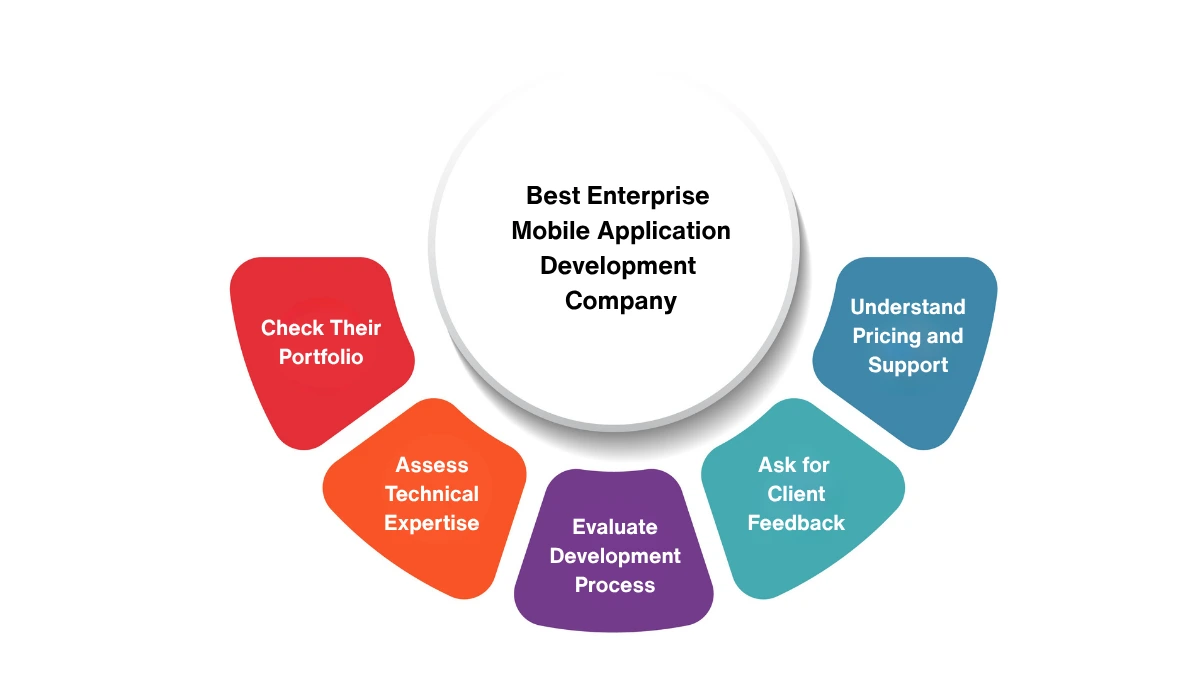
Here are a few key factors to consider before you make a decision:
1. Check Their Portfolio and Industry Experience
A company’s previous work tells you a lot about what to expect. Review their mobile app development portfolio to see if they’ve built apps similar to what you need. Don’t hesitate to ask for detailed case studies, even if they’re anonymised, to understand how they solved real business challenges.
If they’ve worked with clients in your industry, that’s a strong plus. It means they already understand your market’s dynamics, user expectations, and compliance requirements.
2. Assess Technical Expertise and Team Strength
Your chosen partner should have a strong grasp of enterprise app technologies, including iOS, Android, and cross-platform development frameworks like Flutter or React Native.
Ask how they ensure scalability, data security, and performance in large enterprise environments. The best companies will guide you on the right tech stack for your goals rather than pushing their own preference.
3. Evaluate Their Development Process
A transparent and well-structured development process is crucial. Ask how they handle project planning, milestones, testing, and deployment.
Reputable partners focus on strategy, research, and collaboration. They’ll take time to understand your business model and co-create solutions, not just follow orders.
Also, make sure they have clear communication channels, flexible engagement models, and support within your time zone.
4. Ask for References and Client Feedback
A confident company will have happy clients who are willing to vouch for them. Request references or testimonials from businesses similar to yours.
You can also check independent reviews on platforms like Clutch or GoodFirms for honest feedback on reliability, communication, and post-launch support.
5. Understand Pricing and Post-Launch Support
Price shouldn’t be the only deciding factor, but it’s definitely important. Get a detailed quote that includes each stage, design, development, testing, and ongoing maintenance.
The best partners offer end-to-end enterprise app development services, including updates and optimisation after launch. This ensures your app stays secure, scalable, and relevant as technology evolves.
Conclusion
A well-built enterprise app can do more than just streamline operations — it can redefine how your business runs.
Whether your goal is to improve employee collaboration, enhance customer experience, or automate processes, choosing the right enterprise mobile app development partner is the foundation for success.
By following these key considerations, you’ll be better prepared to select a team that understands your goals, communicates clearly, and delivers quality work on time.
Remember, it’s not just about having an app; it’s about creating a digital tool that drives business growth and innovation.
How IDS Logic Can Help with Mobile App Development ?
At IDS Logic, we help businesses transform their ideas into high-performing mobile applications.
Our experienced enterprise mobile app developers build secure, scalable, and feature-rich apps that align with your business goals.
From strategy and design to deployment and maintenance, we handle the entire app development lifecycle.
We’ve delivered impactful solutions across industries, including retail, finance, education, and healthcare.
Whether you need a custom app or want to modernise your existing platform, our team ensures your mobile solution delivers measurable results.
Explore Our Mobile App Development Services
Let’s create something extraordinary for your business.

Frequently Asked Questions
Q1. How is an enterprise mobile app different from a regular business app?
An enterprise mobile app is built for large-scale operations within an organisation. It connects teams, automates internal processes, and integrates with existing systems like ERP or CRM. Regular business apps usually target customers and focus on branding or sales.
Q2. What is the average cost of enterprise mobile app development?
The cost depends on factors like features, technology, platform choice, and complexity. Basic enterprise apps may start from a few thousand pounds, while advanced, multi-platform solutions can cost significantly more. A detailed consultation helps estimate accurate costs.
Q3. How long does it take to develop an enterprise mobile app?
Timelines vary based on scope and functionality. Typically, a simple app can take 3–4 months, while complex enterprise applications might take 6–9 months or longer. Using an agile approach helps ensure flexibility and faster delivery.
Q4. What security measures are essential for enterprise mobile apps?
Security is crucial. Your app should include features like data encryption, multi-factor authentication, secure APIs, and regular vulnerability testing. Compliance with data protection laws such as GDPR is also essential for UK businesses.
Q5. Can an enterprise mobile app integrate with existing business systems?
Yes. A well-built enterprise app can integrate seamlessly with tools like Salesforce, Microsoft Dynamics, SAP, or custom CRMs. Integration enhances efficiency, ensures data consistency, and provides real-time access to vital business information.