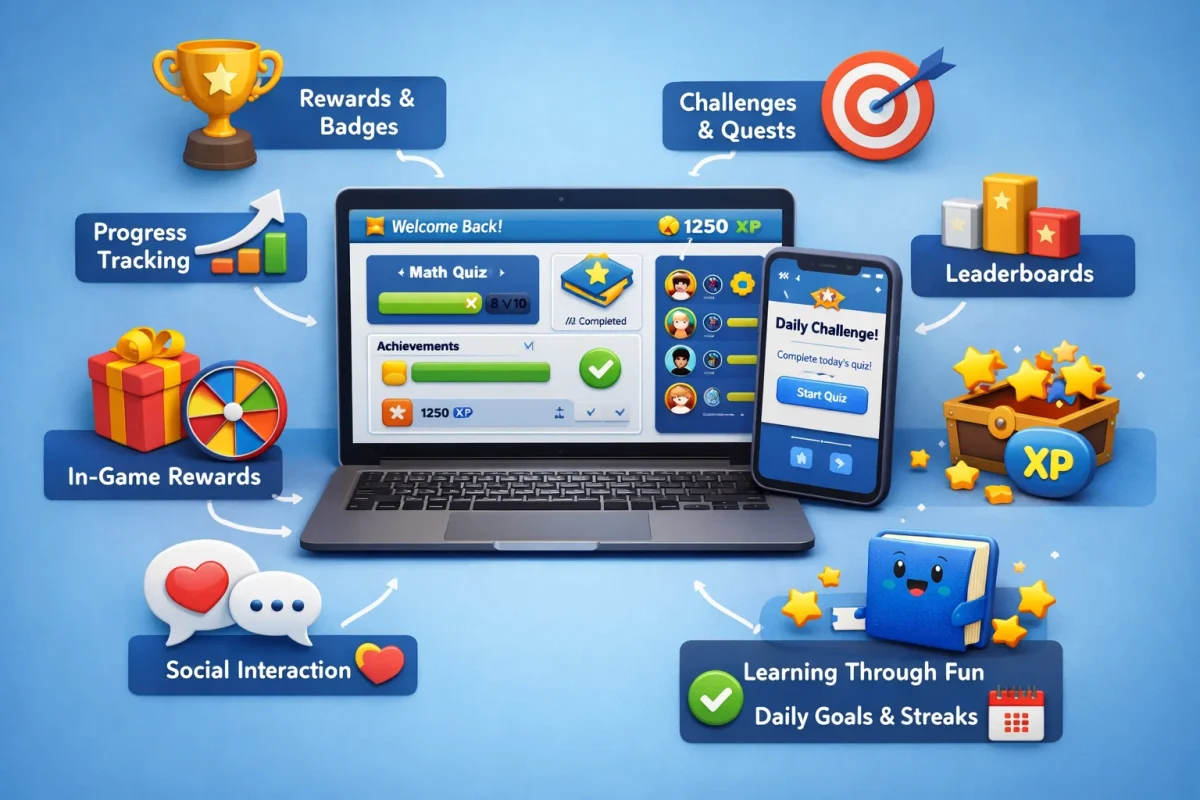
Gamification allows every learner to progress at their own pace with custom challenges, adaptive levels, and personalised feedback. This ensures that students—from early learners to professionals—stay motivated through learning journeys tailored to their individual strengths and weaknesses.
With thousands of mobile apps launching every day, standing out in the crowded market has become more challenging than ever. For app developers, keeping users engaged isn’t just about great design or smooth performance anymore, it’s about delivering an experience that feels rewarding, interactive, and meaningful.
This is where gamification in educational mobile apps plays a crucial role. By blending elements of fun, competition, and achievement into the learning process, gamification transforms routine study sessions into engaging experiences. Points, badges, leaderboards, and rewards motivate users to return, learn more, and perform better.
Over the past few years, the education landscape has shifted dramatically. With mobile learning now mainstream across the UK, students and professionals expect digital tools that are flexible, intuitive, and immersive. According to recent studies, over 67% of learners prefer gamified learning experiences because they make studying more enjoyable and effective.
In 2025, mobile learning gamification strategies are shaping the future of digital education, improving focus, encouraging consistency, and making knowledge retention easier. Whether you’re designing a new app or enhancing an existing one, adding game mechanics can be the key to boosting learner engagement via gamification and building lasting success in the growing educational app development UK market.
What is Gamification in Educational Mobile Apps?
Gamification means adding game-like elements, such as points, badges, levels, and challenges, into non-gaming environments like mobile apps. The idea is to make everyday activities more engaging by tapping into people’s natural drive for achievement, competition, and progress.
When applied to educational mobile apps, gamification transforms traditional learning into an interactive and enjoyable journey. Instead of just reading lessons or completing exercises, learners feel like they’re progressing through a game, unlocking levels, earning rewards, and celebrating achievements along the way.
This approach works because it blends education with entertainment. It helps learners stay motivated for longer, build consistent study habits, and feel a sense of purpose as they move forward. According to recent reports, gamified learning platforms can increase student engagement by up to 60%, proving how powerful these strategies have become in the digital classroom.
Unlike what some may assume, gamification doesn’t mean turning your educational app into a full-fledged game. Instead, it’s about using mobile learning gamification strategies, like personalised progress tracking, challenges, and visual feedback, to make learning more dynamic.
With custom educational app development in the UK, teachers and developers can create platforms that appeal to learners of all ages. These apps stimulate curiosity, improve knowledge retention, and make the learning experience both measurable and memorable.
In short, gamification in educational mobile apps encourages users to keep learning not because they have to, but because they want to.
Read More: 5 Best Marketing Strategies for Educational iOS apps
How Gamification Helps to Influence and Motivate Learners?
Using smart game-mechanics in an educational app taps into what really drives people: curiosity, control, and engagement. This is why gamification in educational mobile apps works so well.
It sparks curiosity. When learners see rewards or progress, they feel eager to explore more and unlock the next stage.
It gives a sense of control. People dislike feeling forced. With gamified features, learners choose their milestones, view their progress and decide when to advance.
It builds friendly competition. Leaderboards or achievement charts let users compare performance in a healthy way. That motivates them to improve and stay committed.
It reinforces habits. Regular interaction with the app becomes part of a routine, thanks to game-like rhythms and feedback loops.
In the UK market, where the number of mobile learners and educational apps is rising steadily, employing mobile learning gamification strategies can help an app stand out and keep users engaged longer.
Key Benefits of Gamification in Education
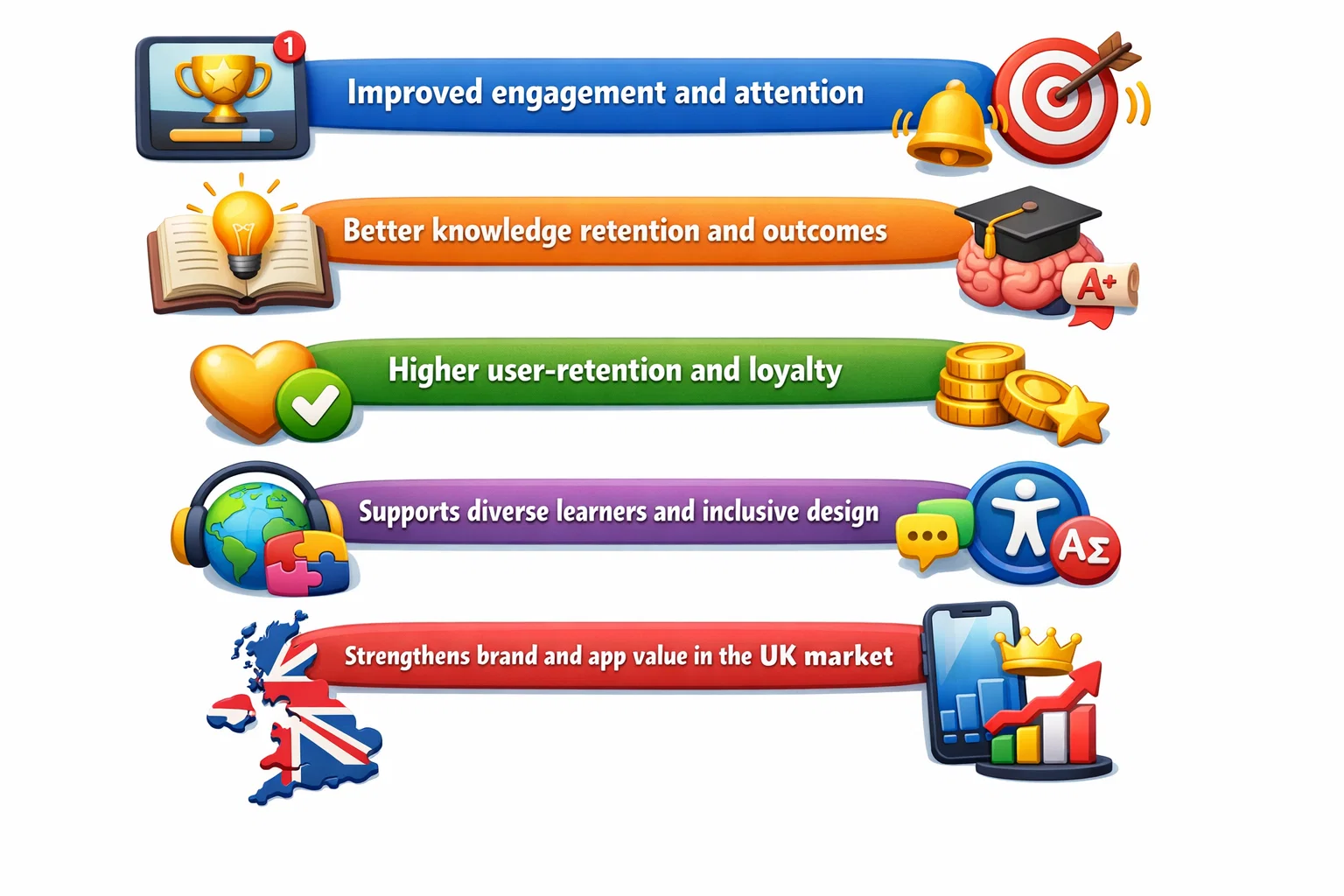
When you apply gamification in your app’s design, you unlock several strong advantages. Here are some of the major benefits for educational apps and learners in the UK context (and beyond):
1. Improved engagement and attention
Gamified elements make learning feel less like a chore and more like a challenge worth doing. Studies show gamified modules can hold attention and create deeper involvement.
2. Better knowledge retention and outcomes
Learners recall more when the experience is interactive and rewarding. The market is moving such that gamification plays a key role in retention and learning outcomes.
3. Higher user-retention and loyalty
In the crowded UK edtech and mobile learning app market, apps must not only gain users but keep them. Gamification helps by offering progress tracking, unlocks and rewards that encourage users to come back.
4. Supports diverse learners and inclusive design
Gamified mobile apps can cater to different learning styles by offering choice, visual feedback, rewards and adaptive pacing. That aids learners who might struggle with traditional formats.
5. Strengthens brand and app value in the UK market
For educational app developers and UK-based organisations, adding gamified features adds perceived value, helping your offering to stand out amid competition and drive success in educational app development.
Gamification Strategies for Your Educational Mobile App Development
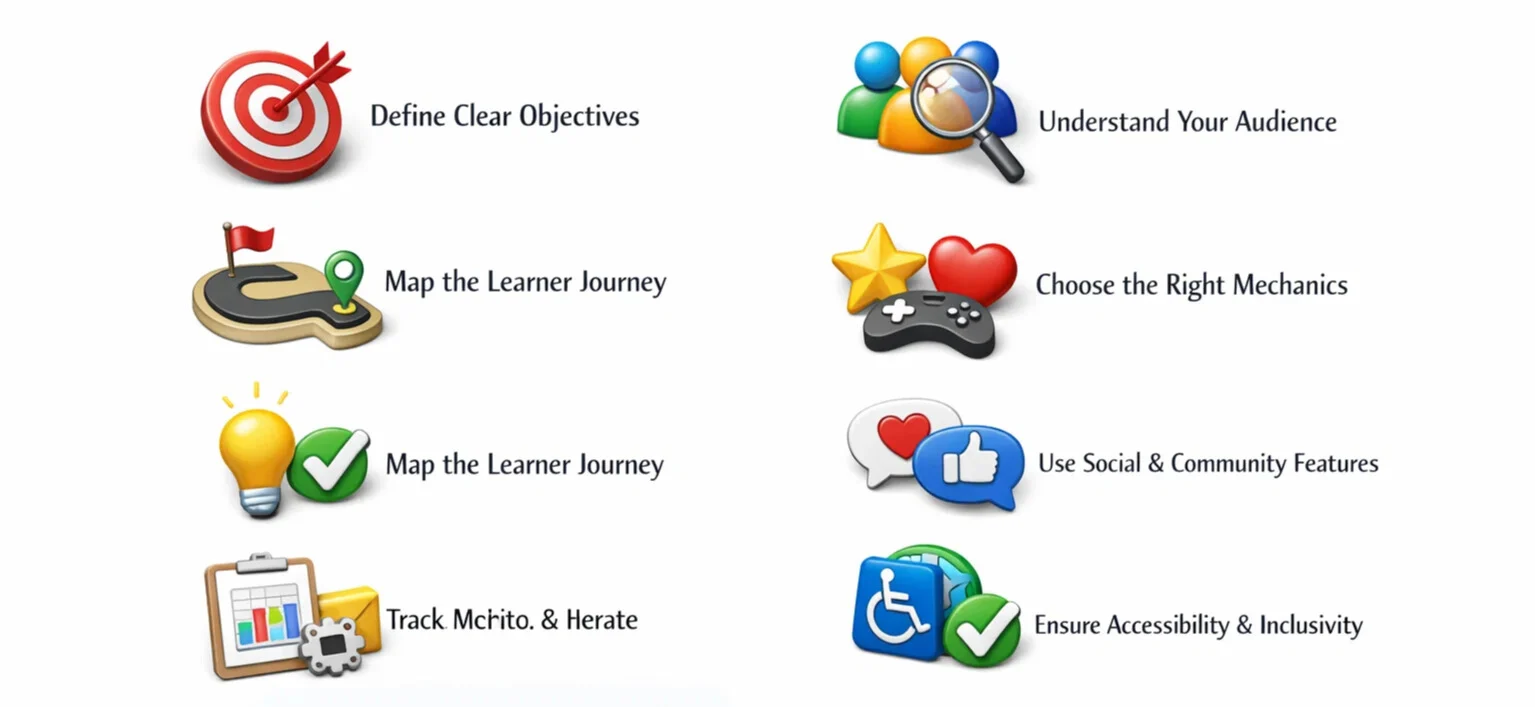
To develop a successful educational app in the UK market using gamification, you’ll need clear strategies, careful planning and ongoing iteration. Here are actionable steps:
1. Define clear objectives
Start with what you want learners to do: “log in daily”, “complete five modules”, “participate in peer challenges”. Then align your games-mechanics accordingly.
2. Understand your audience
Age range, interests, language (UK spelling, UK cultural references), digital habits, all of this matter. The game-elements that excite a school student differ from those that motivate an adult professional.
3. Map the learner journey
Trace how a user enters the app, starts a module, hits achievement, shares progress, returns. Identify the moments where game-mechanics can amplify motivation.
4. Choose the right mechanics
Points, badges, progress bars, leaderboards, avatars, mini-quests, each has value. But use them with purpose. For example, a badge for “completed five lessons in a row” or a leaderboard among peers working through a micro-module.
5. Keep it simple and meaningful
Too many mechanics can confuse. Offer rewards that feel real. Even digital unlocks count if they reflect effort and progress.
6. Use social and community features
Allow sharing achievements, invite peer challenges or team goals. Social visibility encourages participation and retention.
7. Track metrics and iterate
Monitor retention, session length, module-completion rates, feature-usage (e.g., how many used the leaderboard). Use data to refine your gamification.
8. Ensure accessibility and inclusivity
Make sure your mechanics don’t disadvantage learners (e.g., those with disabilities or slower pace). UK apps must comply with accessibility norms and consider all user types.
By combining all these mentioned strategies, you will strengthen your position in the educational app development UK space and build an app that truly leverages boosting learner engagement via gamification.
How to Effectively Add Gamification to a Learning App?
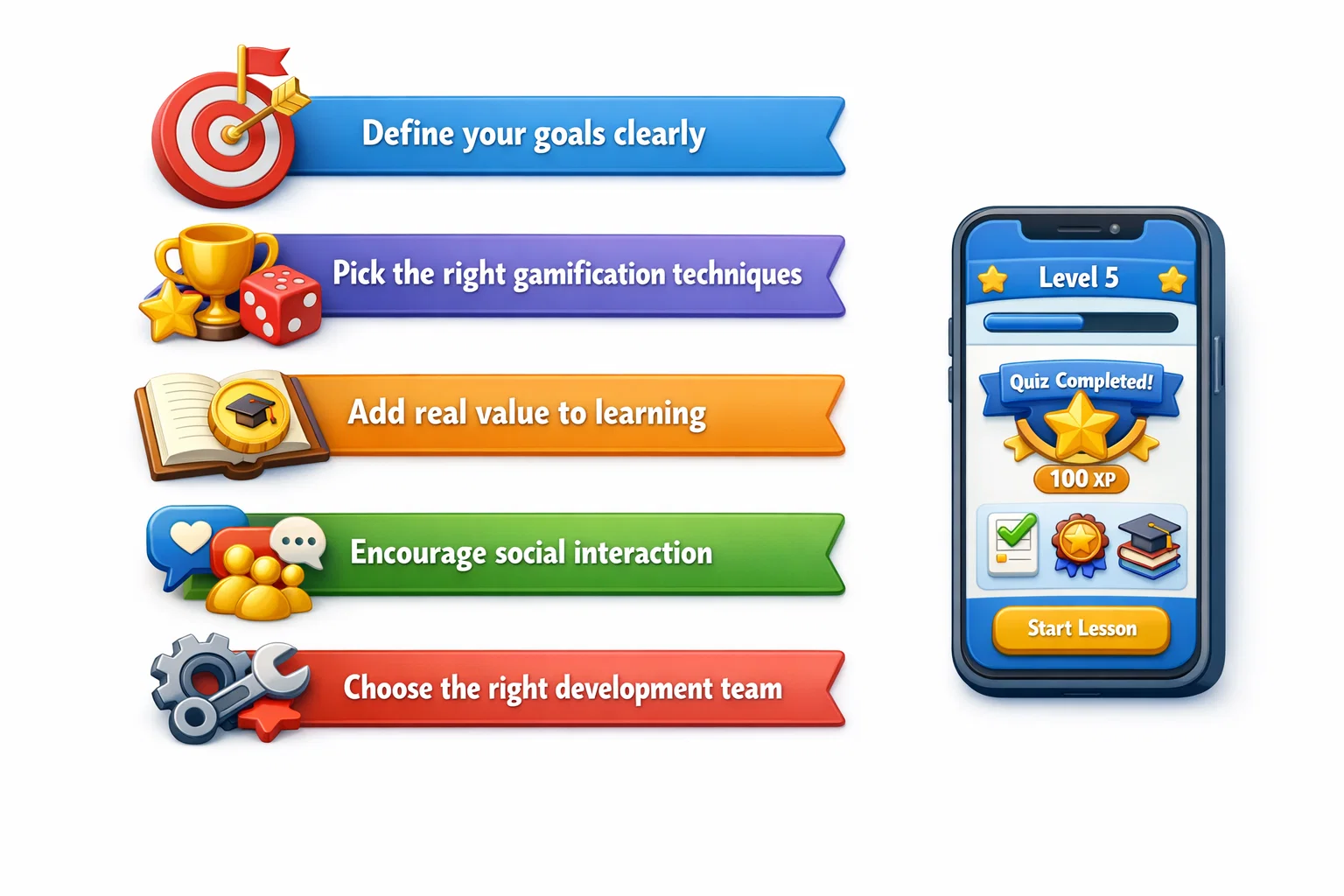 Designing a gamified app is not just about adding points and badges. It’s about using smart strategies to make learning more interactive, inclusive, and rewarding. Here’s how to do it right.
1. Define your goals clearly
Start by identifying why you want to use gamification. Do you want to boost engagement, improve retention, or make lessons more inclusive? Setting measurable goals helps you pick the right features and ensures your gamification strategy adds real value.
2. Pick the right gamification techniques
Choose tools that fit your audience and content. For example, leaderboards work well for older students, while story-based rewards suit younger learners. Virtual coins, badges, or progress bars can be tailored based on user preferences. Use A/B testing to see what resonates best.
3. Add real value to learning
Gamified elements should inspire action and improvement. For instance, daily rewards can motivate consistency, progress trackers can show growth, and challenges can keep users excited to learn more. Each feature should make learning easier, not more complex.
4. Encourage social interaction
Learning is more powerful when shared. Allow learners to post their scores, achievements, or progress on social media or within the app community. Add multiplayer challenges or team-based goals to promote healthy competition and peer motivation.
5. Choose the right development team
A team with proven experience in gamified education apps will help you combine the right technology and psychology. They can design engaging user journeys while ensuring that technical execution meets your goals and timeline.
Common Mistakes to Avoid When Implementing Gamification
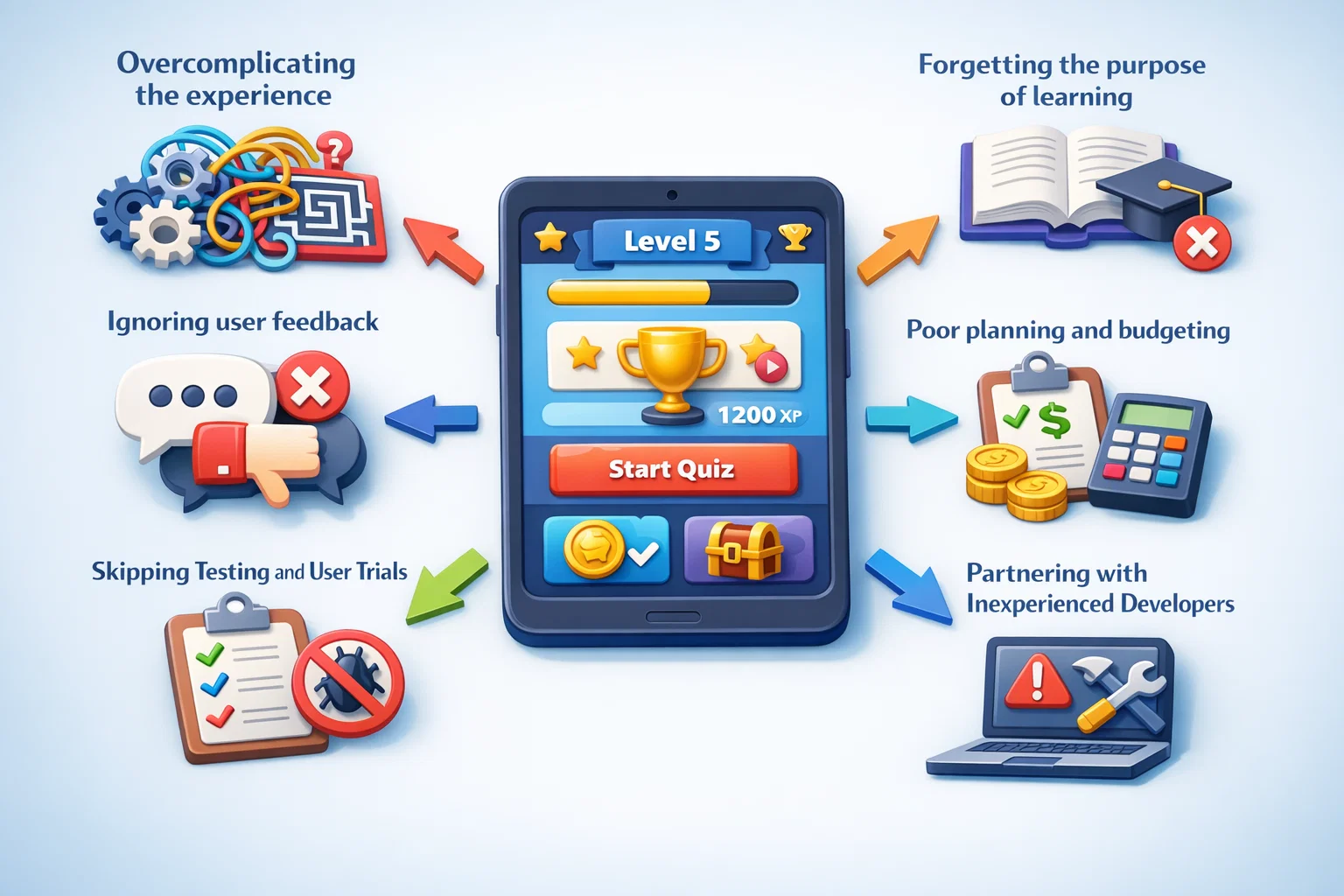
Gamification can completely transform an educational app, but only if done right. Many developers fall into traps that make their apps confusing or less engaging. Here are a few common mistakes to avoid when introducing gamified elements into learning platforms.
1. Overcomplicating the experience
Simplicity always wins. While adding several features might seem impressive, too many layers of badges, levels, and challenges can confuse users. Learners prefer clear goals and easy navigation. Keep your app intuitive, and focus on smooth progression rather than overwhelming features.
2. Forgetting the purpose of learning
Gamification is meant to support education, not overshadow it. If the focus shifts from learning to merely earning points or rewards, users lose the actual value of the app. Every game mechanic should align with the educational goal and make learning more enjoyable, not a distraction.
3. Ignoring user feedback
Your users are your best critics. Regularly collect feedback through reviews, surveys, or in-app analytics. It helps identify what’s working and what needs improvement. Continuous feedback loops ensure that your gamified features remain relevant and engaging.
4. Poor planning and budgeting
Without proper financial planning, even the best gamified app idea can fall apart. Set clear budgets for development, testing, and maintenance before you begin. This prevents unexpected costs or delays later.
5. Skipping testing and user trials
Never launch without testing. Prototype testing with real users can reveal usability issues early on. It’s easier and cheaper to make changes before launch than after your app is live.
6. Partnering with inexperienced developers
Gamification in education requires skill and understanding of both learning psychology and app design. Always choose a development team experienced in eLearning apps and gamified systems. They’ll help ensure the app functions seamlessly while meeting your goals.
Final Thoughts
Gamification has grown from a trend to a cornerstone of modern education technology. With the rise of AI, AR, and VR, learning apps are becoming more immersive and personalised than ever. By blending game mechanics with smart design, educators can boost motivation, engagement, and academic success.
The future of gamification lies in balance, making apps fun but purposeful. When done thoughtfully, it turns passive learners into active participants and transforms education into an exciting, goal-driven experience.
If you’re ready to create an interactive learning app that keeps users motivated and coming back, consider partnering with a trusted mobile app development company like IDS Logic. Our team can help you design a smart, scalable, and engaging gamified app built for success.
Frequently Asked Questions
Q1: Can gamification in educational mobile apps adapt to different learner personalities and styles?
Yes, modern gamification is increasingly personalised. For example, systems now tailor challenges, feedback and reward paths based on how each learner behaves and performs. Research shows that personalised gamification models boost engagement and satisfaction. This means in the UK edtech market you can design your app so that each user sees game-elements relevant to their pace and style rather than one-size-fits-all.
Q2: What evidence is there that gamification improves long-term learning outcomes, not just short-term engagement?
There is growing research indicating that gamified learning interventions lead to better knowledge retention and improved metrics over time. A systematic review found that gamified interventions significantly improved academic performance and engagement across different domains. For UK-based educational app development, this offers a strong case for integrating gamification not just for fun, but for real learning impact.
Q3: What role should educators or teachers play in a gamified educational app environment?
Educators remain crucial, their attitudes, confidence and training affect how successfully gamification is applied. In one study, teachers’ intentions to use gamification were influenced by their perceived control, attitudes and norms. So, when designing a UK-market educational app with gamification, it’s wise to involve educators early on, offer training or guidance, and ensure the design aligns with their workflows rather than working around them.
Q4: Are there risks or negative consequences of gamification in educational apps?
Yes, while gamification delivers many benefits, it also carries risks if it’s poorly implemented. For example, too many badges, points or competitive leaderboards without educational alignment can overwhelm or demotivate learners. A mapping study found multiple reports of such negative effects. For UK educational apps, it’s vital to design game-elements thoughtfully, monitor their impact, and ensure they enhance rather than distract from learning.
Q5: How will gamification in educational mobile apps evolve by 2025 and beyond?
Looking ahead, gamification will become more intelligent and immersive. Key trends include integration of AI to adapt challenges in real-time, and use of augmented or virtual reality to create more engaging experiences. For developers in the UK, planning for these future-capable features now can give your educational app a competitive edge in the “educational app development UK” space.