Mobile tourism apps simplify travel by enabling easy bookings, real-time updates, and personalised experiences, helping both travellers and businesses stay efficient and connected.
Mobile apps have become an essential part of everyday life. Almost every sector is leveraging this technology to improve efficiency and enhance customer experiences. The travel and tourism industry, in particular, has benefited enormously from mobile tourism app development.
In the past, travellers relied heavily on travel agents to plan and book their trips, which was often time-consuming and cumbersome. Today, mobile apps for travel and tourism have completely transformed this process. With just a few taps, users can research destinations, book flights and accommodation, explore local attractions, and even find the best restaurants nearby.
Smartphones have made on-demand services the norm, and the tourism industry is embracing this shift. Both large travel corporations and smaller operators are investing in travel mobile apps to stay competitive and deliver personalised, seamless experiences. Well-designed mobile tourism platforms no longer just assist with bookings, they guide travellers through every step of their journey.
From planning itineraries to navigating unfamiliar cities, mobile apps for the tourism industry have made travel easier, faster, and more enjoyable. As the sector continues to grow, mobile tourism apps remain at the heart of this digital transformation, shaping the way people explore the world.
The Rise of Mobile Tourism Apps
Mobile apps are reshaping how people plan and enjoy their trips. In the past, travellers depended on travel agents for bookings, itineraries, and recommendations, a process that often took hours or even days. Today, mobile apps for the travel industry have made these tasks far simpler and more accessible.
Travellers now use tourism mobile apps to research destinations, book flights and hotels, discover local experiences, and even navigate unfamiliar cities. According to Statista (2025), more than 70% of global travellers plan, book, and manage trips via mobile apps, highlighting a dramatic shift toward mobile-first travel experiences.( Source: Statista )
For travel and hospitality businesses, this shift represents more than convenience for users, it’s a crucial part of digital transformation. Mobile apps for travel and tourism help companies engage customers directly, streamline operations, and offer advanced features like personalised recommendations, AI-driven itinerary suggestions, and instant notifications.
With mobile tourism platforms becoming central to modern travel experiences, businesses that have not yet embraced mobile apps risk falling behind. These apps not only improve customer satisfaction but also provide valuable insights into traveller behaviour, enabling smarter decisions and stronger loyalty.
Key Benefits of Mobile Apps in the Travel and Tourism Industry
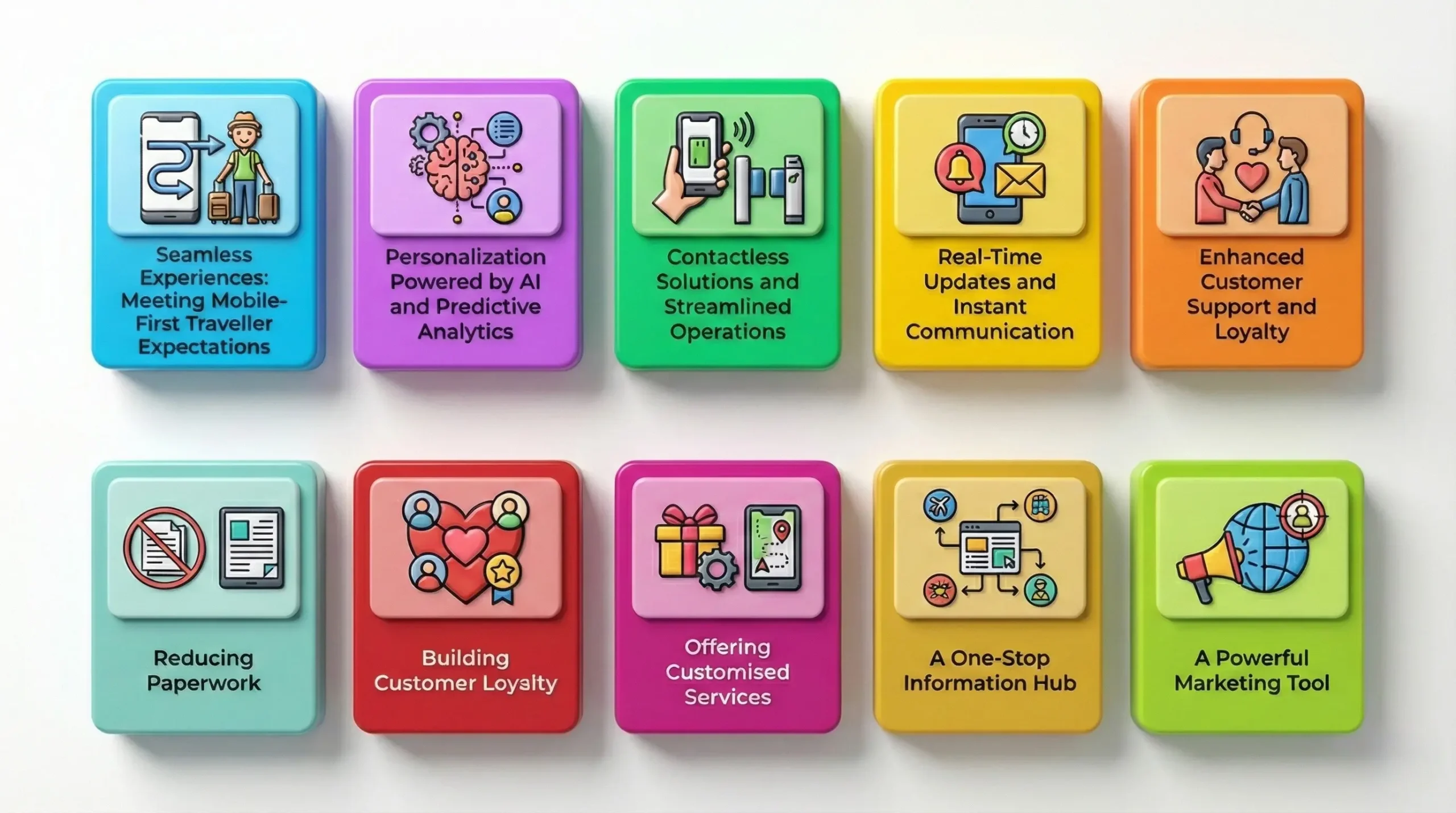
Mobile apps are transforming the way travellers interact with the tourism industry. From planning and booking to navigating destinations, mobile tourism apps have become essential tools for modern travel. They not only meet traveller expectations but also help businesses stay competitive in a fast-paced, digital-first world.
Read More: 15 Best Mobile App Development Tools 2025
1. Seamless Experiences: Meeting Mobile-First Traveller Expectations
Today’s travellers expect seamless, convenient experiences at their fingertips. Mobile apps for travel and tourism make it easy to book flights, check into hotels, access itineraries, and receive real-time updates, all from a smartphone. By offering a mobile tourism platform, businesses can provide the convenience and speed users now consider standard.
2. Personalization Powered by AI and Predictive Analytics
Mobile apps collect real-time data on traveller preferences, behaviour, and booking patterns. This data enables AI-driven personalisation, allowing businesses to suggest tailored itineraries, nearby attractions, or even dynamic pricing options. Travel apps use AI to recommend trips and deals based on previous searches, ensuring users feel valued and engaged. Personalised mobile apps boost customer satisfaction and improve conversion rates, making them indispensable for modern tourism businesses.
Furthermore, the use of predictive analytics allows businesses to anticipate traveler needs, leading to timely upselling opportunities and optimized service delivery.
3. Contactless Solutions and Streamlined Operations
Contactless solutions have become a travel essential. Mobile apps enable digital check-ins, mobile keys, contactless payments, and direct communication with staff, minimising physical contact and speeding up processes. Leading hotel chains now allow guests to unlock doors and manage room preferences entirely through apps. These features have set new industry standards, and travellers increasingly expect them everywhere. This efficiency also drastically reduces operational paperwork and manual check-ins, streamlining business workflows.
4. Real-Time Updates and Instant Communication
Unpredictable travel schedules make real-time updates vital. Mobile apps allow businesses to send instant alerts about flight delays, gate changes, or weather updates, reducing stress and improving the travel experience. Push notifications can also highlight last-minute offers or local events. Customer support is now faster too, travellers can message service teams, request assistance, or ask for recommendations directly through the app, eliminating long waits on call centres.
5. Enhanced Customer Support and Loyalty
Mobile apps provide a central hub for all customer interactions. Customer support is now faster too—travellers can message service teams, request assistance, or ask for recommendations directly through the app, eliminating long waits on call centers. This immediate communication builds trust and strengthens customer relationships. Regular notifications, personalized offers, and gamified engagement within the app encourage repeat bookings and foster long-term customer loyalty, making the app a powerful retention tool.
6. Reducing Paperwork
Digital travel solutions simplify operations for both travellers and businesses. By eliminating physical forms and manual check-ins, apps make the booking process effortless. Users can fill in details, manage itineraries, and complete payments comfortably from home or on the go, improving convenience and boosting satisfaction.
7. Building Customer Loyalty
With so many options in the tourism sector, retaining customers is challenging. Mobile apps help by keeping businesses connected to users. Regular notifications, personalised offers, and engagement on special occasions encourage repeat bookings and foster long-term loyalty.
8. Offering Customised Services
Mobile apps allow businesses to personalise services to meet individual traveller needs. From pre-arranging meals to reserving preferred seating or tailoring room amenities, apps enable companies to deliver memorable, bespoke experiences. A mobile app serves as a comprehensive platform for all travel-related information, providing local guides, real-time wayfinding, and curated insights, helping travellers make informed decisions quickly.
9. A One-Stop Information Hub
Apps serve as a comprehensive platform for all travel-related information. They provide easy access to services, local guides, and insights, helping travellers make informed decisions quickly and enhancing the overall user experience.
10. A Powerful Marketing Tool
Beyond utility, mobile apps act as a strong marketing channel. Businesses can showcase services, highlight promotions, and engage users creatively. A well-designed tourism mobile app becomes a digital ambassador, attracting potential customers and increasing brand visibility.
Scaling Travel Tech with Strategic Outsourcing
As travel and tourism businesses across the UK continue to scale their digital capabilities through mobile apps, managing development complexity, maintaining quality standards, and minimising operational risks becomes increasingly challenging. Many UK organisations are turning to strategic outsourcing to address skills shortages, accelerate time-to-market, and optimise costs without compromising on innovation. A well-structured nearshore approach enables businesses to remain agile while retaining control over delivery, compliance, and long-term scalability.
Download the whitepaper to discover how UK organisations are mitigating risks and maximising value while building scalable digital travel solutions.

Why Do Tourism Tech Companies Must Embrace Mobile Apps Today?
In today’s travel and tourism landscape, mobile apps are no longer optional, they’re essential. Travellers expect to manage every aspect of their journey from their smartphones, from researching destinations to booking flights and accessing real-time updates. Without a mobile tourism app, your business risks falling behind in a fiercely competitive market.
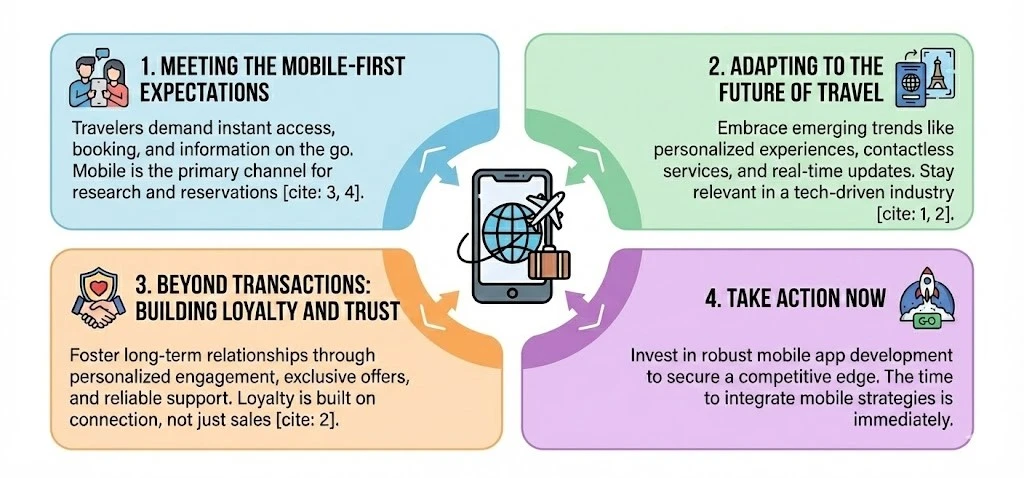
1. Meeting the Mobile-First Expectations
Leading travel platforms like Booking.com, and Uber have set high standards for mobile-first experiences. Studies show that over 65% of travellers now prefer using mobile apps to book trips, illustrating a clear shift toward mobile tourism platforms. By adopting a mobile-first approach, your travel business can meet these expectations and stay ahead of competitors.
2. Adapting to the Future of Travel
The future of travel belongs to companies that embrace innovation. Every traveller wants convenience, speed, and personalised experiences. AI-driven suggestions, instant booking updates, and seamless itineraries are no longer futuristic, they are the standard that users now expect from mobile apps for the tourism industry.
Every moment your business isn’t leveraging mobile technology is a moment your potential customers are engaging with competitors. Mobile apps enable travel tech companies to understand customer behaviour, anticipate needs, and deliver experiences that feel effortless.
3. Beyond Transactions: Building Loyalty and Trust
Modern travel isn’t just about selling flights or hotel rooms. It’s about creating memorable journeys. A well-designed mobile app allows businesses to connect with travellers in meaningful ways, providing personalised recommendations, instant support, and frictionless interactions. Each interaction in the app builds trust, encourages repeat bookings, and strengthens long-term loyalty.
4. Take Action Now
The choice for travel businesses is clear: innovate or risk being left behind. Mobile tourism apps are the gateway to smarter, more connected, and highly personalised travel experiences. By adopting mobile technology today, your business can lead the way, shape the traveller experience, and secure a lasting place in the fast-evolving tourism industry.
Conclusion: The Future of Tourism Lies in Mobile Apps
The travel and tourism industry is undergoing a digital revolution, and mobile apps are at its heart. These platforms are no longer just tools for booking, they are complete travel companions, guiding travellers at every step of their journey. From personalised recommendations and real-time updates to seamless booking and contactless services, mobile apps are setting the new standard for the tourism experience.
For travel businesses, adopting mobile app development is no longer optional. It’s a strategic move to stay competitive, build customer loyalty, and deliver experiences that travellers now expect. Companies that adopt mobile tourism apps can reach their audience more effectively, understand traveller behaviour, and offer personalised services that drive repeat business.
The future belongs to those who act now. Mobile apps provide the flexibility, connectivity, and convenience that travellers demand. Businesses that fail to adapt risk losing relevance, while those that invest in mobile app solutions position themselves as leaders in the evolving tourism landscape.
In short, mobile apps are not just a trend, they are the future of travel. By leveraging their potential, your business can create smarter, faster, and more personalised experiences, ensuring travellers keep coming back.
Partner with IDS Logic to develop innovative, user-friendly mobile solutions tailored for the travel and tourism industry and stay ahead in the digital era.