Looking for gaining support from the right software development company? Here is a guide to help you understand what to look forward to.
Finding the right software development partner has become a critical decision for businesses. Software now drives customer experience, internal efficiency, and long-term growth. A wrong choice can slow delivery, increase costs, and damage trust. The right partnership, however, can unlock innovation and create lasting value.
Nowadays, companies don’t only work with external teams for cost-saving purposes. Industry studies suggest that fewer than one third of companies outsource purely to reduce costs. For faster development, access to specialized skills, and competitiveness, most businesses seek out a trusted software engineering partner. As a matter of fact, over 90% of global organisations rely on some form of software partnership in order to achieve their digital objectives.
Search alternative while selecting companies
For UK organisations, the challenge is not finding options. It is choosing the right one. The global software outsourcing market continues to grow and is expected to cross £650 billion by 2026, with thousands of providers competing for attention. This abundance often creates confusion rather than clarity. Many companies look similar on the surface, yet differ greatly in quality, approach, and long-term value.
Choosing a reliable software development partnership means looking beyond pricing and timelines. Businesses must assess experience, communication style, security practices, and alignment with long-term goals. A strong application development partner does not just build software. They act as an extension of your team and support growth at every stage.
This guide offers a detailed explanation of what matters most when choosing a software development partner. It focuses on real business pain points, modern expectations, and the key factors UK companies should take into account when making such an important decision.
How to Evaluate a Software Development Partner’s Approach?
Before signing any agreement, it is essential to understand how a software development partner actually works. Many businesses make the mistake of focusing only on cost or timelines. In reality, the development approach often determines long-term success.
In 2026, most high-performing software partnerships follow a custom-first development model. This model moves away from rigid templates and focuses on real business needs. Instead of forcing your idea into a pre-built structure, the partner shapes the solution around your goals.
Four clear stages usually make up this approach: planning, design, development, and support. The process builds clarity and reduces risk at each stage. In recent industry research, 67% of executives prefer outcome-driven software development partnerships over hourly or task-based ones. As a result, accountability and measurable results are becoming increasingly important to executives.
The upfront investment for custom development is typically between £12,000 and £40,000, with delivery times of three to six months. Although higher upfront costs may seem excessive, they often contribute to fewer revisions, better performance, and a stronger long-term return.
Clearly Defining Requirements from Day One
One of the biggest challenges in software development is unclear expectations. Even experienced teams can struggle when requirements keep changing or remain undocumented. Many businesses spend weeks debating features such as user access, reporting, or inventory logic. These discussions often delay progress. The most effective solution is creating a clear requirements document early.
All stakeholders should contribute to this document. The document should outline the core features, future needs, and limitations of the project. While negotiating takes time, it reduces confusion later on. In fact, projects with documented requirements undergo 40% fewer revisions during development.
A strong application development partner will help you ask the right questions. They will not rush this stage. Instead, they treat clarity as an investment, not a delay.
Why User Feedback Strengthens the Partnership?
Despite the best plans, real users cannot be predicted. That’s why feedback is so important. Users tell us what works and what doesn’t. Getting feedback early helps teams improve usability, stability, and performance. Studies show that products shaped by continuous user feedback are more likely to be adopted and last longer. This reduces the risk of building features nobody uses.
A strong software partnership encourages regular feedback loops. They treat users as contributors, not afterthoughts. This mindset leads to better software and stronger trust.
Key Factors to Consider When Choosing the Right Software Development Partner
Choosing a software development partner in 2026 requires more than checking a portfolio. UK businesses now face tighter budgets, higher user expectations, and faster digital change. As a result, the decision directly affects delivery speed, quality, and long-term growth.
According to recent studies, over 60% of software projects fail because of poor partner selection. This makes it crucial to assess how a partner works, communicates, and adapts over time. Here are the most important factors to consider when building a software development partnership.
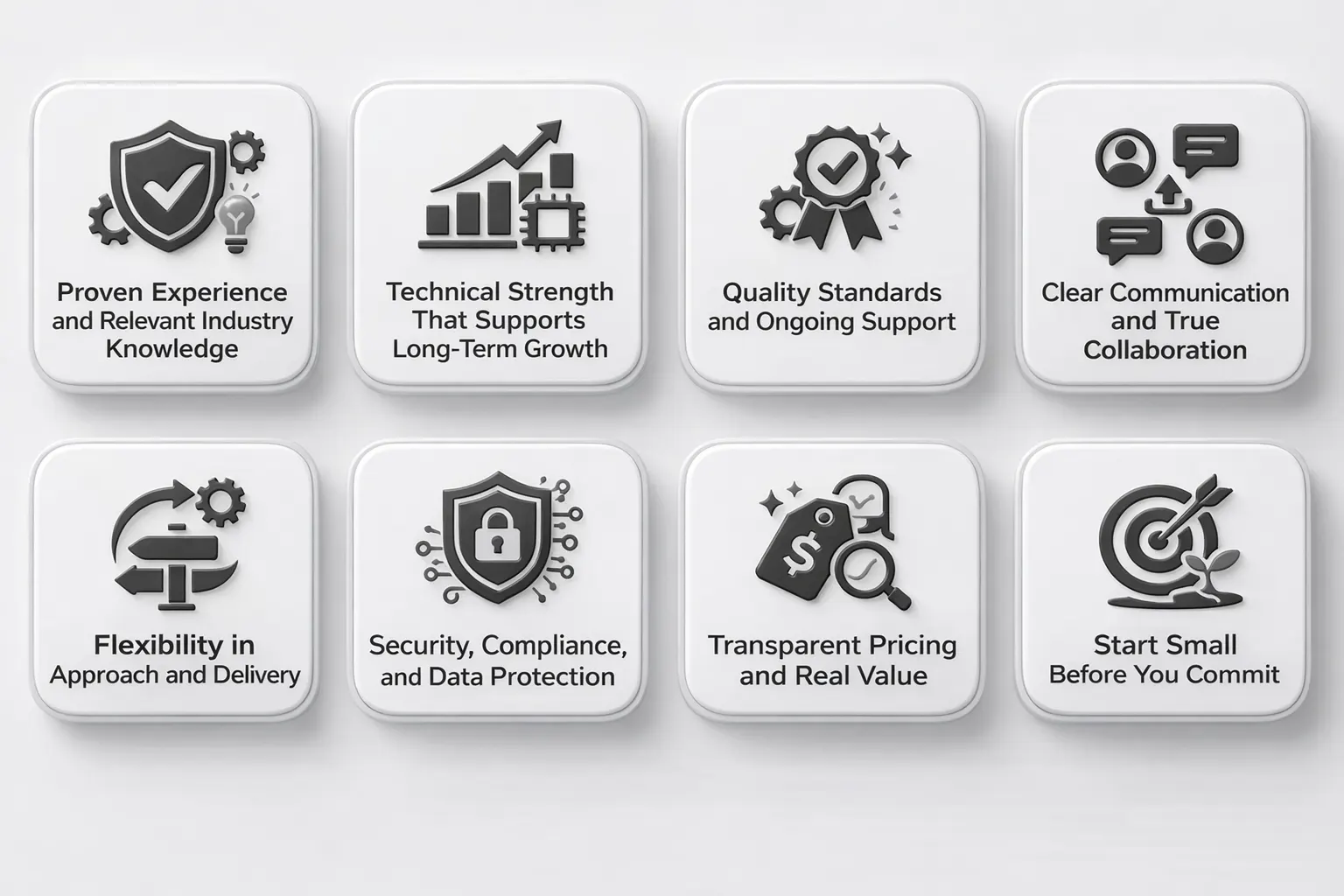
1. Proven Experience and Relevant Industry Knowledge
Experience still matters, but relevance matters more. A strong software engineering partner should show clear success with projects similar to yours. Look for experience in your industry and with businesses of a similar size.
Partners with domain knowledge understand real challenges early. They avoid guesswork and reduce rework. This often leads to faster delivery and better outcomes. In 2026, industry-specific experience has become a top priority for UK decision-makers, especially in regulated sectors.
2. Technical Strength That Supports Long-Term Growth
Technical ability goes beyond tools and platforms. A reliable application development partner should explain their choices in simple terms and link them to business goals.
Review their past work carefully. Ask how they solved complex problems and scaled systems over time. Strong partners also invest in modern tools, security practices, and cloud-ready solutions. According to recent data, 67% of organisations now prefer outcome-based partnerships, where results matter more than hours worked.
3. Quality Standards and Ongoing Support
Software does not end at launch. Bugs appear, users need change, and systems require updates. A strong software development partner prioritises testing, performance, and post-launch care.
Look for partners who offer:
- Clear quality checks
- Ongoing maintenance and updates
- Fast response times for issues
- UK businesses that invest in long-term support report lower downtime and higher user retention.
4. Clear Communication and True Collaboration
Communication often defines success or failure. A good software partnership depends on openness, regular updates, and quick responses. Poor communication causes delays, confusion, and cost overruns. In contrast, transparent collaboration builds trust and keeps projects on track.
Choose a partner who:
- Shares progress clearly
- Listens to feedback
- Works as part of your team
5. Flexibility in Approach and Delivery
Business needs change. Markets shift. Priorities evolve. Your app development partner must adapt without losing control of scope or budget. Avoid rigid, template-driven providers. Instead, choose a partner who tailors solutions and adjusts plans when needed. Flexibility is especially important for growing UK businesses that need room to scale.
6. Security, Compliance, and Data Protection
Security expectations continue to rise. In the UK, data protection and compliance remain non-negotiable. A trusted software engineering partner should follow strong security practices and protect sensitive data at every stage. They should also stay aligned with current regulations and best practices. In 2026, security is no longer an add-on. It is a baseline requirement.
7. Transparent Pricing and Real Value
The cheapest option often leads to hidden costs later. Look for clear pricing models and honest estimates. A strong software development partnership explains what you pay for and why. They also help you plan future costs with confidence. Flexible pricing models that balance control and adaptability are increasingly popular among UK companies.
8. Start Small Before You Commit
Considering a short engagement first can give you a sense of how well the partner fits your culture and expectations, allowing you to assess quality, communication, and reliability before making any long-term commitment. Successful trials can build confidence and reduce risk.
Why Does the Right Software Development Partnership Make the Difference?
A new approach to outsourcing goes beyond saving money. 66% of organisations outsource at least one function today, with 40% planning to increase their outsourcing spend. A focus has shifted toward long-term collaboration. A software development partnership that aligns with your business goals makes delivery predictable. Communication becomes better. Knowledge stays within the project. Over time, this alignment results in less technical debt and faster release schedules.
When alignment is missing, problems appear slowly. Missed deadlines, unclear ownership, and rising costs begin to stack up. The impact goes beyond budgets. It affects momentum, confidence, and market responsiveness.
What a Software Development Partner Should Bring to Your Business?
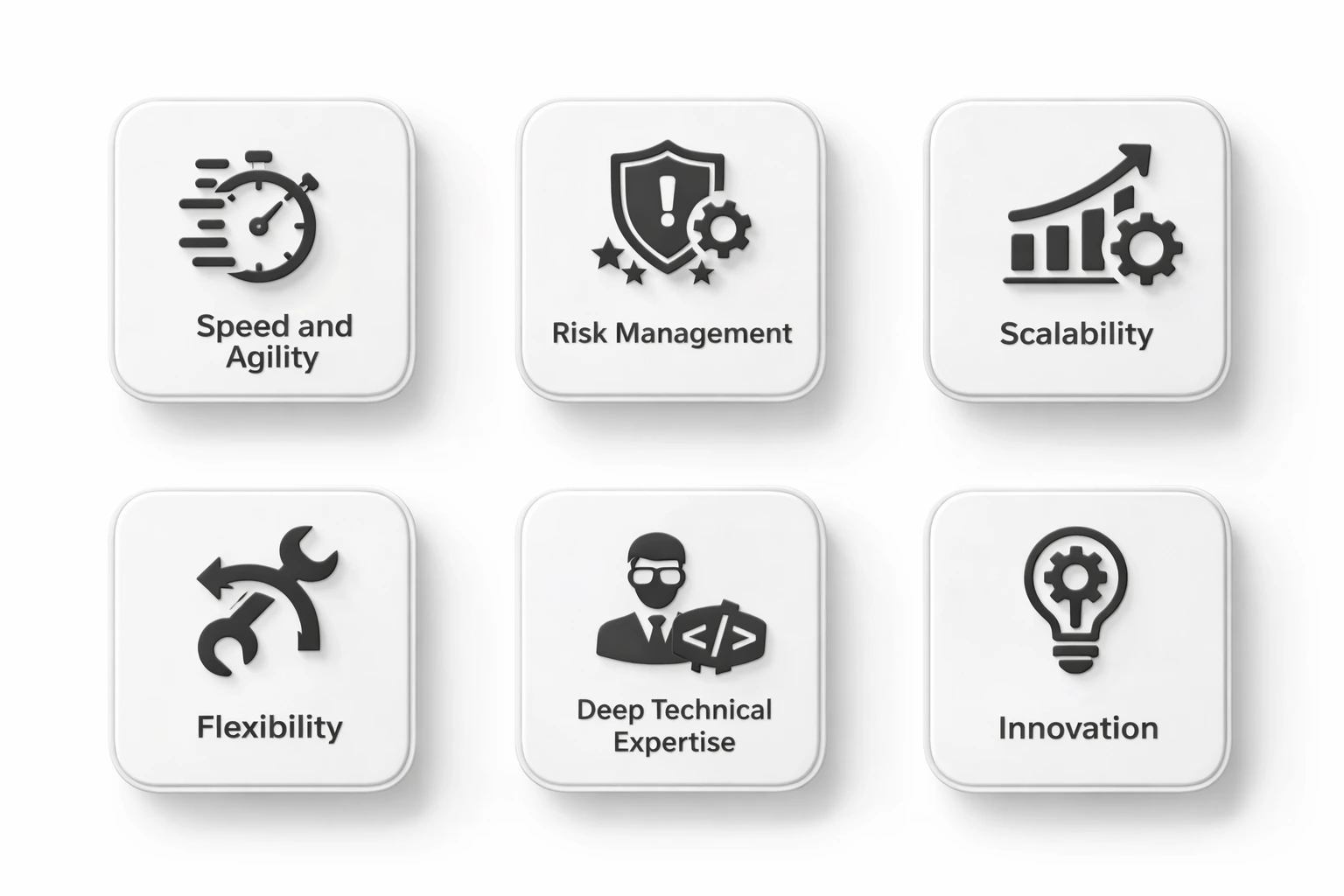
When choosing a software development partner, it is not just about filling a skills gap. In 2026, UK businesses expect partners to add speed, clarity, and long-term value. With rising customer expectations and tighter delivery timelines, the right partnership can protect growth. A bad partnership can slow things down.
Over 60% of organisations now turn to external software partners to scale faster and access specialised skills. A strong software development partnership should offer the following key capabilities. Here are the key capabilities every successful software development partnership should offer.
1. Speed and Agility That Support Fast Decisions
Markets move fast, and software needs to keep up. A reliable software engineering partner brings proven processes that reduce delays and remove guesswork. Experienced teams work efficiently because they have seen similar challenges before. They plan better, adjust faster, and keep delivery moving. This agility helps UK businesses respond to market changes without losing momentum. In 2026, speed is no longer a bonus. It is a baseline expectation.
2. Risk Management Through Experience
Every software project carries risk. Delays, scope creep, and quality issues can appear at any stage. A seasoned software development partner helps reduce these risks early. They identify gaps before they become problems. They also guide businesses through outsourcing challenges with clear processes and realistic timelines. Studies show that projects led by experienced partners face fewer costly reworks. Risk mitigation is not about avoiding change. It is about managing it with confidence.
3. Scalability Without Long-Term Commitments
Growth rarely follows a straight line. Some months demand more resources, while others require less. A strong application development partner supports this reality. Outsourced teams allow businesses to scale up or down without permanent hiring. The team stays familiar with the product, which reduces onboarding time during future updates. This flexibility helps businesses grow without locking themselves into fixed structures. For UK companies facing talent shortages, scalability has become a major advantage.
4. Flexibility That Matches Business Change
In-house teams often come with fixed roles and long-term commitments. Outsourcing offers a different model. A flexible app development partner allows you to adjust team size, skills, and focus as needs evolve. This approach supports changing priorities without disrupting delivery. In fast-moving sectors, flexibility often decides whether a product succeeds or stalls.
5. Deep Technical Expertise That Adds Real Value
Software engineering partners do more than build features. They close technical gaps and introduce smarter ways of working. They also provide fresh ideas based on what works across industries, which improves performance, security, and system stability. As a result of this outside perspective, businesses will increasingly look for partners who can raise technical standards, not just meet them, in 2026.
6. Innovation That Keeps Products Competitive
Innovating keeps products relevant. Without it, software quickly falls behind. A trustworthy software development partner supports innovation through early testing, proof of concept, and continuous improvement. Adapting products based on real user feedback and refining ideas helps companies launch features faster and see higher adoption rates when they work with innovation-focused partners.
Conclusion – Choosing the Right Software Development Partner for the Long Term
A software development partner isn’t just a short-term choice. It influences your product’s evolution, your ability to adapt to change, and your ability to scale. By 2026, businesses are facing tighter timelines, increased security risks, and increasing user expectations. This makes choosing the right partner more important than ever.
The strongest software development partnerships are built on clarity, trust, and shared goals. When a partner understands your business, communicates openly, and supports you beyond launch, delivery becomes predictable and sustainable. Over time, this reduces risk, controls costs, and protects long-term value.
UK businesses should invest in experience, flexibility, and ongoing support rather than focusing only on price or speed. A software engineering partner who is well selected will help your business stay resilient in the evolving digital landscape rather than just deliver software.
Why Choose IDS Logic as Your Software Development Partner?
IDS Logic works as a long-term software development partner, not just a delivery team. The focus stays on solving real business problems while building software that remains stable, secure, and scalable over time.
1. Business-First Development Approach
IDS Logic aligns technology decisions with business goals. Every project starts with understanding your objectives, users, and growth plans. This ensures solutions deliver real value, not unnecessary features.
2. Custom, Scalable Software Solutions
As an experienced application development partner with over 18 years of industry experience, IDS Logic builds bespoke software that adapts as your business grows. Bespoke Software Solutions are designed to scale smoothly, without disruption or the need for frequent rebuilds.
3. Strong Focus on Quality and Security
Quality checks, performance testing, and secure development practices remain central throughout delivery. This reduces long-term risk and supports compliance expectations common across UK businesses.
4. Clear Communication and Transparent Delivery
IDS Logic prioritises clear communication, regular updates, and honest timelines. This transparency helps avoid surprises and keeps stakeholders aligned from start to finish.
5. Long-Term Support and Partnership
IDS Logic offers ongoing support, updates, and technical guidance to keep systems reliable and future-ready after launch. With IDS Logic, businesses are assured of a reliable software development partnership focused on long-term success, not short-term results.
Read More : Bespoke Software Development vs Off-the-Shelf Software: Which is Right for Your Business?
Frequently Asked Questions
Q1. How long should a software development partnership last?
A strong software development partnership usually lasts beyond the first project. Many businesses work with the same partner for several years. This long-term approach reduces onboarding time and improves product knowledge. Over time, the partner understands your systems, users, and goals better. This leads to faster delivery and fewer mistakes as the product evolves.
Q2. Can a software development partner work alongside an in-house team?
Yes, and this is very common in 2026. Many UK businesses use external teams to support their internal developers. A good software engineering partner integrates smoothly with your team. They follow shared processes and communicate clearly. This hybrid model improves speed without losing control.
Q3. How do we measure the success of a software development partnership?
Success is not just about delivery speed. Look at stability, communication, and long-term results. Fewer delays, clear updates, and smooth releases are strong signs. A successful partner also helps reduce future technical issues. Over time, your software should become easier to maintain and scale.
Q4. Is outsourcing suitable for small and mid-sized UK businesses?
Yes. With outsourcing, smaller companies can gain access to experienced talent without paying permanent hiring costs. SMEs in the UK use a software development partner to compete with larger firms. This approach helps them move faster and manage budgets better as workloads change.
Q5. How important is post-launch support when choosing a partner?
Post-launch support is critical. Software always needs updates, fixes, and improvements. Without ongoing support, systems can become unstable or outdated. A reliable application development partner plans for long-term maintenance. This protects your investment and ensures consistent performance.
Q6. What role does trust play in a software development partnership?
Trust allows teams to work without constant supervision. When trust exists, communication becomes easier and decisions happen faster. A trusted partner takes ownership and acts responsibly. This reduces stress for internal teams and improves overall project flow.
Q7. Should businesses prioritise location when selecting a software partner?
Location matters less than it once did. Clear communication and strong processes are more important. Many successful partnerships work across different locations and time zones. As long as expectations are clear, remote collaboration can be very effective for UK businesses.