Choosing Shopify for non-eCommerce websites can have several benefits. Read on to know more.
Shipping on Shopify remains fast, efficient, and budget-friendly. Businesses can print labels, manage import taxes, offer order tracking, and enjoy discounts on shipping rates, up to 88% off, making Shopify a trusted website platform for UK businesses.
But here’s something even more striking: Shopify powers approximately 5.3 million live websites globally as of 2025, proving it’s not just an ecommerce tool but a scalable CMS solution.
While Shopify is best known for building seamless ecommerce websites, its versatility makes it a compelling option for non-ecommerce websites, whether you need a portfolio site, informational blog, or service-based website without online selling. For UK businesses and creators, Shopify offers a polished, easy-to-use platform beyond traditional ecommerce.
In today’s digital-first world, every online presence matters, not just to sell, but to engage, inform, and impress. That’s why a question worth exploring is: Can Shopify serve non-ecommerce needs effectively?
In this article, we’ll explore how you can repurpose Shopify for content-driven websites, brochure-style sites, portfolios, or business landing pages, highlighting its strengths, limitations, and how it stacks up as a non-transactional solution in the UK.
By the end, you’ll understand how Shopify can be adapted as a non-ecommerce platform that balances simplicity, structure, and style in one place.
Is Shopify Ideal for Non-Ecommerce Websites in the UK?

In today’s digital era, having a strong online presence is no longer optional, it’s essential for businesses of every size and industry. Shopify websites are widely recognised for their user-friendly design, powerful integrations, and scalable features, which is why many brands rely on Shopify development agencies in the UK to create high-performing ecommerce stores.
But here’s the bigger question: Can non-ecommerce websites benefit from Shopify as well? The answer is yes. With the right strategy, Shopify can be tailored for non-ecommerce websites such as blogs, service-based sites, portfolio showcases, and community platforms.
1. Leveraging Shopify Features for Non-Ecommerce Websites
One of the main advantages is the ability to create a seamless user experience using Shopify CMS features such as custom themes, drag-and-drop sections, and built-in content management tools. Whether you want to present your services, display an events calendar, or build a professional portfolio, Shopify’s drag-and-drop functionality makes it simple and efficient.
2. Shopify SEO and User Engagement
Another key benefit lies in Shopify Search Engine Optimisation. Non-ecommerce businesses can optimise meta titles, headings, URLs, and blog content, helping websites rank higher in UK Google search results and attract organic traffic. Paired with advanced Shopify analytics, you can track visitor behaviour, improve engagement, and refine your digital strategy.
3. Apps and Integrations for Non-Ecommerce Businesses
Shopify’s App Store enables appointment booking, quote requests, lead capture forms, making Shopify ideal for service-based businesses in the UK that don’t require product checkout.
When Should You Use Shopify for a Non-Ecommerce Website?
Shopify is a suitable choice for non-ecommerce websites when:
-
You want a managed hosting environment
-
Security and performance are priorities
-
You plan future monetisation (subscriptions, bookings, payments)
-
You need a low-maintenance CMS platform
However, if blogging and content publishing are your core focus, WordPress may offer better flexibility.
Shopify Benefits for Non-eCommerce Websites
While Shopify is widely recognised for powering online stores, its potential goes much further. For non-eCommerce websites, partnering with a Shopify development agency or a Shopify maintenance company can be a smart choice. The platform makes it simple to create professional, scalable, and secure websites without heavy development costs.
Below are some standout benefits:
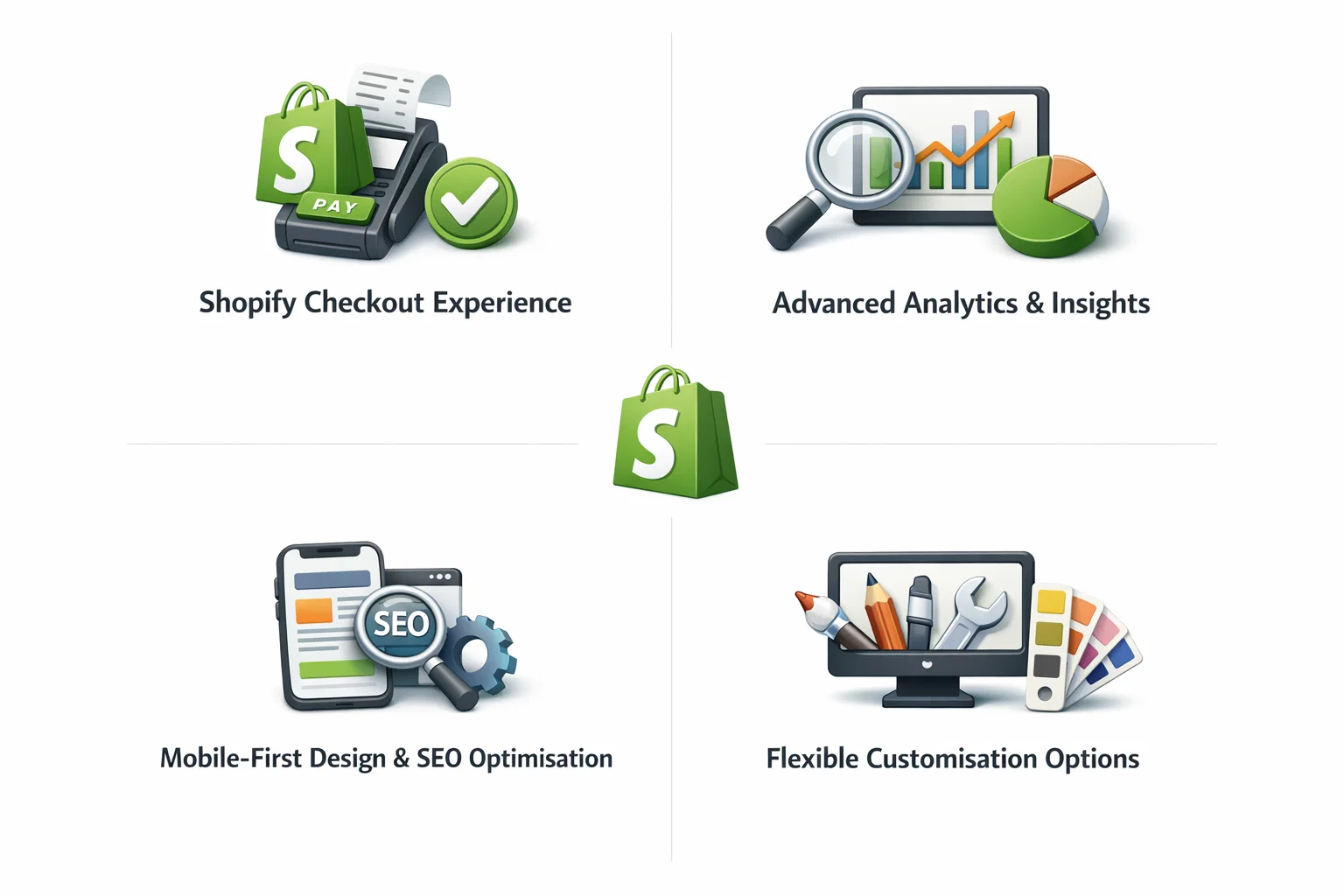
1. Shopify Checkout Experience
One of Shopify’s strongest assets is its streamlined checkout system, designed and tested extensively for usability. This results in fewer dropouts and higher completion rates, which can significantly improve conversions for businesses offering bookings, subscriptions, or service payments.
Another advantage is the familiarity of Shopify checkout. With millions of users globally, visitors already recognise its interface, which builds trust and saves them time. Even for non-eCommerce sites, this consistency reduces friction and enhances credibility.
2. Advanced Analytics and Insights
For those considering Shopify for non-eCommerce websites, its robust analytics tools are a major advantage. Shopify tracks user behaviour, such as which pages are visited, time spent, and exit points. These insights allow businesses to identify areas of improvement, enhance engagement, and fine-tune their website strategy.
Data-driven decision-making through Shopify Analytics is especially valuable for service providers, consultants, and content-driven platforms that need visibility into user preferences.
3. Mobile-First Design and SEO Optimisation
In today’s digital ecosystem, mobile optimisation is critical. Shopify themes are mobile-friendly by default, ensuring websites load quickly and meet Google’s ranking requirements. This is vital for Shopify SEO optimisation, as mobile responsiveness and page speed are both ranking factors.
Additionally, the platform’s infrastructure prioritises performance, ensuring pages load fast, which further supports both SEO and user satisfaction.
4. Flexible Customisation Options
A key benefit of Shopify is its ability to adapt to different industries and niches. With an extensive library of themes, businesses can select a design that aligns with their brand. Beyond that, custom CSS and HTML options allow deeper customisation for those who want to fine-tune layouts, colour schemes, or add unique functionality.
This level of personalisation ensures that non-eCommerce websites on Shopify don’t look generic but instead reflect the brand’s identity while delivering a tailored user experience.
Read More: Guide to Setting Up Google Analytics for Ecommerce
The Cons of Using Shopify for Non-eCommerce Websites
While Shopify offers many benefits, there are also some drawbacks worth noting:
1. SEO and Ranking Confusion
Shopify, when used purely as a CMS, can sometimes generate extra pages or structures that confuse search engines. For instance, blogs or service-based sites may still have a checkout system embedded, which could mislead Google into categorising them as eCommerce stores.
This misalignment may cause your site to rank for irrelevant product keywords instead of your intended topics. To avoid this, it’s important to leverage Shopify SEO tools effectively. Clearly define metadata, use consistent keyword strategies, and maintain a strong site hierarchy to ensure search engines understand your content and rank it appropriately.
2. Cost Considerations
Unlike traditional hosting platforms, Shopify requires a monthly subscription, with plans ranging from around £19 to £249. A detailed WooCommerce vs Shopify pricing comparison highlights long-term cost differences for non-ecommerce and service-based websites. While these plans include hosting, security, and support, they may feel expensive for businesses that don’t need full eCommerce functionality.
For non-eCommerce websites, especially those focused on content or services, alternatives like WordPress hosting providers can be more budget-friendly. Still, for businesses that value Shopify’s integrated ecosystem, ongoing support, and maintenance, the cost may be justified.
Shopify vs WordPress for Non-Ecommerce Websites (UK Perspective)
| Feature | Shopify | WordPress |
|---|---|---|
| Hosting | Included | External |
| SEO Flexibility | Moderate | High |
| Cost | Monthly Subscription | Lower |
| Customisation | Controlled | Extensive |
| Best For | Service & Hybrid Sites | Content-Heavy Sites |
Can You Use Shopify for Non-eCommerce?
Yes, you technically can but it’s not always the best idea. There are better alternatives to Shopify for non-eCommerce websites, especially if your main focus is content, blogging, or showcasing services rather than selling products. Instead of investing in Shopify development agency services, a platform like WordPress CMS may be a far more practical and cost-effective choice.
With WordPress, you gain access to an enormous ecosystem of plugins and themes that allow you to customise your site’s design and functionality with ease. From SEO optimisation tools and advanced security add-ons to social media integrations and analytics, WordPress provides nearly limitless flexibility without locking you into high monthly fees.
Another major advantage is cost. Unlike Shopify, which operates on a paid subscription model, WordPress itself is open-source and free to use. Your only recurring expenses may be hosting and premium plugins, which are generally much more affordable compared to Shopify’s ongoing pricing plans.
Ultimately, if your goal is to build a non-eCommerce website that is scalable, highly customisable, and budget-friendly, WordPress remains a leading choice. It allows you to maintain complete control of your content and design while keeping website maintenance costs low, making it ideal for businesses, bloggers, and service providers seeking a powerful yet economical online presence.
Final Thoughts
While Shopify is best known for powering millions of eCommerce stores worldwide, its flexibility also makes it a reliable website builder for non-eCommerce businesses. From service providers and bloggers to portfolio websites, Shopify offers the tools to build a professional online presence even without product sales. For more insights on leveraging Shopify’s features and maximising your site’s growth, explore the rest of our blog for expert tips.
Shopify continues to gain traction as one of the fastest-growing platforms for businesses in the UK. According to recent industry data, Shopify stores saw around 38% growth in Q1 2024 compared to the same period last year, highlighting its strong adoption. However, creating a successful Shopify site, whether e-Commerce or non-eCommerce, requires careful planning, strategy, and optimisation.
To stand out in the UK digital market, you must prioritise key elements such as search engine optimisation, mobile responsiveness, and brand consistency. Partnering with an experienced Shopify development agency UK ensures your non-ecommerce Shopify website is technically sound, scalable, and search-engine friendly. By making informed decisions, you can fully harness Shopify’s potential and build a website that drives growth, engages users, and strengthens your brand identity.

Frequently Asked Questions
Q1. Can Shopify be used for membership or subscription websites?
Yes. Shopify’s flexibility allows non-eCommerce businesses to create membership-based websites or subscription portals. Using apps like Bold Memberships or Recharge, you can restrict content, offer exclusive resources, or provide digital products on a recurring subscription basis, making it ideal for educational platforms, online communities, or premium content sites.
Q2. Is Shopify suitable for event-based or booking websites?
Absolutely. Shopify can support event registration and appointment booking for non-eCommerce businesses. Apps like BookThatApp and Events Calendar enable scheduling, ticket sales, and event management, allowing companies to promote workshops, classes, or seminars while keeping everything integrated in one platform.
Q3. Can Shopify integrate with third-party tools for non-eCommerce purposes?
Yes. Shopify offers seamless integration with numerous third-party tools and apps, which is invaluable for non-eCommerce websites. Whether you need CRM systems, email marketing platforms, analytics dashboards, or social media integrations, Shopify provides connectivity options that enhance functionality and workflow efficiency for service-based businesses, blogs, and informational sites.
Q4. How secure is Shopify for non-eCommerce websites?
Shopify is highly secure for both eCommerce and non-eCommerce websites. Its built-in SSL certification, automatic updates, and hosting on reliable servers ensure that user data and website content remain protected. Non-eCommerce businesses can confidently use Shopify for content management, service presentations, or digital portfolios without worrying about security vulnerabilities.