People researching a service for the first time rarely need the same information as existing customers.
Returning visitors may already understand the basics, while new prospects still need context and reassurance.
Sitefinity website design and personalisation can address those differences without creating separate websites. Good design creates clarity. Relevant content then helps visitors move towards the right next step.
Sitefinity supports audience segments, personalised pages and targeted content variations.
This guide explains how Sitefinity web design can combine those capabilities without creating unnecessary complexity.
Why Sitefinity Web Design and Personalisation Should Work Together
Web design often begins with layouts, navigation, branding and responsive behaviour.
However, one design cannot always answer every visitor’s question equally well.
A prospective customer may need proof and pricing guidance. An existing customer may want support or account information.
Someone from another industry may need a different case study. Sitefinity website personalisation lets teams adapt parts of the experience around those differences.
Progress Sitefinity can serve different content, page assets and page versions to defined visitor segments. Personalisation therefore becomes part of the experience design rather than an isolated marketing layer.
Design for the Task the Visitor Wants to Complete
A personalised experience should make the next useful action easier to find. Changing content simply because visitor data exists creates little value.
Start with a real difference in user intent. For example, a professional-services website might show separate calls to action for:
- first-time visitors researching a service
- returning prospects comparing options
- existing customers looking for support
The design remains consistent. The message changes where relevance genuinely improves the journey.
What Does Sitefinity Personalisation Actually Allow You to Change?
Sitefinity personalisation works through audience segments and different content versions.
Sitefinity supports personalised pages, dynamic widgets, reusable personalised widgets and personalised page layouts.
The ASP.NET Core renderer also supports personalisation for pages and widgets.
These options let teams decide how much of an experience genuinely needs to change.
Personalise a Complete Page
A page can have different versions for separate audience groups. This approach suits cases where the content or journey needs to change substantially. However, full-page variations also create more editorial responsibility. Use them when the visitor experience genuinely differs.
Change Individual Widgets
Sometimes only one part of a page needs to change. A content block, image or call to action may need different messaging for another segment. Widget-level changes can keep Sitefinity content personalisation more manageable. Progress supports personalisation across many ASP.NET Core and MVC widgets.
Reuse Personalised Elements
Teams can also reuse personalised widgets across pages. That helps maintain consistency when the same audience needs similar messaging in several places. Reusable components can also reduce duplicated editorial work.
A 2026 Update – Dynamically Generated Experiences
Sitefinity 15.4 now also supports Dynamically Generated Experiences, or DGE.
DGE can use visitor intent to assemble relevant sections from approved Sitefinity content in real time.
This differs from traditional Sitefinity audience segmentation, which relies on predefined audience logic.
Both approaches have a place. Use rule-based personalisation when the audience logic is clear and governed.
Intent-based experiences may help where visitor needs change quickly or large content estates create too many manual variants.
Progress introduced DGE during the 15.4 product updates in 2026. Its current model keeps generated experiences grounded in published Sitefinity content.
Sitefinity Audience Segmentation Comes Before Personalised Content
Personalisation only works when the audience definition makes sense. Sitefinity audience segmentation lets teams group visitors around characteristics, behaviours or other defined rules.
Sitefinity Insight can also support persona-based segmentation using visitor behaviour and profile characteristics. The technical ability to create a segment does not mean every segment deserves unique content.
A useful segment should answer three questions:
- Who needs something different?
- Why does their experience need to change?
- What action or outcome should improve?
Without those answers, personalisation can become content duplication.
Avoid Creating Segments Around Data Alone
Analytics may show visitors arriving from several locations. Location alone does not justify separate content.
It matters only when geography changes the information someone needs.
Device, behaviour and customer status should follow the same test.
Effective Sitefinity personalised content starts with a genuine visitor need rather than an available data field.
How Personalisation Changes Sitefinity Web Design
Personalisation affects more than copy. It can change how teams think about hierarchy, calls to action, imagery and the order of information.
That is why Sitefinity web design should account for personalisation during planning. Retrofitting several content variants into a rigid design often creates awkward results.
Keep the Visual Structure Familiar
Personalisation affects more than copy.
It can influence content hierarchy, imagery, calls to action and the order in which information appears.
Planning Sitefinity web design around those possibilities avoids forcing multiple variants into a rigid layout later.
Give Different Visitors a Clear Next Step
Calls to action provide one of the simplest personalisation opportunities.
A new visitor might need:
Explore the Service
A returning prospect may respond better to:
Discuss Your Requirements
An existing customer may need:
Get Support
The page structure can remain stable while the action becomes more relevant.
Use Imagery Only When It Adds Context
Different audiences may benefit from different visuals. However, swapping images without changing meaning achieves little. Use personalised imagery when it helps explain the offer, audience or situation more clearly.
Keep the Number of Variations Under Control
Every new version needs content ownership, testing and future review. Five audience groups can quickly create five versions of one important page.
Multiply that across a large website and maintenance becomes difficult. A practical Sitefinity user experience strategy therefore balances relevance with editorial capacity.
Need Sitefinity Design to Support More Than Standard Content?
IDS Logic supports Sitefinity CMS development for organisations that need tailored layouts, integrations and scalable digital experiences.
Sitefinity Responsive Web Design Still Matters With Personalisation
Personalised content does not remove basic usability requirements. Every variant still needs to work across phones, tablets and desktop screens.
Sitefinity responsive web design supports layouts that adapt across different screen sizes. Progress also provides responsive layouts and device-preview capabilities.
However, responsive testing should cover the personalised versions too.
A shorter default headline may fit perfectly on mobile. Its personalised replacement may wrap across four lines.
A different call to action might also push important content below the fold. These are small changes, but they affect the final experience.
Check Personalised Journeys, Not Only Pages
Testing one component at a time can miss problems. Follow the complete journey for each important audience.
Check the message, navigation, responsive layout and next action together. Good Sitefinity website development considers the journey rather than treating each page as an isolated asset.
A Practical Sitefinity Personalisation Planning Approach
Before creating personalised content, define what each audience actually needs. Then decide what should change and how you will measure the result.
A simple plan can keep personalisation useful without creating unnecessary variants.
Start With a Clear Audience Need
Different visitor groups should only receive different content when their needs genuinely differ. For example, new visitors may need clearer service information. Returning prospects may benefit more from case studies or proof points.
Match the Sitefinity Experience to That Need
Once the audience is clear, decide what Sitefinity should change.
You might personalise:
- headlines
- supporting content
- case studies
- calls to action
- industry-specific examples
- campaign landing content
Keep each variation focused. Avoid changing several elements unless the journey truly requires it.
Decide What Success Looks Like
Every personalised experience should connect to a measurable outcome.
Useful measures include:
- service-page engagement
- CTA interaction
- support-path usage
- content engagement
- goal completion
For instance, a returning prospect may see stronger proof content. You can then measure whether CTA interaction improves. An existing customer might receive a support-focused CTA. In that case, support-path usage becomes the more useful measure.
The same principle applies to campaign visitors. Their landing content should match the campaign intent, while goal completion shows whether the experience worked.
Useful personalisation connects a clear audience need with a relevant content change and measurable outcome.
Sitefinity personalisation planning approach covering audience needs, content changes and measurement goals.
How Sitefinity Insight Helps Measure Personalisation
Launching a personalised experience is not the end of the work. You still need evidence that the change helps. Sitefinity Insight provides audience analysis, segmentation, journey information and personalisation reporting.
Its reports can show total views and personalised views for tracked personalised pages. That information gives teams a starting point for analysis.
Define the Conversion Before You Personalise
A personalised version should connect to a purpose.
Goals include:
- completing an enquiry
- visiting a key service page
- downloading a useful resource
- starting registration
- reaching a support area
Do not assume a different experience automatically performs better.
Measure it. Sitefinity personalisation reports become useful when the team already knows what success should look like.
Use A/B Testing for Design Questions, Not Personalised Pages
Personalisation and A/B testing answer different questions.
Personalisation changes an experience for a defined audience. A/B testing compares page variations against a measurable goal.
Sitefinity does not support A/B testing on a personalised page while that page remains personalised.
Progress also discourages tests on pages containing personalised widgets because the reporting becomes less reliable by segment.
Use A/B testing for a design or content hypothesis. Use personalisation when defined audiences genuinely need different experiences.
Sitefinity Insight can then report goal completion rates and statistical significance for supported A/B tests.
When Sitefinity Custom Development Becomes Useful
Native functionality covers many requirements, but some scenarios need deeper integration or specialised behaviour.
A segment may depend on CRM data, a bespoke widget or an unusual content rule.
In these cases, Sitefinity custom development can close a genuine platform gap.
Custom work should extend the platform only where standard functionality cannot meet the requirement cleanly.
Typical Reasons for Extending Sitefinity
A customised requirement may involve CRM data, bespoke registration or specialist content components. It could also involve custom personalisation criteria or integration with another business system.
Sitefinity provides APIs for custom personalisation criteria and external personalisation scenarios.
However, each custom component increases testing and maintenance responsibilities.
Sitefinity custom website development therefore needs a clear business case.
Need a Personalisation Feature Sitefinity Does Not Provide Natively?
Custom modules and widgets can extend Sitefinity where standard functionality cannot meet a genuine requirement.
Can Personalisation Work With Modern Sitefinity Frontends?
Yes, but the implementation needs planning. Modern Sitefinity projects may use ASP.NET Core or a separate headless frontend.
The ASP.NET Core renderer supports personalised pages and widgets through Sitefinity’s current page experience.
For custom headless applications, Sitefinity’s Layout service can also support personalised content and tracking. This matters when a redesign includes frontend modernisation.
Teams should decide early how personalisation, tracking and consent will work across that architecture. Treating them as late additions can create unnecessary development work.
Personalisation Still Needs Responsible Data Use
Personalisation often relies on visitor behaviour or profile information. That makes consent and governance part of the design.
Sitefinity includes tracking-consent functionality that can stop defined tracking when a visitor has not consented.
It can also work with third-party consent-management solutions. However, platform controls do not replace organisational responsibility.
Your team still needs to understand:
- what information drives the segment
- why that information is necessary
- which tracking technologies operate
- who can access visitor data
- how long the organisation needs the data
For UK organisations, review PECR and UK GDPR requirements before using non-essential tracking.
The ICO published updated storage and access technology guidance in April 2026.
Sitefinity’s tracking-consent tools can support consent handling, but they do not make an implementation compliant automatically. Collect only the information needed for the experience and document why you need it.
When Website Personalisation Creates More Work Than Value
Not every audience needs a separate version. Restraint often creates a better result.
Avoid personalising content when the visitor’s need remains essentially the same. The same applies when nobody owns the additional content after launch.
Personalisation May Not Be Worthwhile When:
- the audience difference has no meaningful effect on content
- visitor data cannot support reliable segmentation
- nobody owns the personalised variants
- success cannot be measured
- multiple versions create excessive editorial work
- a clearer default page would solve the problem
A good Sitefinity website design should work well before personalisation begins. Personalisation should improve a solid experience, not hide weak navigation or confusing content.
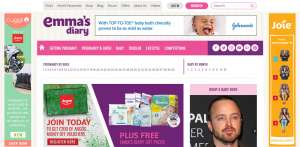
Emma’s Diary – Sitefinity Web Design in a Real UK Digital Platform
Emma’s Diary provides a useful example of Sitefinity supporting a large, evolving digital experience.
The organisation asked IDS Logic to redesign, redevelop and optimise its website for a growing audience.
IDS Logic delivered the platform using Sitefinity CMS, with flexible templates and layouts for the editorial team.
The work included Sitefinity responsive web design, accessibility, performance optimisation and A/B conversion testing.
The platform also supports registered-user features, offers, competitions and voucher redemption.
A later solution allowed discounts to target the user base on a flexible, segmented basis.
The published case study reports improved customer retention and engagement alongside continued membership growth.
These outcomes reflect the wider programme, not one personalisation feature alone.
The case study therefore demonstrates how design, CMS flexibility and audience-focused functionality can evolve together.
Keep Personalisation Useful After Launch
Content and audience behaviour both change after launch.
A segment that made sense two years ago may no longer justify separate content. Review important personalised experiences periodically.
Look for unused variants, outdated messages and journeys that no longer support current goals.
Maintenance should also include platform updates, integrations and custom components. IDS Logic provides ongoing Sitefinity support for established digital platforms across the UK.
Conclusion: Create Relevance Without Adding Complexity
The best Sitefinity web design does not personalise every part of the website. Instead, it gives each important audience a clear path to the information they need.
Sitefinity supports audience segmentation, content variations and measurement through Sitefinity Insight.
Used with purpose, these capabilities can improve relevance without creating an unmanageable content estate. Start with the visitor’s needs, make the smallest useful change and measure the result.
This approach keeps Sitefinity personalisation focused on better experiences rather than unnecessary complexity.