Get to know every aspect of Magento integration through this blog. It covers all the important aspect that will help you to understand the subject in a better manner.
Dealing with Magento EDI integration can feel both exciting and complex. On one hand, businesses want smooth operations and, on the other hand, they need to stay profitable and competitive. Unlike physical shops, eCommerce relies on constant, accurate data exchange. That’s where Magento EDI makes a difference.
In today’s fast-paced eCommerce world, accuracy is everything. If your orders, invoices, and stock levels are wrong, customer trust suffers. Magento EDI integration helps prevent this. It automates how information flows between your store, suppliers, logistics partners, and even banks. The result is faster processes, fewer mistakes, and stronger customer satisfaction.
Instead of relying on old paper-based methods, EDI uses standard, machine-readable formats. This not only saves time and reduces costs but also ensures smoother communication across your entire supply chain. With Magento 2 EDI integration, UK businesses can optimise order fulfilment, manage stock better, and scale without extra overhead.
Insights in the Blog
This guide takes you through the essentials of Magento EDI integration, how it works, the methods available, and the benefits it brings. We’ll walk through choosing the right EDI provider in the UK, mapping your data, testing the connection, and preparing to go live. You’ll also see the different types of integration, direct, indirect, hybrid – and when each approach makes sense for your business.
Magento 2 EDI integration is no longer just about automation. It plays a central role in improving accuracy, boosting customer satisfaction, and building stronger ties with suppliers and partners. By removing duplicate tasks and manual entry, companies save costs and stay compliant with industry rules like GDPR and ISO standards.
We’ll also look at new developments such as cloud-based EDI platforms, AI-powered mapping tools, and real-time tracking dashboards, innovations that make EDI eCommerce integration faster and more reliable than ever. Whether you’re setting up Magento EDI integration for the first time or fine-tuning an existing system, this guide offers a clear roadmap.
Finally, we’ll show how IDS Logic can support you with Magento development services, including Magento EDI integration software and tailored solutions for UK businesses. With our expertise, you’ll be able to integrate EDI smoothly, strengthen your operations, and prepare your store for growth.
What is EDI Integration?
Electronic Data Interchange (EDI) integration allows businesses to exchange data electronically between different systems. This includes invoices, purchase orders, shipping notices, and other essential documents, eliminating manual entry.
EDI converts human-readable documents into standardized machine-readable formats. This automation reduces errors, saves time, and strengthens operational efficiency. For Magento store owners, EDI integration ensures seamless data exchange across ERP, Warehouse Management Systems (WMS), and CRM solutions.
How Does Magento 2 EDI Integration Work?
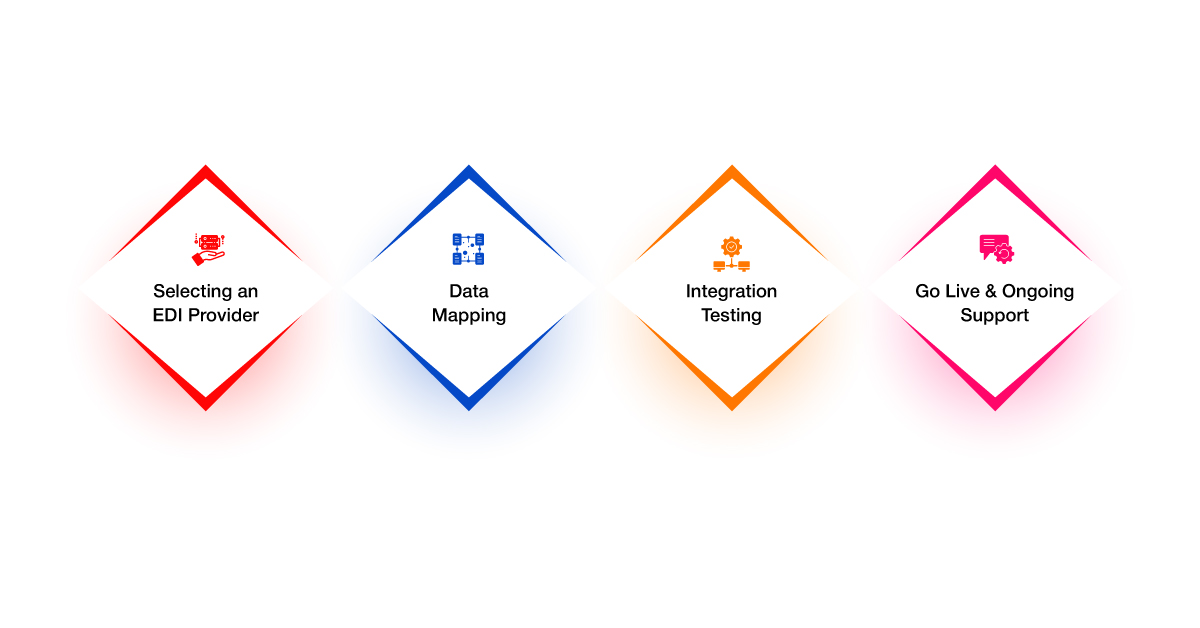
Magento 2 EDI integration lets your store exchange orders, invoices, and stock data automatically. It reduces errors, saves time, and improves efficiency. Whether you’re new to EDI or optimising an existing setup, choosing the right provider, mapping data correctly, and thorough testing are key. Modern tools like AI-assisted mapping and cloud platforms make integration faster and more reliable.
1. Selecting an EDI Provider
Choose an EDI provider based on experience, compatibility, and support in the UK. Look for companies that offer Magento EDI integration software and expertise in direct EDI integration.
2. Data Mapping
Your provider will map Magento data fields to the EDI system. Proper mapping ensures accurate, real-time exchange of orders, invoices, and stock updates. AI-assisted mapping tools are increasingly used to reduce setup time and errors.
3. Integration Testing
Before going live, test the connection thoroughly. Send sample transactions and check for errors. Testing guarantees smooth integration and reliable performance from day one.
4. Go Live & Ongoing Support
Once tested, finalise the integration. Your EDI provider should offer continuous monitoring, updates, and ongoing support. Cloud-based platforms now allow real-time tracking and faster troubleshooting, ensuring your Magento store stays efficient.
Types of EDI Integration
Magento 2 EDI integration can be set up in several ways, depending on your business needs and partner requirements.
1. Direct EDI Integration
Direct integration establishes a point-to-point connection between your ERP system and your trading partners. This method suits large businesses with multiple connections and allows direct communication using standard protocols. While highly efficient, it requires significant technical resources to manage several connections.
2. Indirect EDI Integration
Indirect EDI uses a third-party intermediary, such as an EDI broker or Value-Added Network (VAN). Your ERP sends data to the intermediary, who converts it into the required format for each partner. This approach simplifies communication, especially when partners have different format requirements, and reduces the complexity of managing multiple connections yourself.
3. Hybrid EDI Integration (For EDI-Enabled Partners)
Hybrid integration combines direct and indirect methods. You can connect directly with key partners while using intermediaries for others. This approach balances control and simplicity, allowing high-volume partners to maintain direct connections and smaller partners to be integrated via the intermediary.
4. Hybrid EDI Integration (For Non-EDI Partners)
This type enables communication with partners who do not support EDI. Data from emails, PDFs, or Excel sheets is converted into a format compatible with your ERP system. This approach expands your digital reach, allowing seamless data exchange even with non-EDI partners.
Benefits of Magento EDI Integration
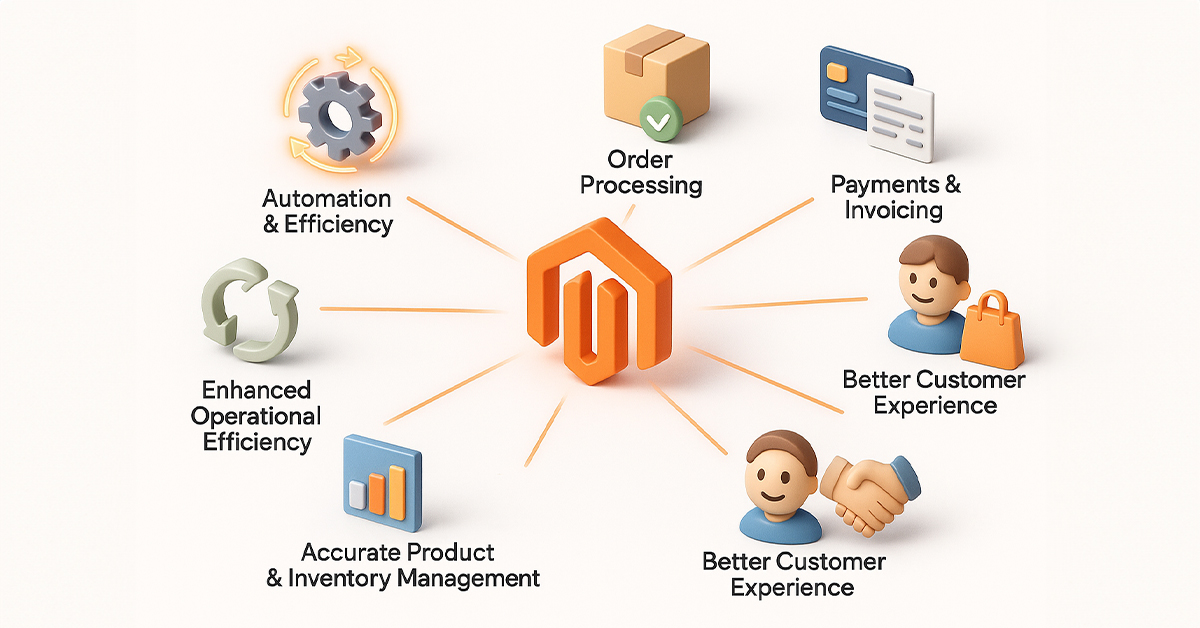
Magento 2 EDI integration automates order, inventory, and payment processes, reducing errors and saving time. It ensures accurate product data, improves operational efficiency, enhances customer satisfaction, and strengthens relationships with suppliers and partners.
1. Automation and Efficiency
Magento EDI integration removes the need for manual data entry, cutting errors and saving time. Key processes that can be automated include:
2. Order Processing
Instantly receive and manage customer orders without manual intervention.
3. Inventory Management
Real-time stock updates prevent overstocking or running out of products.
4. Payments & Invoicing
Financial documents exchange seamlessly, reducing delays and mistakes.
5. Accurate Product and Inventory Management
EDI integration ensures product information stays consistent across all channels. By reducing human errors, businesses can track stock more effectively and make informed restocking decisions.
6. Enhanced Operational Efficiency
Automation speeds up routine tasks such as order handling, invoicing, and shipping. This reduces labour costs and allows your team to focus on high-value activities that drive growth.
7. Better Customer Experience
Fast, error-free processing means orders reach customers on time. Accurate product data builds trust, while improved operational efficiency leads to higher satisfaction and loyalty.
8. Stronger Partner Relationships
Quick, reliable transactions help build trust with suppliers and logistics partners. Automated workflows make collaboration smoother, while consistent, accurate data enhances partner confidence.
Best Practices for Magento EDI Integration
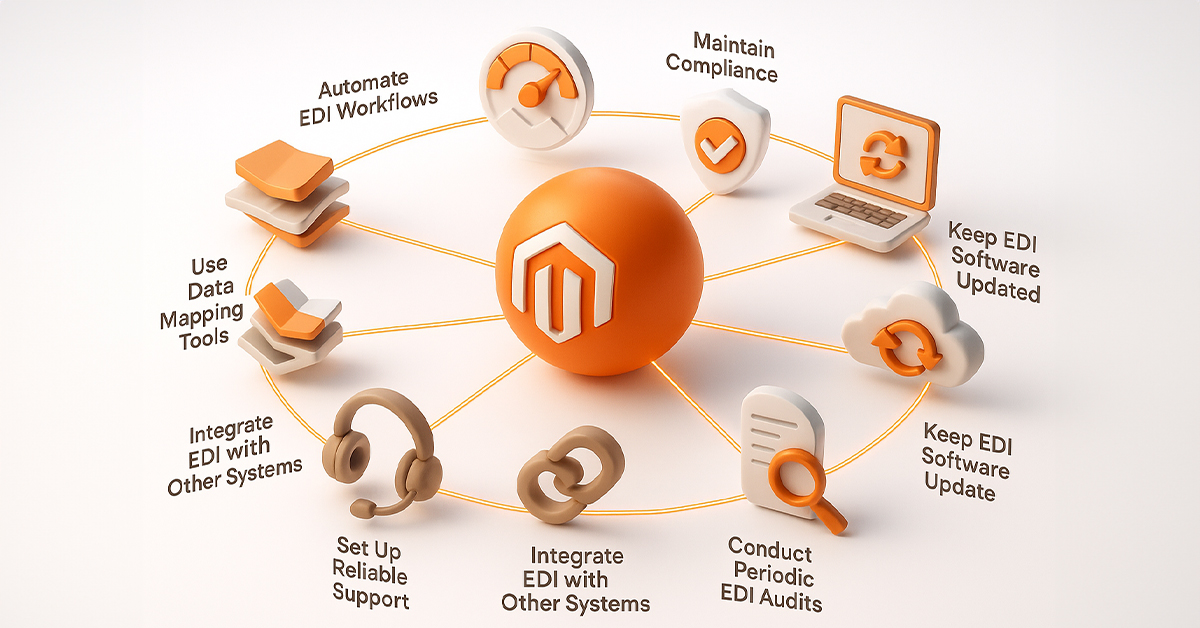
To get the most out of your Magento 2 EDI integration, following best practices ensures smooth, accurate, and reliable operations.
1. Automate EDI Workflows
Use automation to handle repetitive tasks like order processing and data exchange. Automation reduces manual effort, minimises errors, and keeps your operations running efficiently.
2. Use Data Mapping Tools
Leverage mapping tools to convert data correctly between Magento and your EDI system. Accurate data translation ensures consistency across orders, invoices, and inventory updates.
3. Monitor Performance Regularly
Track key EDI performance metrics to spot issues early. Regular monitoring helps maintain seamless operations and avoids delays in your eCommerce workflows.
4. Maintain Compliance
Follow industry regulations such as GDPR and ISO standards for electronic data exchange. Compliance reduces risks and keeps your integration secure and legally sound.
5. Optimise Data Exchange Protocols
Use efficient data transfer protocols to speed up communication between your Magento store and trading partners. Fast, reliable data exchange improves overall system performance.
6. Keep EDI Software Updated
Regularly update your Magento EDI integration software with the latest features and security patches. Staying up-to-date ensures compatibility and protects your data from security threats.
7. Conduct Periodic EDI Audits
Perform audits to verify the accuracy and success of your integration. Auditing identifies improvement areas and ensures adherence to industry best practices.
8. Integrate EDI with Other Systems
Ensure your EDI system works seamlessly with ERP, WMS, and CRM platforms. Integrated systems enhance efficiency and maintain consistent data across all channels.
9. Set Up Reliable Support
Have a strong support system to quickly resolve any integration issues. Prompt support minimises downtime and ensures smooth eCommerce operations.
Conclusion: Unlock the Full Potential of Magento EDI Integration
Magento 2 EDI integration streamlines business operations, improves data accuracy, and boosts overall efficiency. By automating the exchange of invoices, orders, and inventory data with trading partners, businesses can save time, reduce errors, and focus on more strategic tasks. Automation also helps handle repetitive workflows, freeing up resources for growth and innovation.
Integrating EDI with Magento not only optimises internal processes but also strengthens relationships with suppliers, distributors, and logistics partners. Real-time data exchange ensures smoother order fulfilment, accurate inventory management, and enhanced customer satisfaction.
At IDS Logic, a leading Magento development company in the UK, we specialise in Magento EDI integration, Magento 2 development, and end-to-end eCommerce solutions. Whether you want to optimise an existing store, integrate advanced EDI workflows, or build a Magento store from scratch, our expert developers can provide tailored solutions that fit your business needs.

Frequently Asked Questions
Q1. Can Magento EDI integration help with multi-channel sales?
Yes. Magento EDI integration ensures consistent and real-time data across multiple sales channels. It keeps product information, stock levels, and order updates accurate, whether you sell online, in-store, or via marketplaces. This reduces errors and improves customer experience across channels.
Q2. How does Magento EDI integration improve supply chain visibility?
By automating the exchange of orders, invoices, and shipping notices, Magento EDI provides a clear view of inventory and order status at every stage. Businesses can track shipments, monitor stock, and forecast demand more accurately, enhancing operational efficiency.
Q3. Is Magento 2 EDI integration suitable for small and medium-sized businesses (SMBs)?
Absolutely. While large enterprises benefit from direct EDI connections, SMBs can use cloud-based or hybrid Magento EDI solutions. These approaches are cost-effective, scalable, and reduce manual workload, allowing smaller businesses to compete efficiently in eCommerce.
Q4. Can Magento EDI integration support sustainability initiatives?
Yes. By reducing paper-based documentation and automating workflows, Magento EDI integration supports eco-friendly practices. Digital data exchange lowers the reliance on printing, reduces errors, and minimises waste, contributing to greener business operations.
Q5. How do Magento EDI solutions enhance collaboration with suppliers?
Magento EDI integration creates faster, more accurate communication between businesses and suppliers. By sharing real-time order, invoice, and inventory data, partners can plan better, reduce delays, and respond quickly to changing demand. This strengthens trust and long-term relationships.